


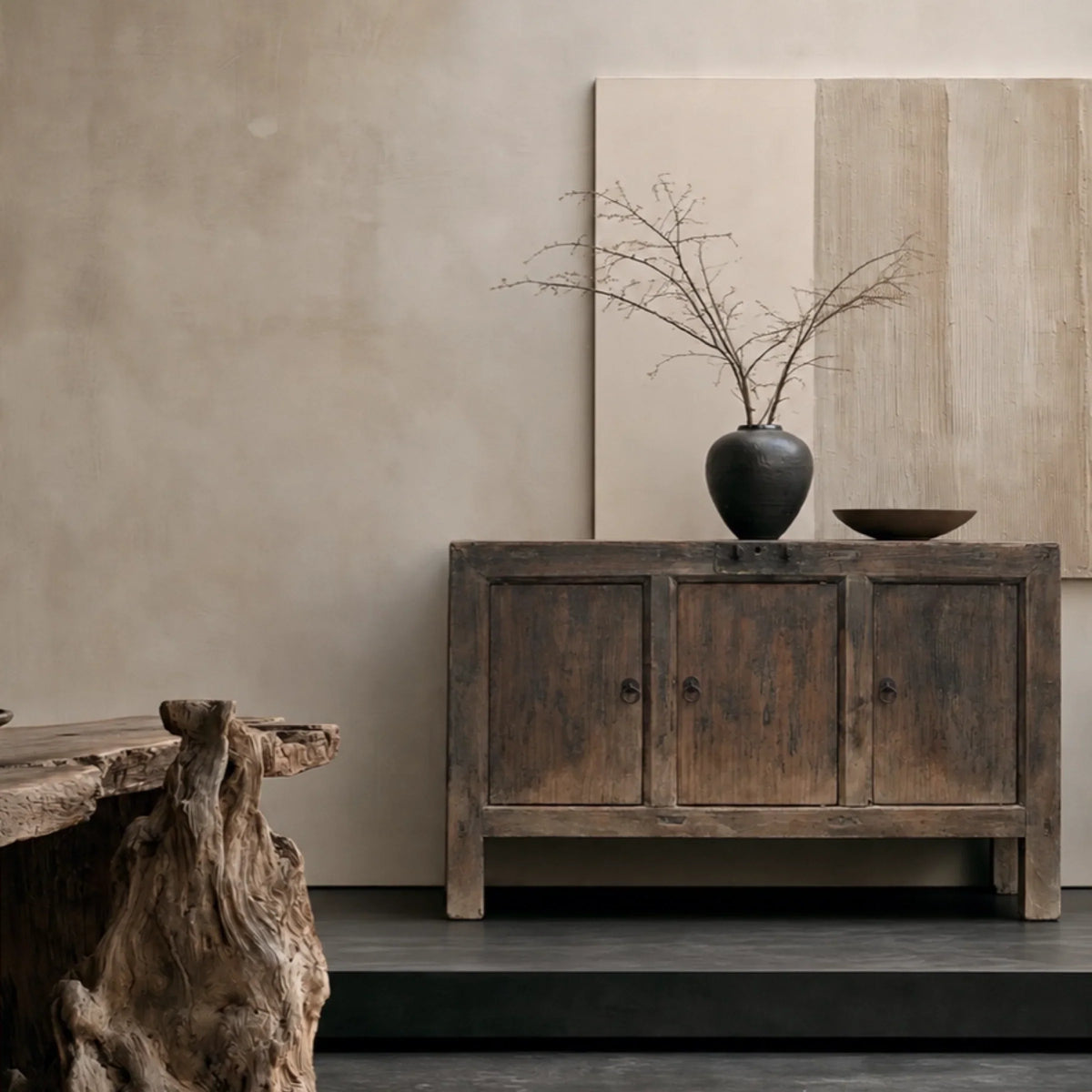
Our old Chinese sideboards: history, solid elm and decorating ideas
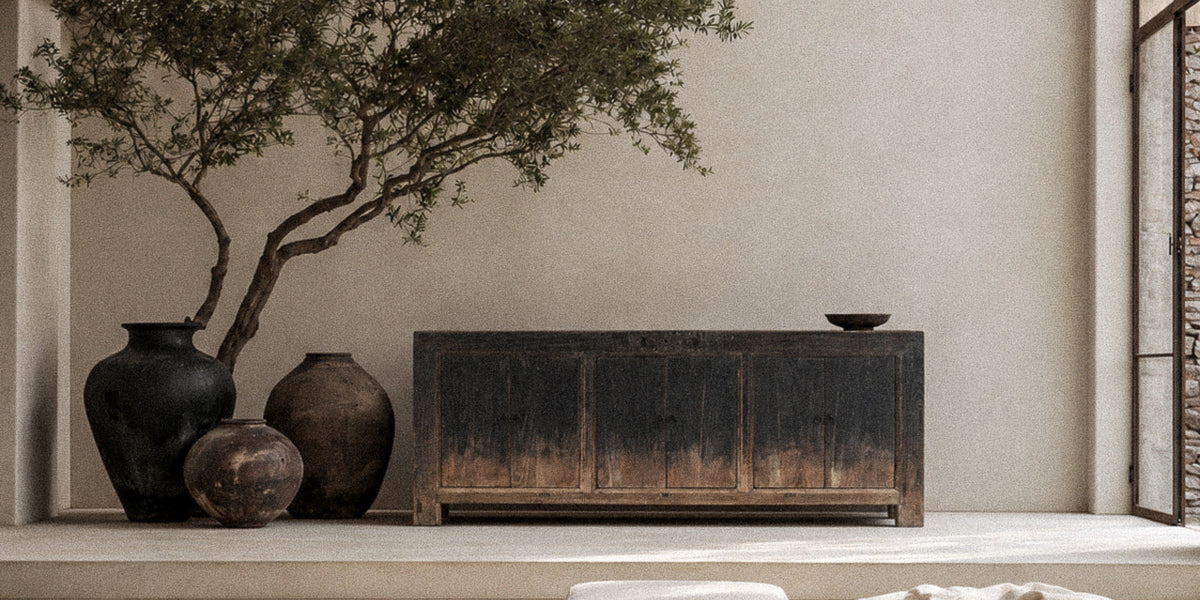
There are pieces of furniture we choose for their lines, their wood or their patina. And then there are those that tell a story.
Our old Chinese sideboards belong to this second category. Behind their apparent simplicity lies a history made of uses, transformations and the marks left by time.
furniture that had a first life
To us today, they are simply old Chinese sideboards, but originally some of these pieces had an entirely different purpose.
This is particularly true of our Qingdao sideboards: originally, they were large solid wood chests used to store rice as well as maize, wheat and other grains. They were opened from above, through one or more hatches set into the top.
Simple, sturdy pieces, designed above all for everyday life.


old chests fully restored
When our craftsmen recover these chests, many have been left abandoned and need genuine restoration work. We set aside the pieces that are too damaged, but for the others we rely on the craftsmen's skill to give them a new life, while preserving as much as possible of what gives them their character.
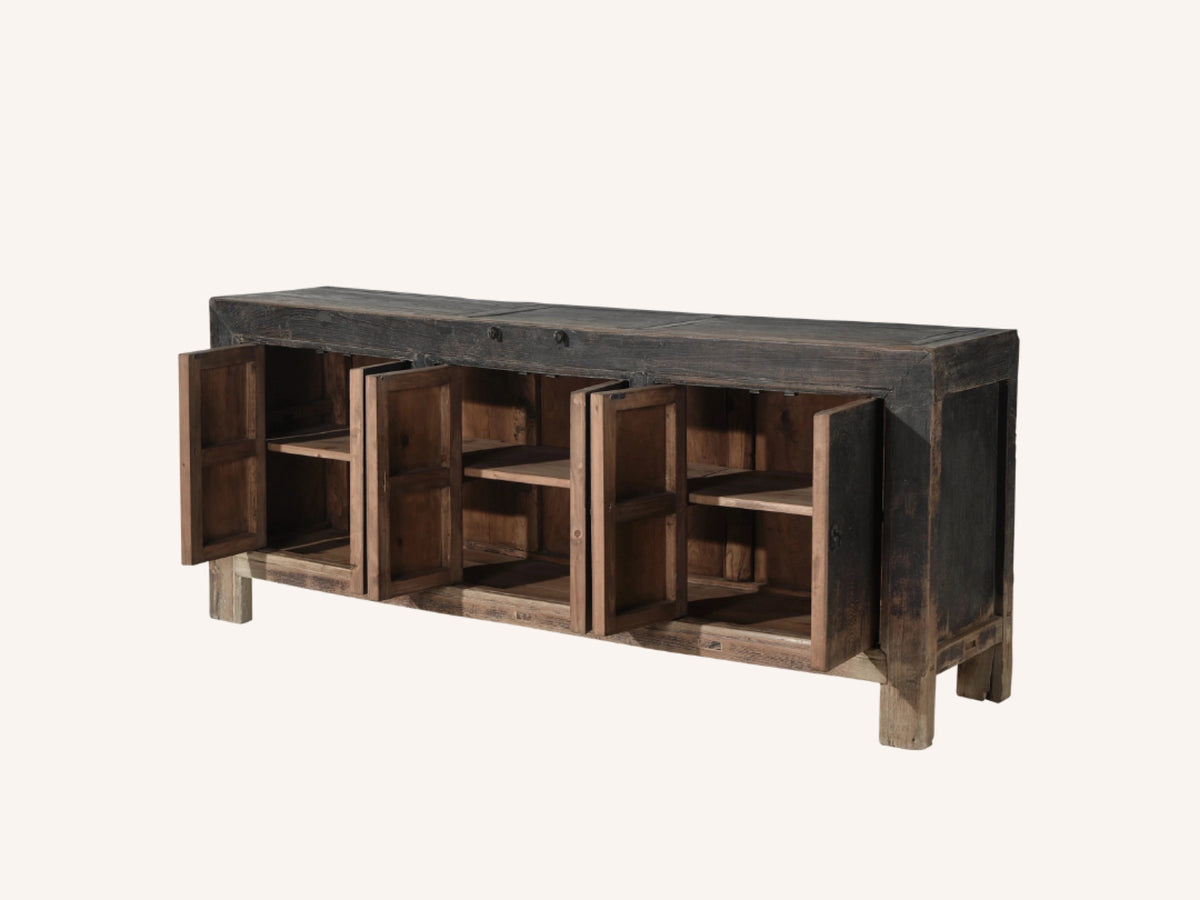
The idea is not to transform the piece completely, but to adapt it to the way we live today. The old hatches on top are kept in the structure, while doors are cut directly into the front. They are then reinforced at the back with crossbars to make them sturdy. The craftsmen also add the rings that now serve as handles.
On some models, the original locking system is still there: rings, wrought iron plates or studded fittings that once held a padlock. Others also have studded iron reinforcement plates on the corners, reminders of their former use.

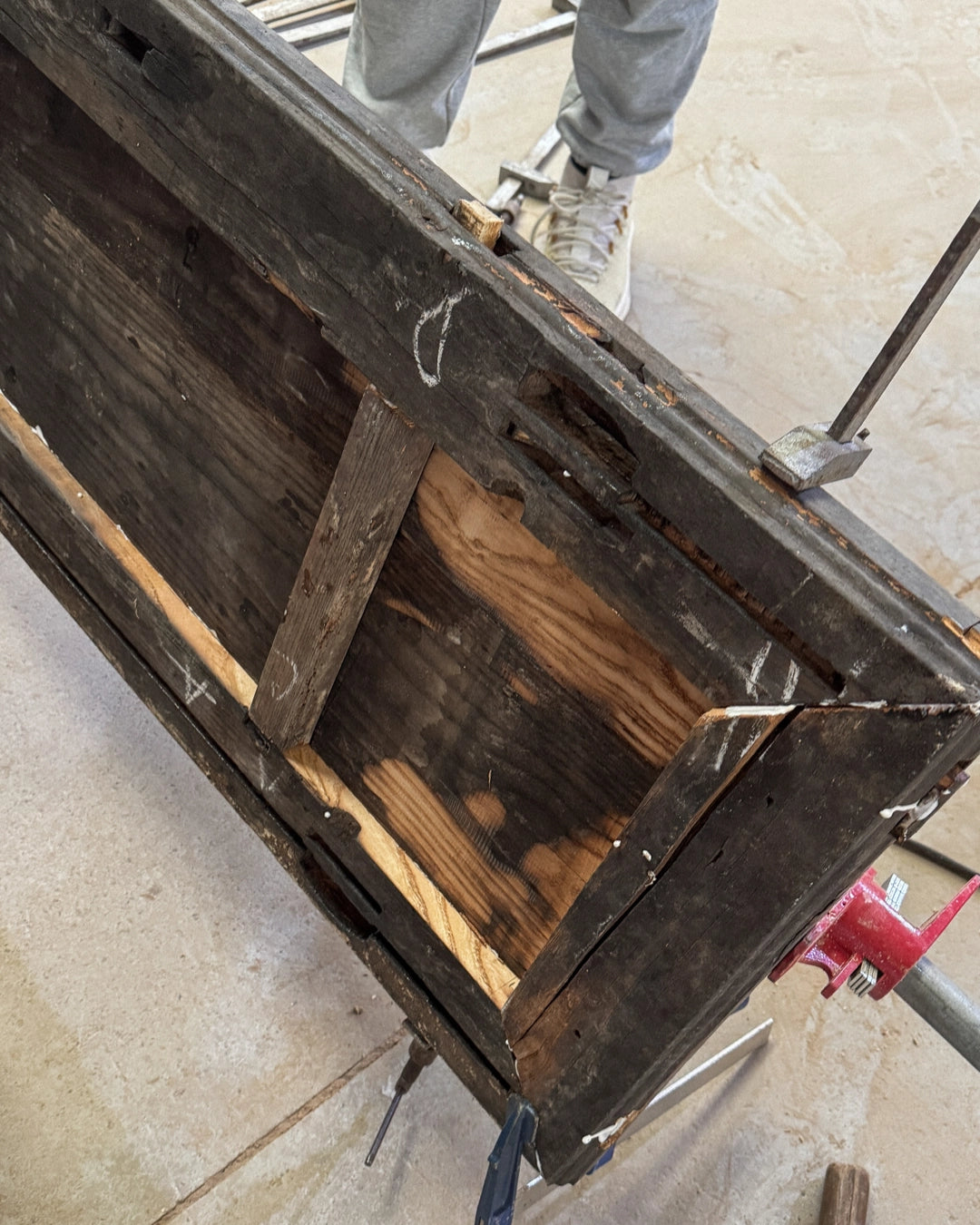
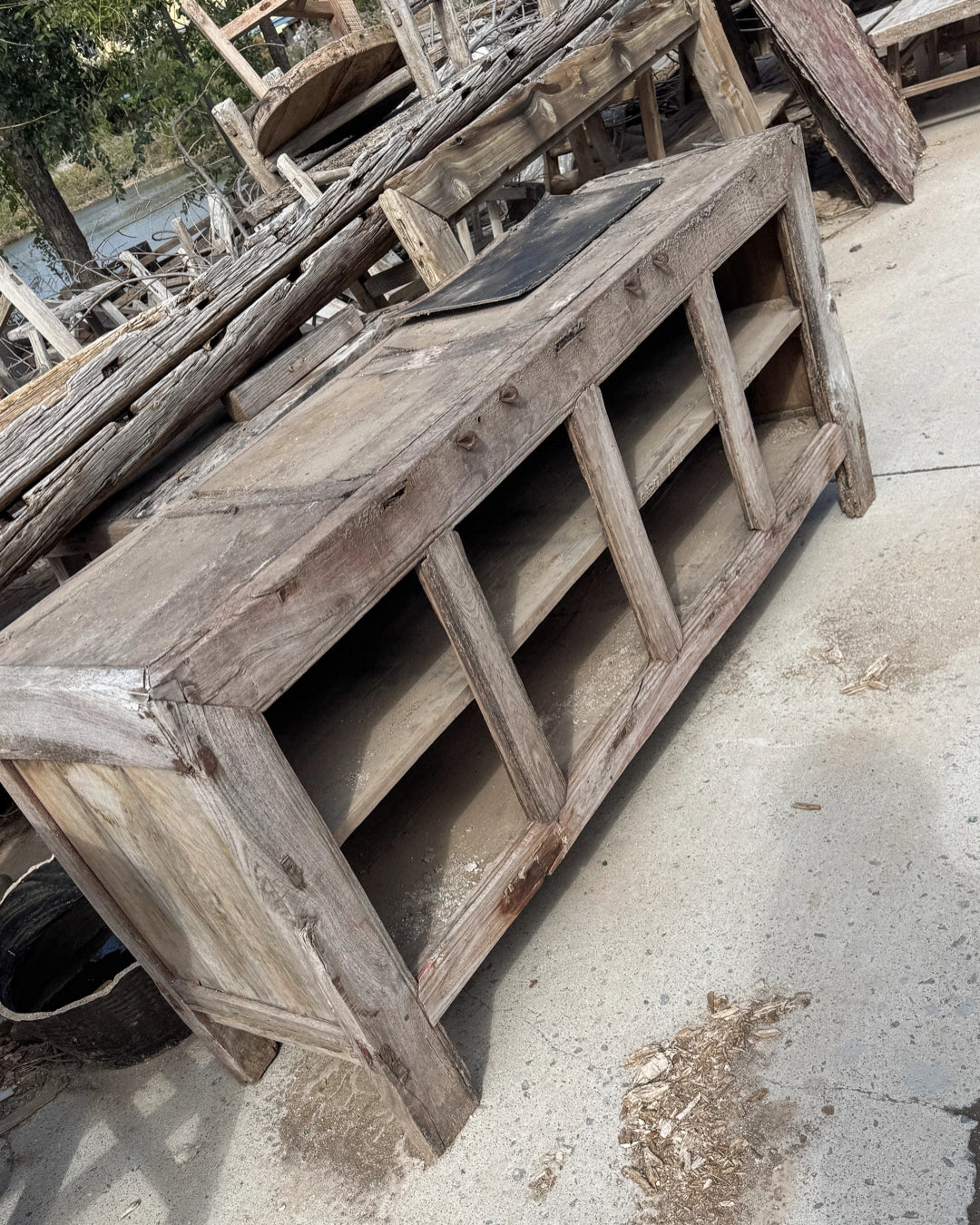
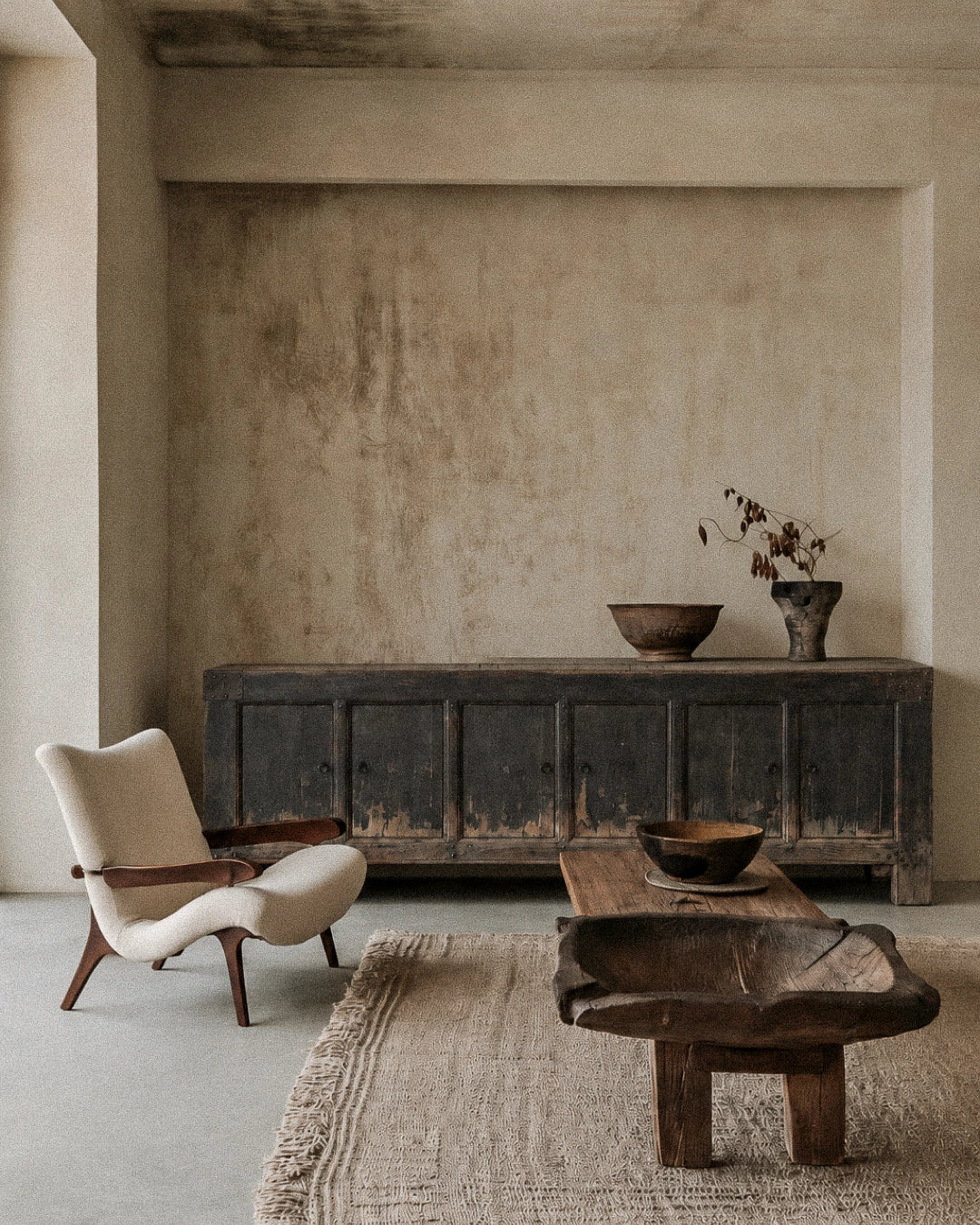
The original chests are usually very deep, far deeper than the furniture we use today. To make them easier to live with, the craftsmen take them apart, reduce their depth, then reassemble them. It is quite remarkable work when you see the original state of some of the chests.
Inside, we keep the original elements wherever possible. Shelves may be added to make storage more practical, and some sideboards even still bear traces of the Chinese newspaper once used to line the inner walls.
These are all the small details we love to find, because they remind us that behind the sideboard placed today in a dining room or living room, there was first a piece of furniture used for many years thousands of kilometres from here.

Our Chinese sideboards are made of solid elm, a wood traditionally used a great deal in Chinese furniture. It is a species we particularly like for its grain and for the way it changes over time.
On an old piece of furniture, nothing is perfectly uniform. The wood may be lighter in places and darker elsewhere. Sometimes there are scratches, signs of use or old repairs, and that is precisely what gives them their charm.
Each sideboard has its own colour, its own marks and its own patina. Even when two models look alike, they are never truly identical.
surprisingly contemporary lines
What we also love about these sideboards is their simplicity: a large front, a thick top, understated lines and very little decoration.
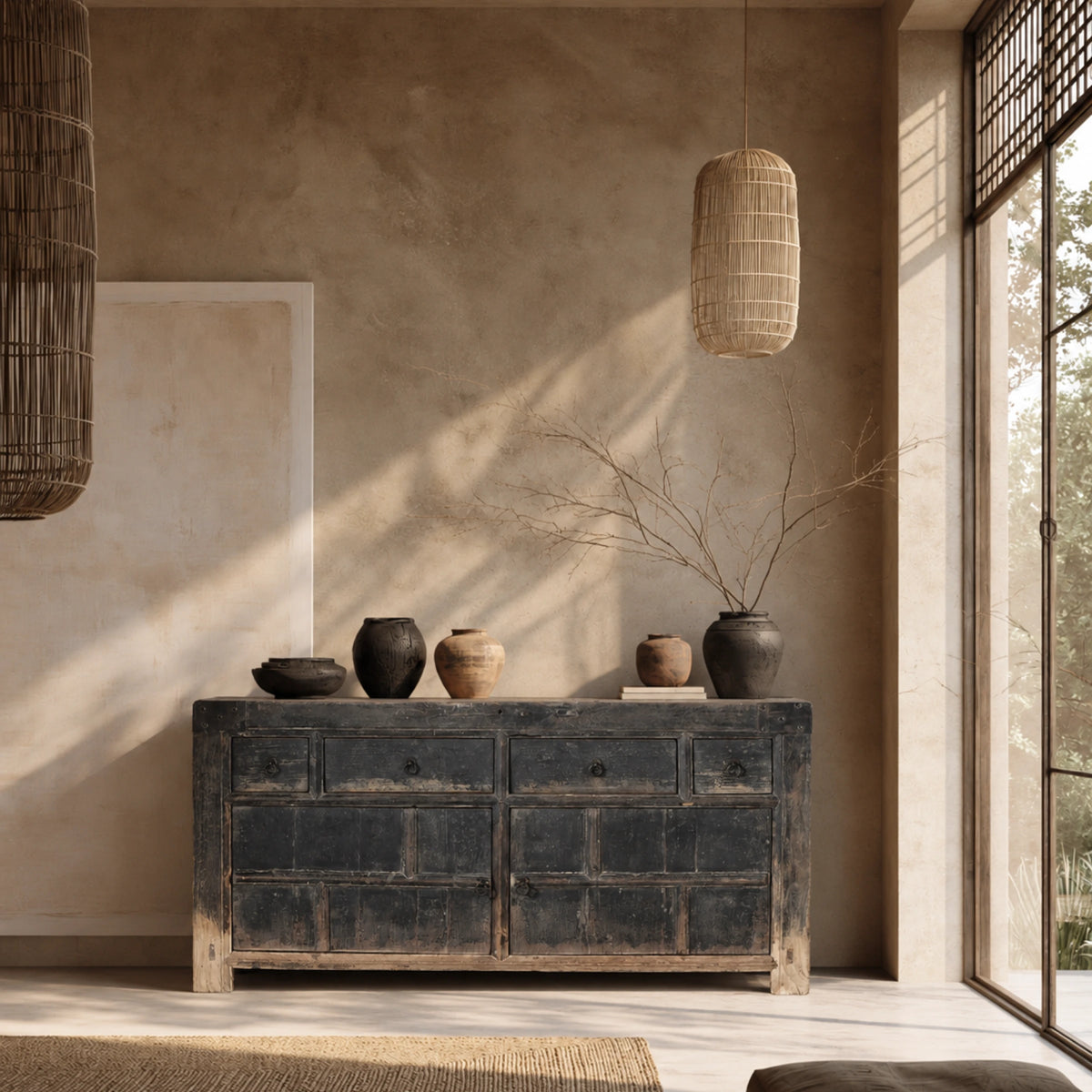
Despite their age, they fit easily into contemporary interiors, and with linen, stone, pale walls or a few handcrafted objects, they blend very naturally into a minimalist or wabi-sabi setting.
But we also like to mix them with much more modern pieces: a contemporary sofa, a graphic lamp or a work of art. There is no need to recreate a traditional Chinese interior. On the contrary, it is often the mix of periods that makes the whole interesting.


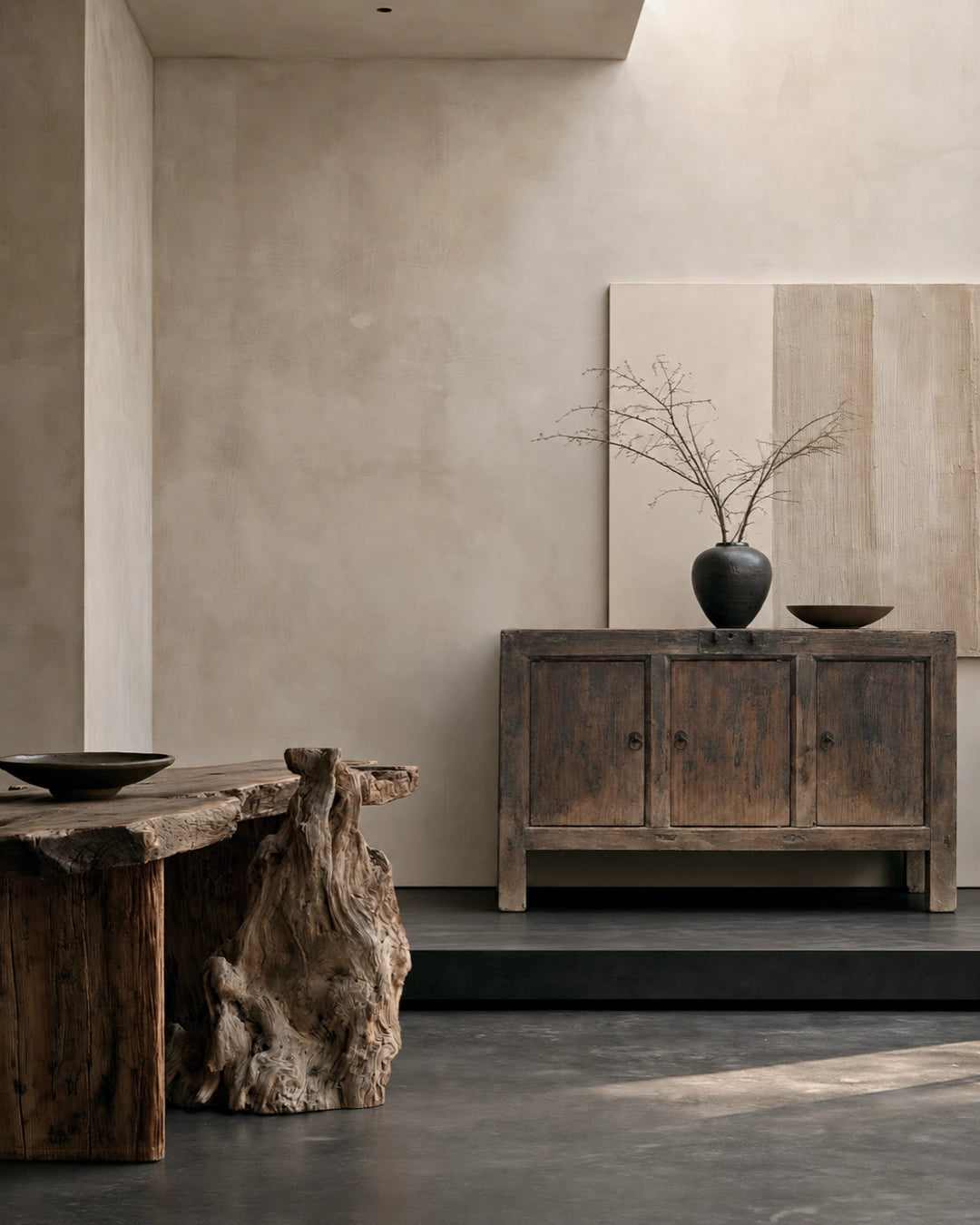
Their generous size also makes them particularly practical pieces: in a dining room, they easily hold crockery and table linen; in a living room, they can serve as a TV unit or hide everything you would rather keep out of sight; and in a large hallway, they offer plenty of storage while instantly giving the space character.
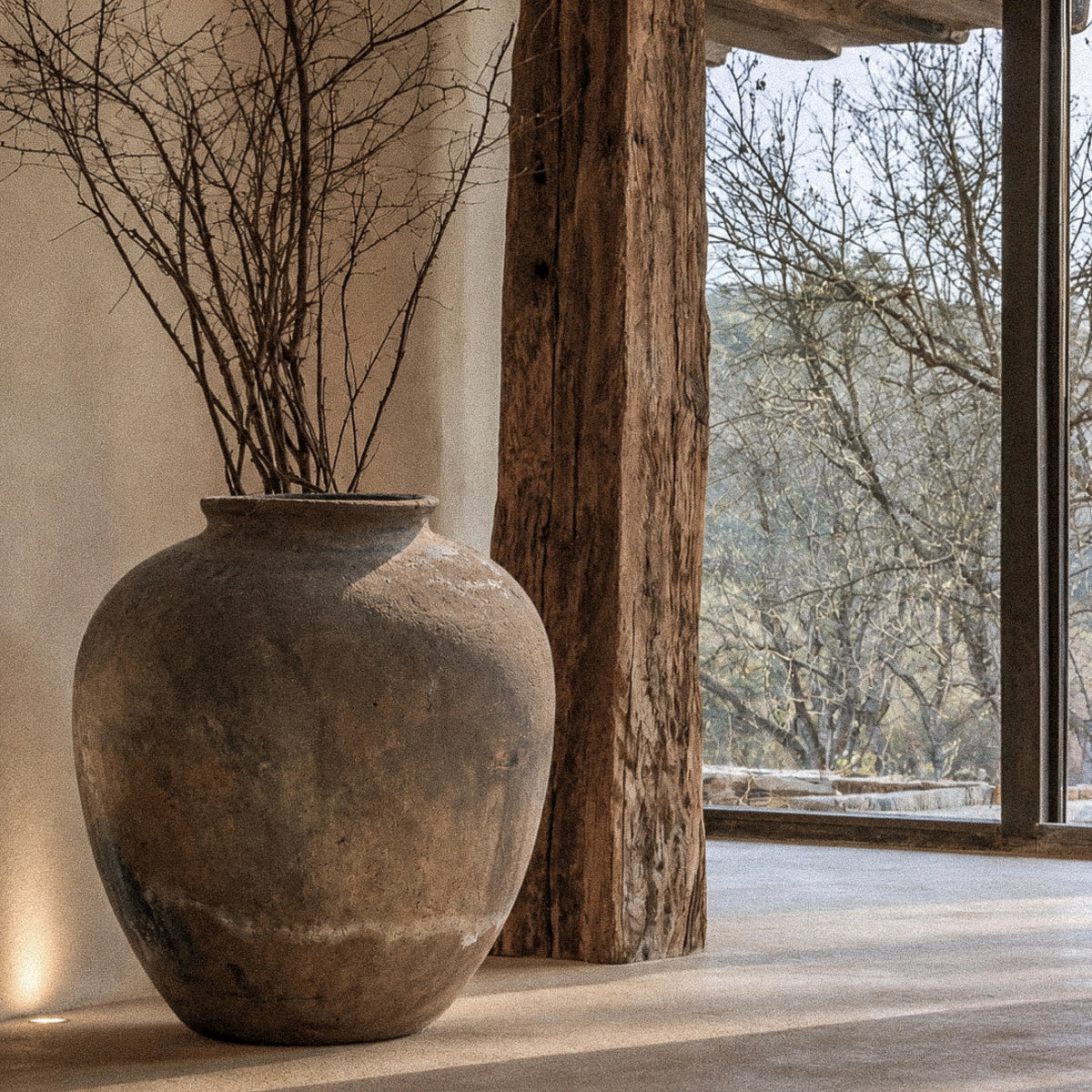
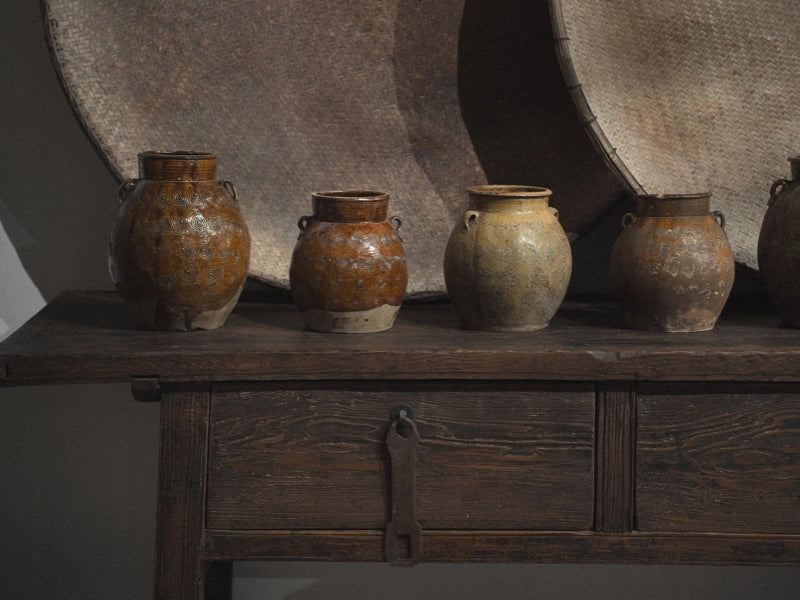
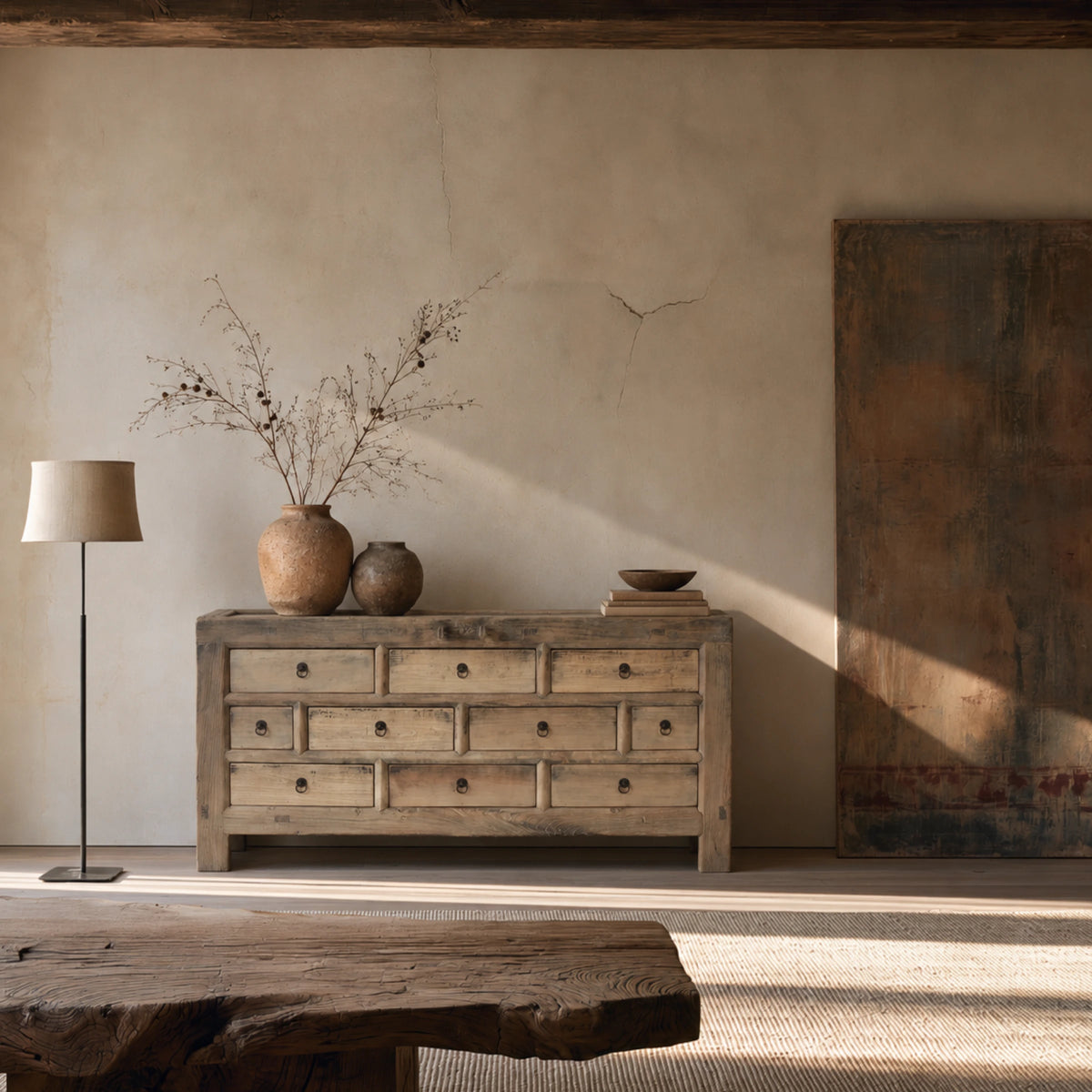
As the piece already has a strong presence, a few objects on the top are enough: a lamp, some pottery, a few books or a large vase.

why choose an old sideboard?
Because an old piece does not tell the same story as a new piece of furniture. When we select our furniture, we are not looking for perfection: we are looking precisely for the details that show it has been lived with.
the wood bears the traces of its use: small irregularities, variations in colour and sometimes repairs made over the years. |
|
an old sideboard is never completely smooth, nor completely regular. It sets you apart, because no one else will ever have the same one as you. |

a new story to write...
This is probably what we love most about these pieces: a chest once used to store grain in China can today become a sideboard in a house in Provence.
It passes through the years, changes country, changes purpose, but keeps the traces of its first life.
Our Qingdao sideboards are all different: dimensions, wood tones, number of doors, patina and marks of time vary from one model to another.
When a piece is sold, we never find exactly the same one again, and that is also why we love old furniture so much.






Frequently asked questions
An old Chinese sideboard is a solid wood piece of furniture that has often had a first life before being adapted to our interiors. Our Qingdao sideboards, for example, were originally large rice storage chests. Restored by craftsmen, they are now transformed into storage furniture while keeping their wood, their patina and many original features.
These large chests were mainly used to store grains such as rice, maize or wheat. They were opened through one or more hatches on top. Their great depth allowed large quantities of food to be stored.
The chests are first restored by craftsmen, then adapted to the way we live today. Doors are cut into the front and reinforced at the back with crossbars, rings are added as handles and shelves can be fitted inside. As the original chests are often very deep, the craftsmen may also take them apart, reduce their depth and then reassemble them.
Elm is a wood traditionally used in Chinese furniture. It is a strong wood, but it is also valued for its grain and the tones it develops over time. On an old Chinese sideboard, its patina, irregularities and signs of use make each piece different.
It varies from piece to piece. Some sideboards keep their old hatches on top, wrought iron plates or rings, studded metal reinforcements on the corners, or the locking system that once allowed a padlock to be fitted. Traces of the Chinese newspaper used to line the inner walls can sometimes even be found inside.
Thanks to their simple lines and natural wood, these sideboards fit easily into a contemporary, minimalist or wabi-sabi interior. They can serve as a sideboard in a dining room, a TV unit in a living room or a large storage piece in a hallway. A few objects on the top are usually enough: a lamp, some pottery, books or a vase.
Our old Chinese sideboards in solid elm are selected piece by piece, then restored by craftsmen before they arrive at Orpaï. Each piece has its own dimensions, wood tones, signs of use and original details. A selection of old Chinese sideboards is currently available on our website.
Read more
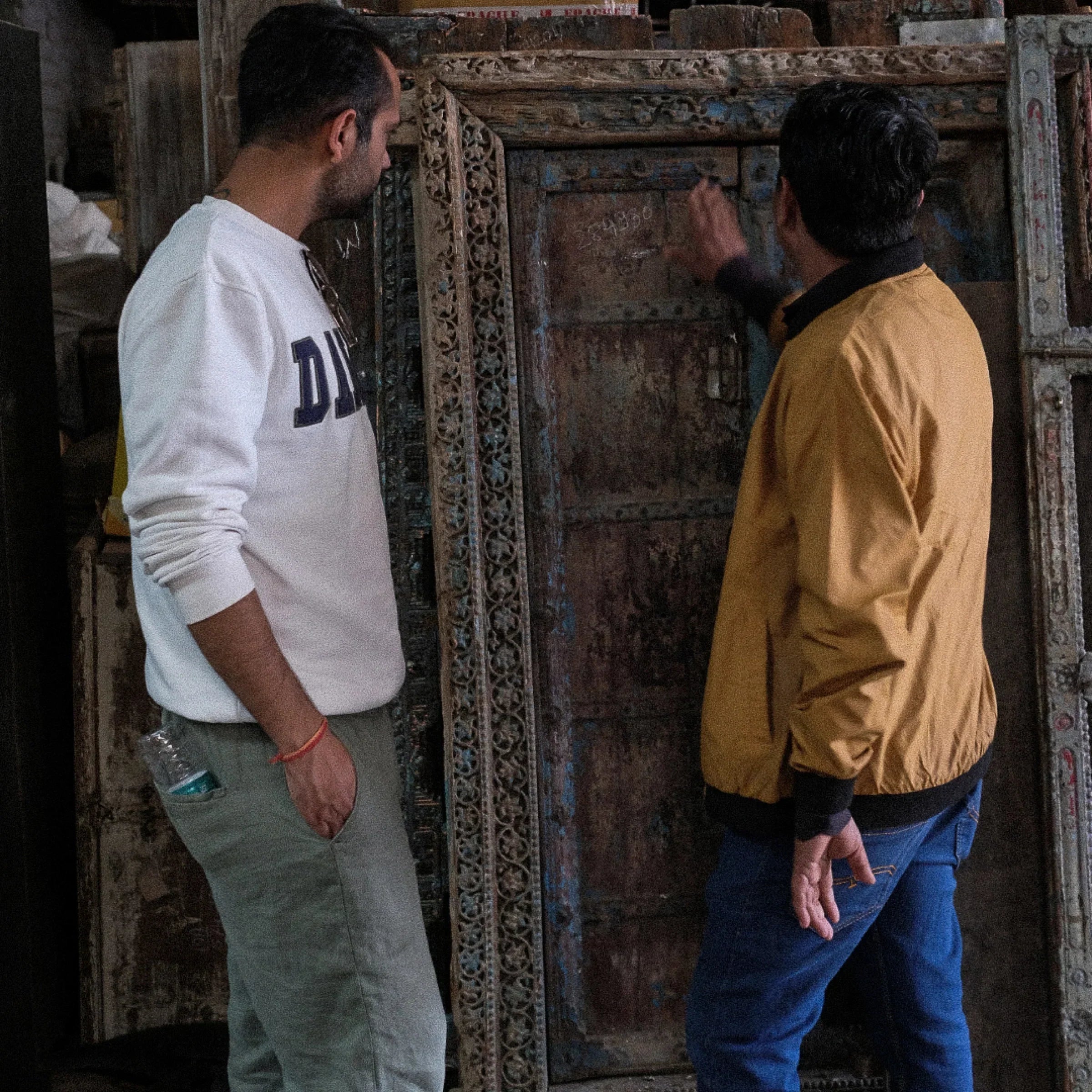
How do we find the old furniture, jars and objects we offer at Orpaï? From India to China by way of Turkey, discover the behind-the-scenes of our sourcing, our travels and the way we select each pi...
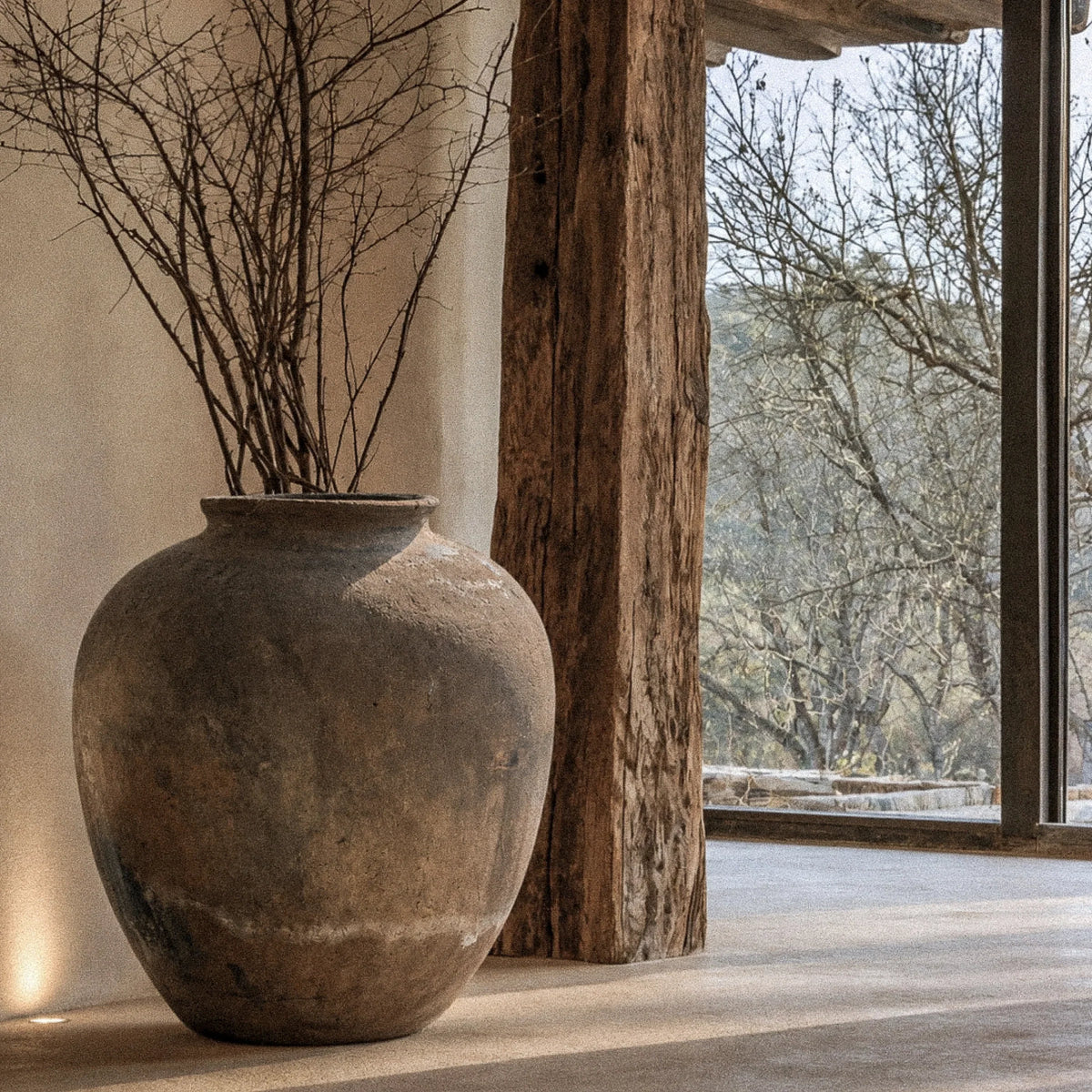
Once used in the Indian countryside to store grain or keep water cool, old jars now find a new place in our interiors and gardens. Discover their history, their uses and our advice for bringing the...