

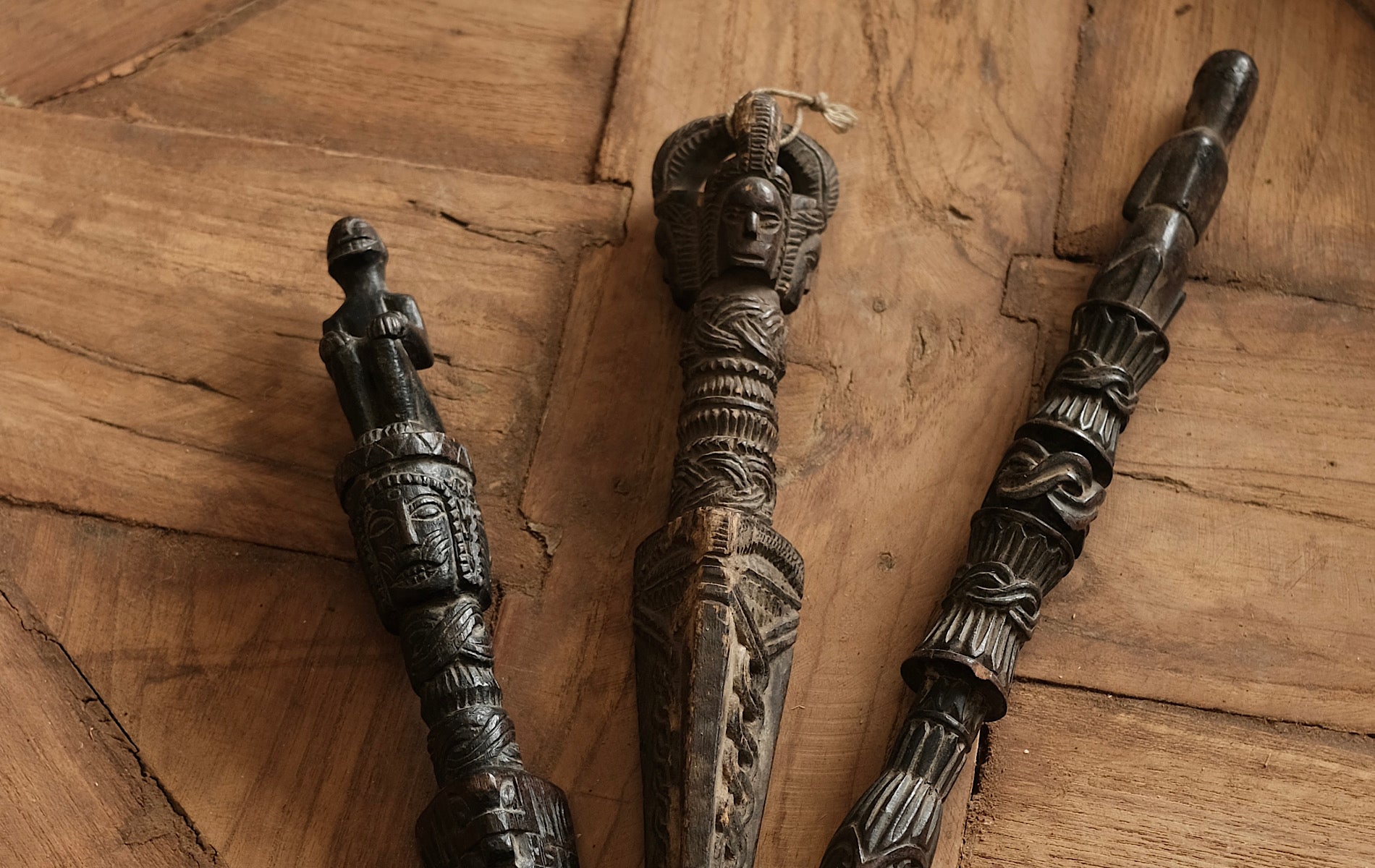
The phurba, a Buddhist ritual dagger
Phurbas are ritual daggers associated with deities of Vajrayana Buddhism. Made up of a blade, a handle and a pommel, these carved daggers are often made of brass and metal, but also of wood, as here. The pommel of a phurba often depicts the three faces of Vajrakila (joyful, peaceful, wrathful), but can also depict the Tibetan snow lion, a stupa... The blade traditionally has three faces that meet at the point. They symbolise the dagger's power to transform the negative energies of the "three poisons": attachment/envy/desire, delusion/ignorance/wrong views, and aversion/fear/hatred.

Technically, in rituals the phurba is meant to pierce the earth vertically. Phurbas are known to symbolise peace and stability, and are used to ward off demons. Padmasambhava is considered the inventor of the phurba. In the 8th century, Padmasambhava is said to have used the phurba to bless the ground on which he founded Samye Monastery. In Tibet, tents have always held a special place because nomadic culture is very present there, and driving tent pegs into the ground could be seen as a sacrifice of the earth. The shape of the phurba may therefore derive from the pegs used to fix these tents to the ground. In rituals, only shamans and certain other individuals are allowed to use a phurba. The blade of these magic daggers is not really sharpened, as its purpose is spiritual rather than destructive.

Read more
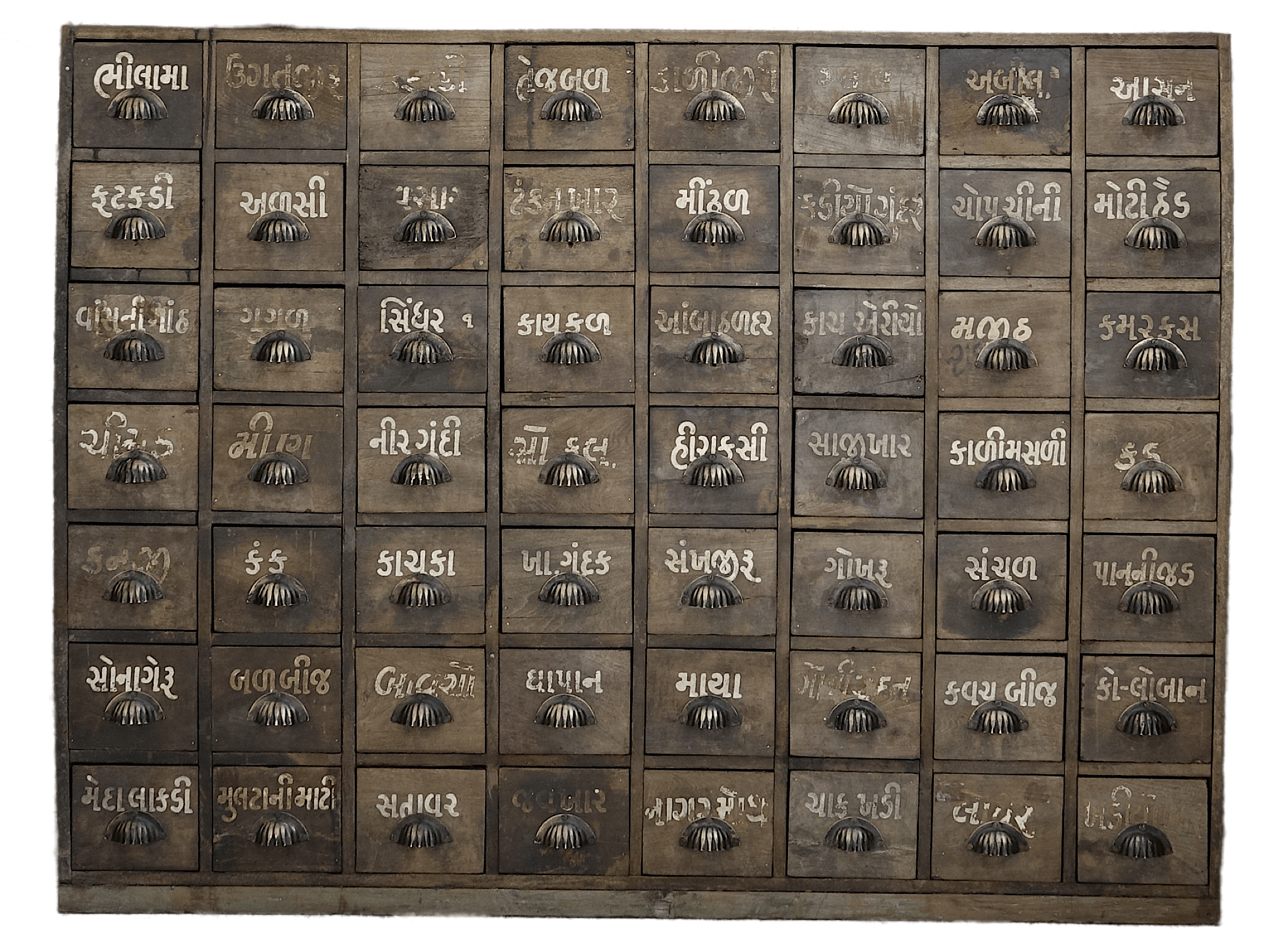
During our last trip to India in February, we came across a pair of apothecary cabinets in very good condition, from the same shop or workshop. Each drawer is marked with a painted inscription, p...
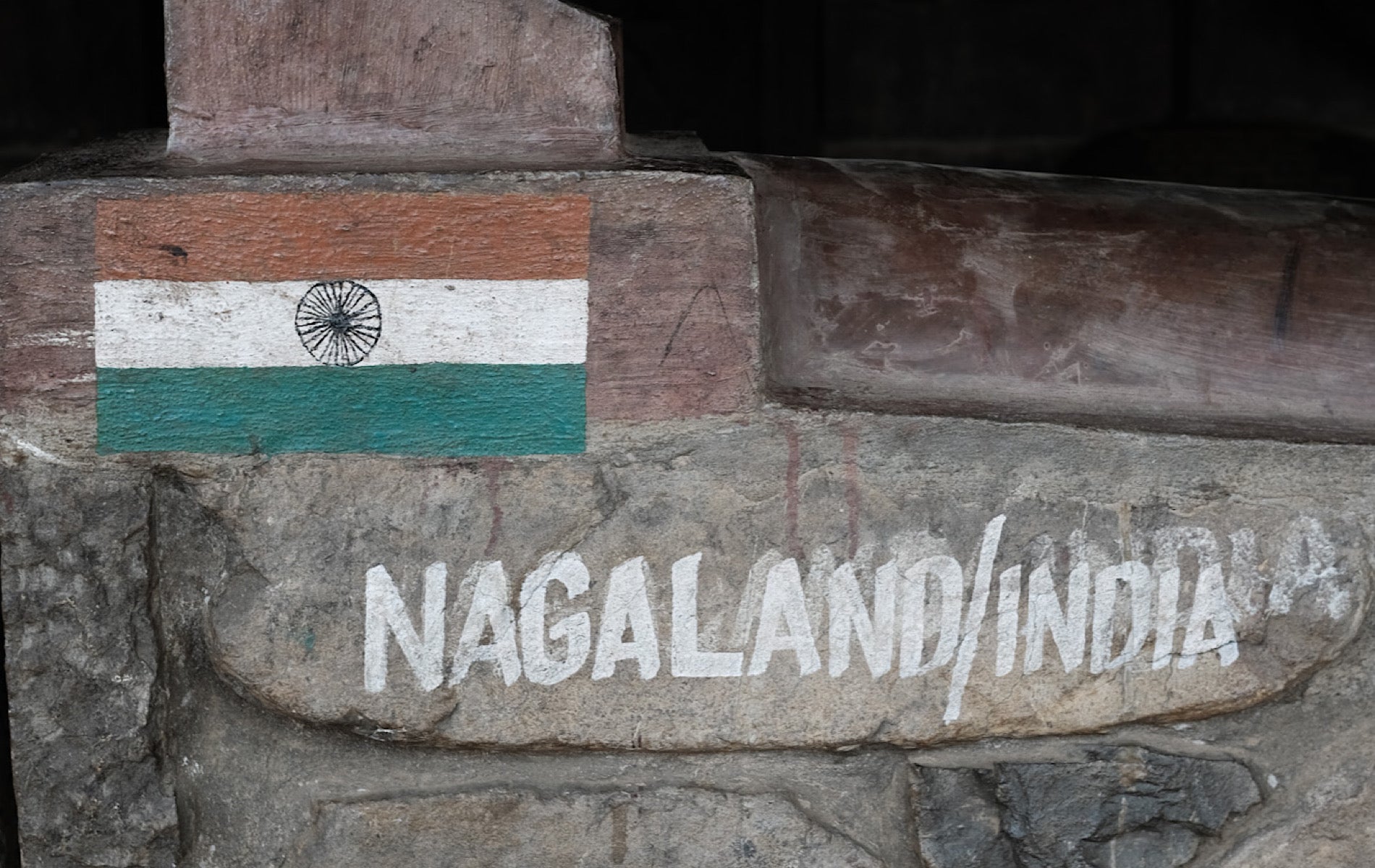
Nagaland is one of the smallest states in India, located in the north-east of the country. It is one of the "Seven Sisters" (Arunachal Pradesh, Assam, Meghalaya, Manipur, Mizoram, Nagaland and Trip...
Leave a comment
All comments are moderated before being published.
This site is protected by hCaptcha and the hCaptcha Privacy Policy and Terms of Service apply.