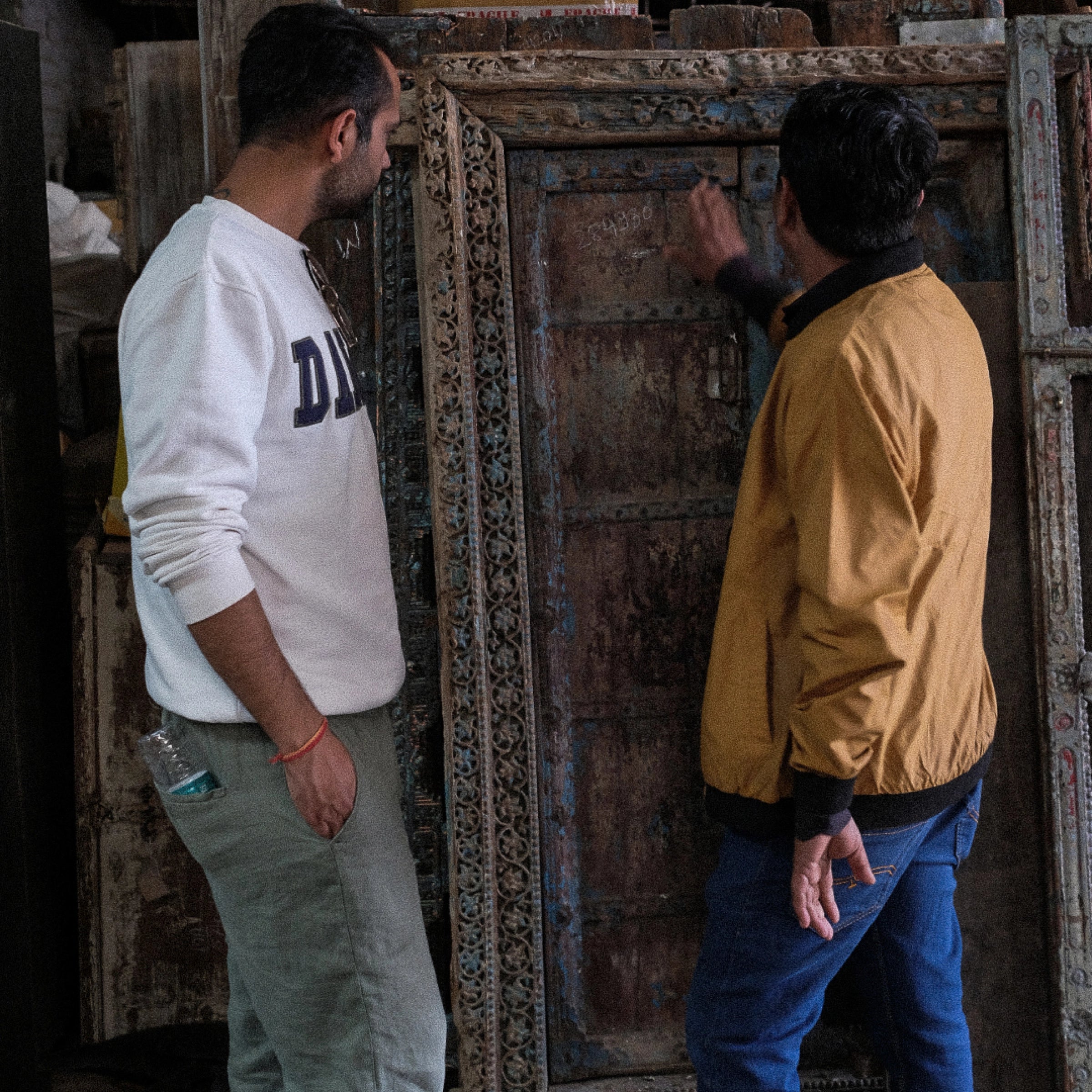
Around an Indian table: objects and culinary traditions

Today, when we think of Indian cuisine, it is above all its flavours that come to mind: the scent of spices, simmering curries… But behind these dishes lie gestures, habits and utensils handed down from generation to generation.
In fact, it is hard to speak of just one Indian cuisine. Between the plains of Rajasthan, the Himalayan mountains and the tropical regions of Kerala, the ingredients, recipes and ways of cooking vary enormously.
One thing is certain: in traditional kitchens, wood, stone and terracotta long held an essential place. Simple materials, worked by hand by craftsmen, that were used every day.
At Orpaï, we have found several of these old objects. Before joining our interiors as decorative pieces, they were used to prepare countless meals. So, to better understand their history, let us step into Indian kitchens for a moment.

Parat: the Indian tray for kneading bread dough
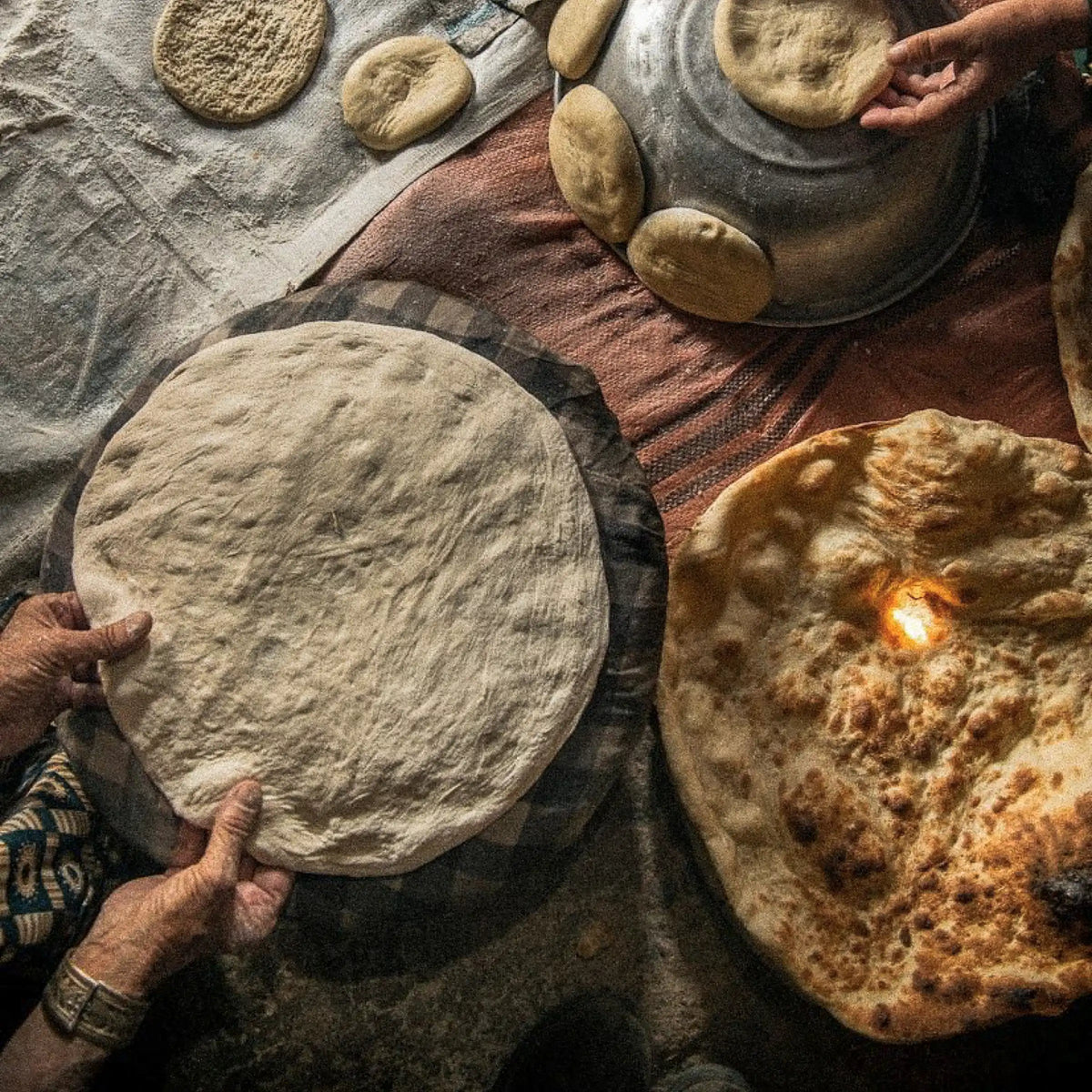
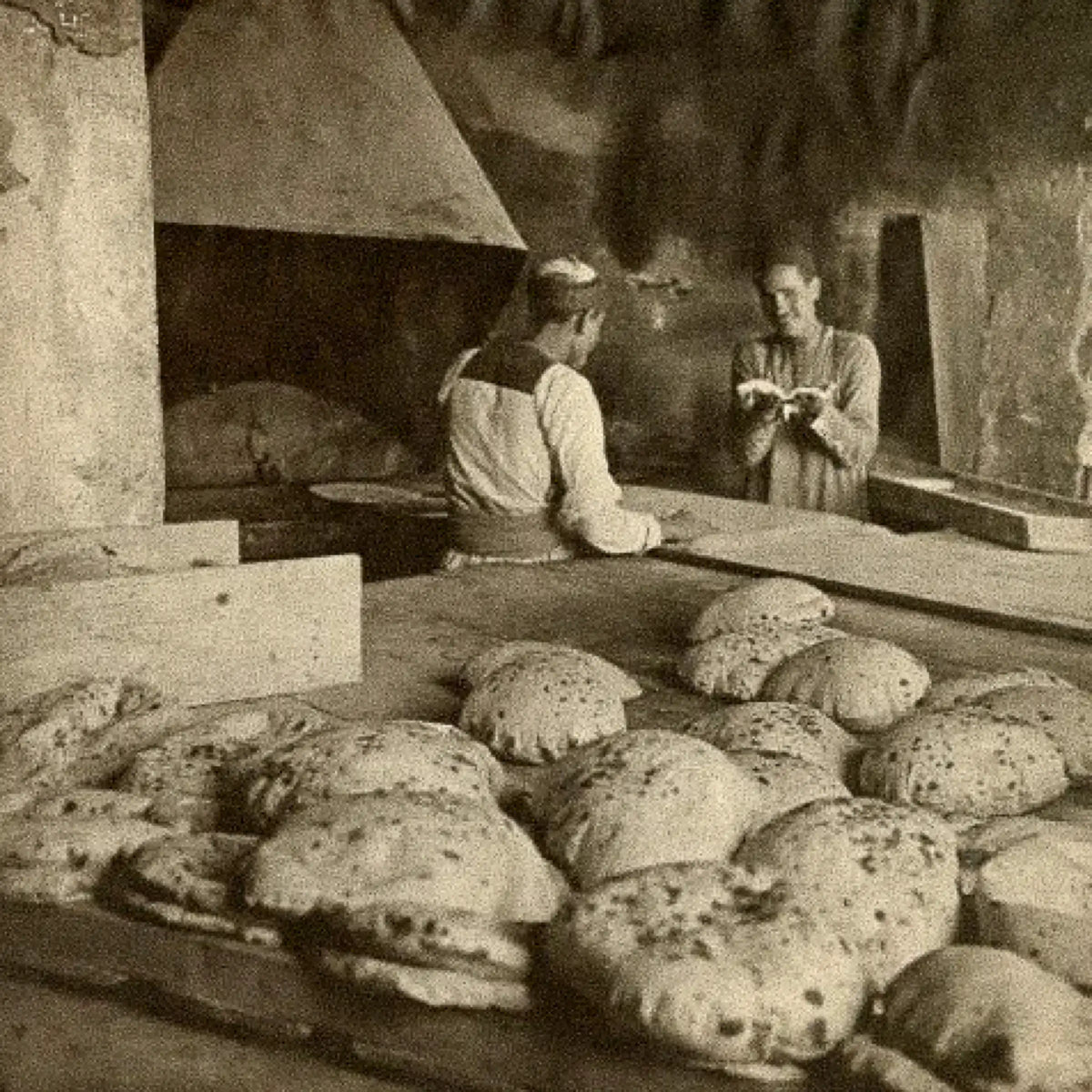
In much of northern India, it is hard to imagine a meal without bread. Chapatis, rotis, parathas… These flatbreads accompany vegetables, lentils and dishes in sauce. And their preparation often begins with something very simple: mixing flour and water.
For this, a large hollow tray called a “parat ” is used. Traditionally, these trays could be made from different materials: wood, stone, metal…
Our wooden Parat trays, hand-carved from solid wood, were among these utensils. Their wide, slightly hollowed shape was used to prepare bread dough.
Wood was not the only material used in Indian kitchens, however. In rural households, stone also played an important role, whether for grinding, crushing or preparing ingredients.
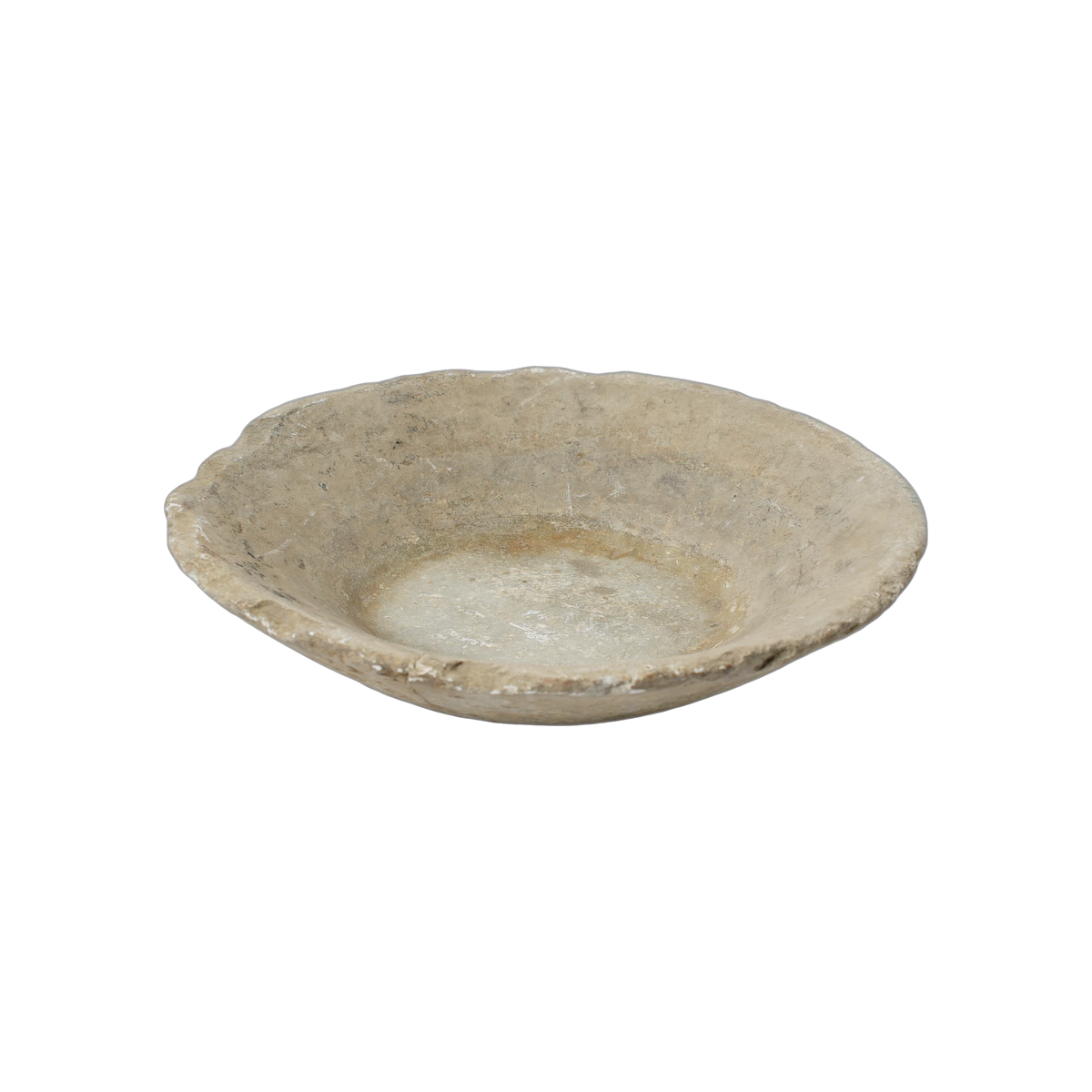
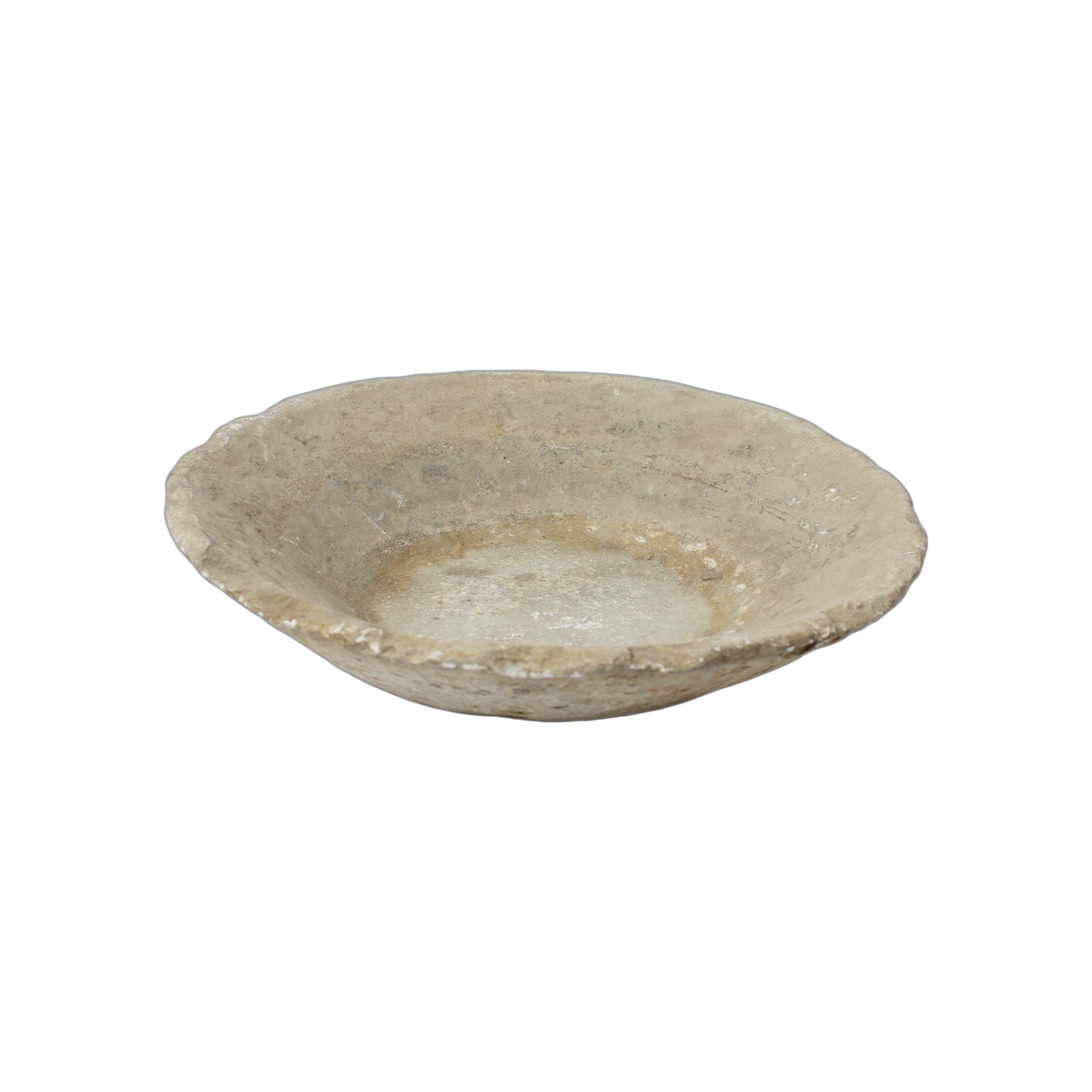
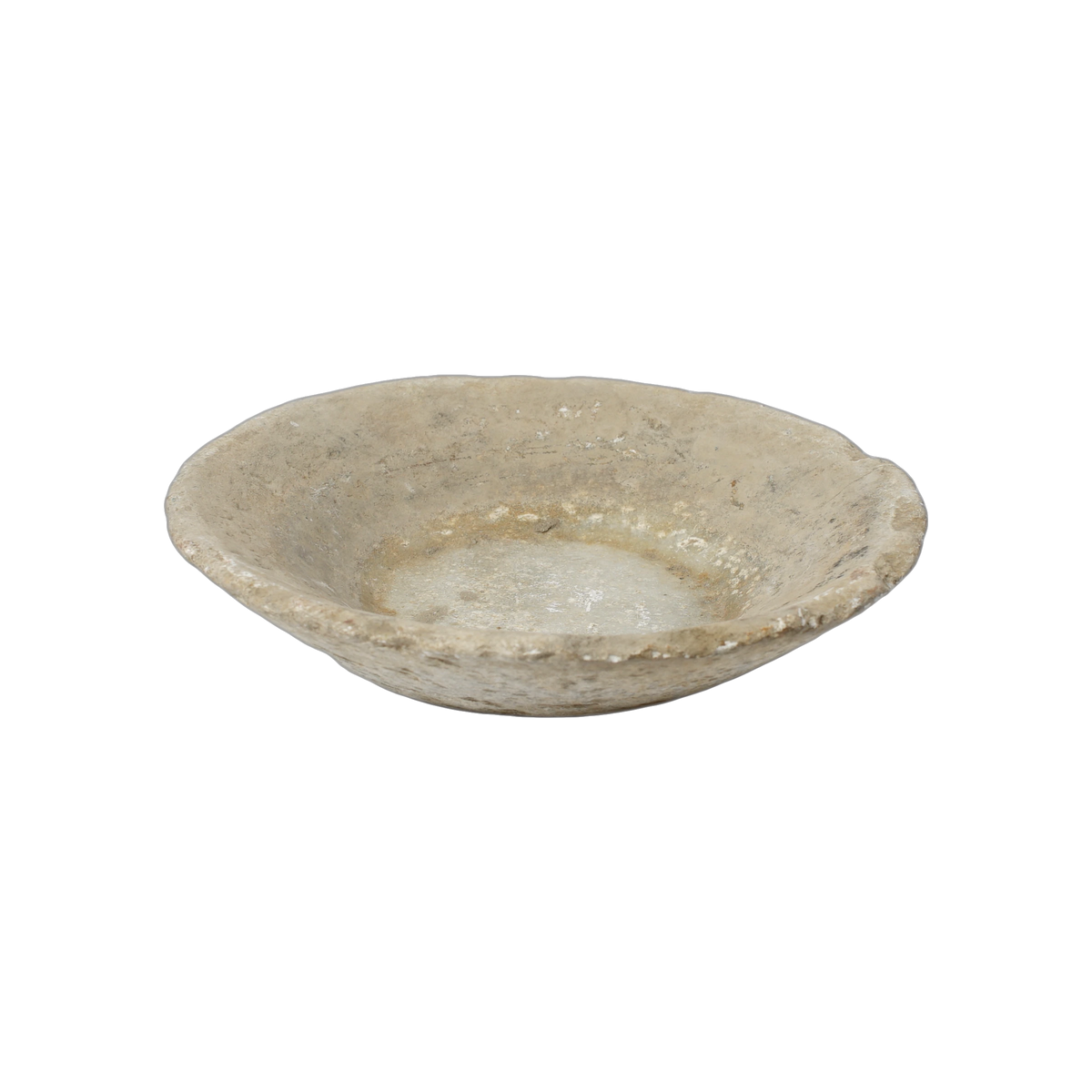
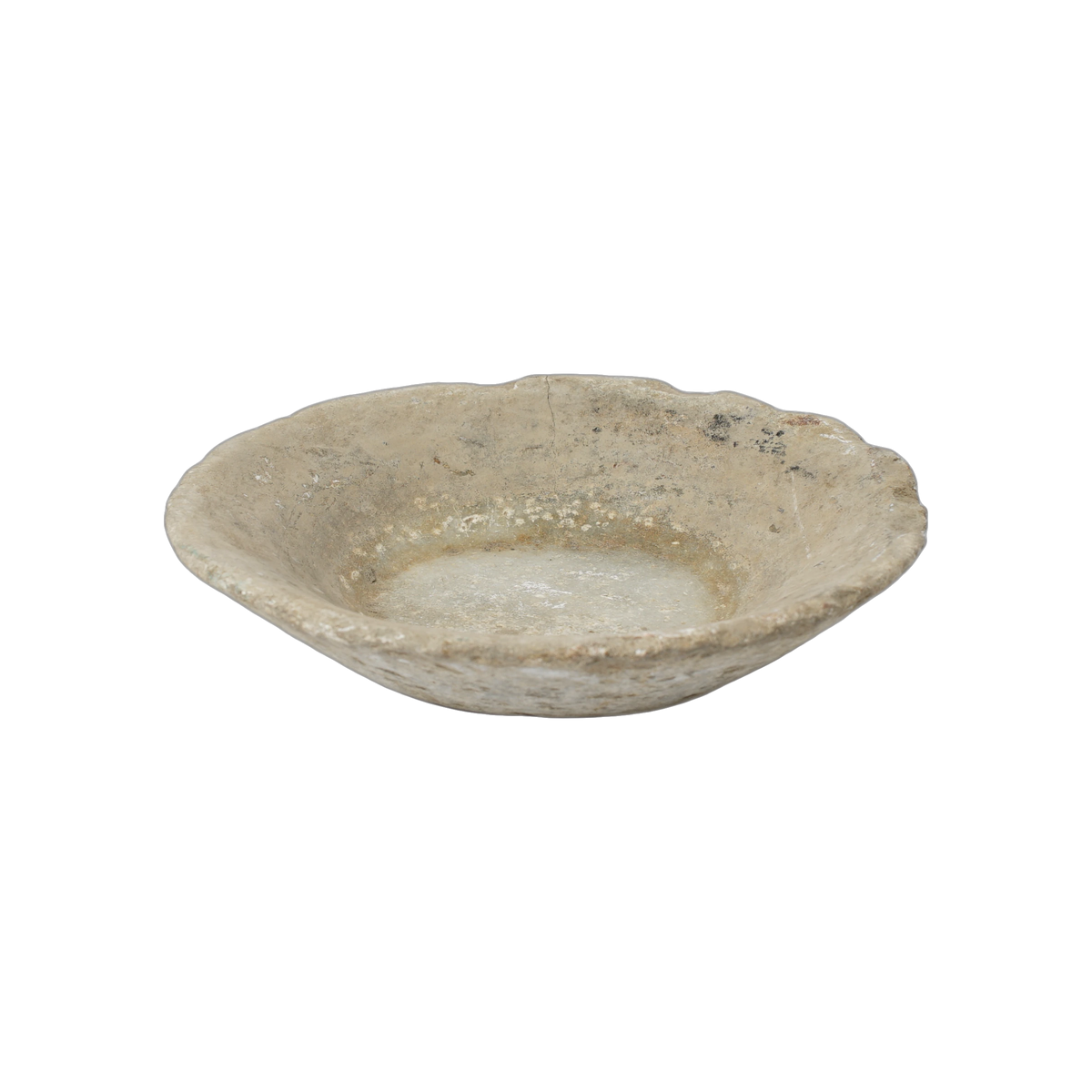
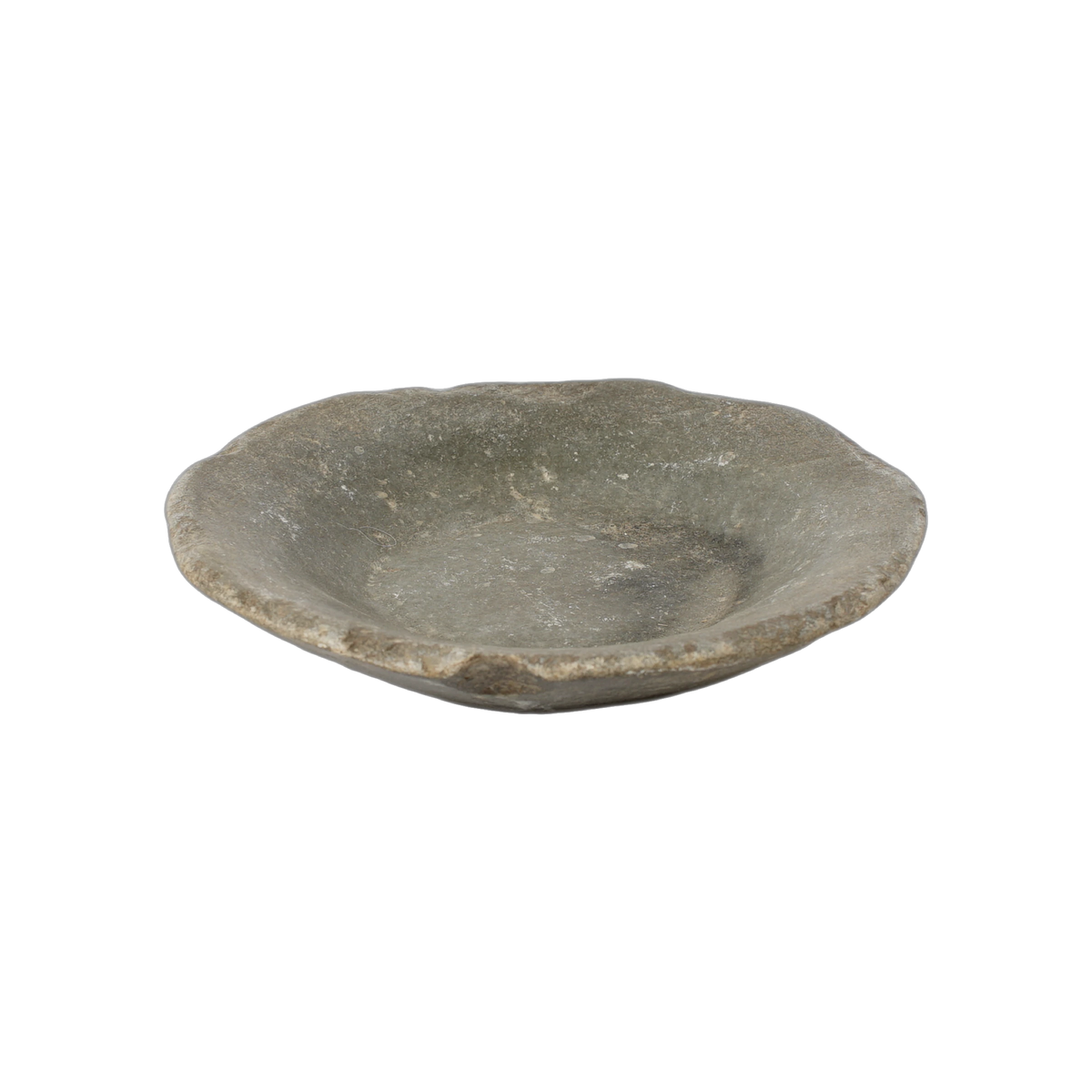
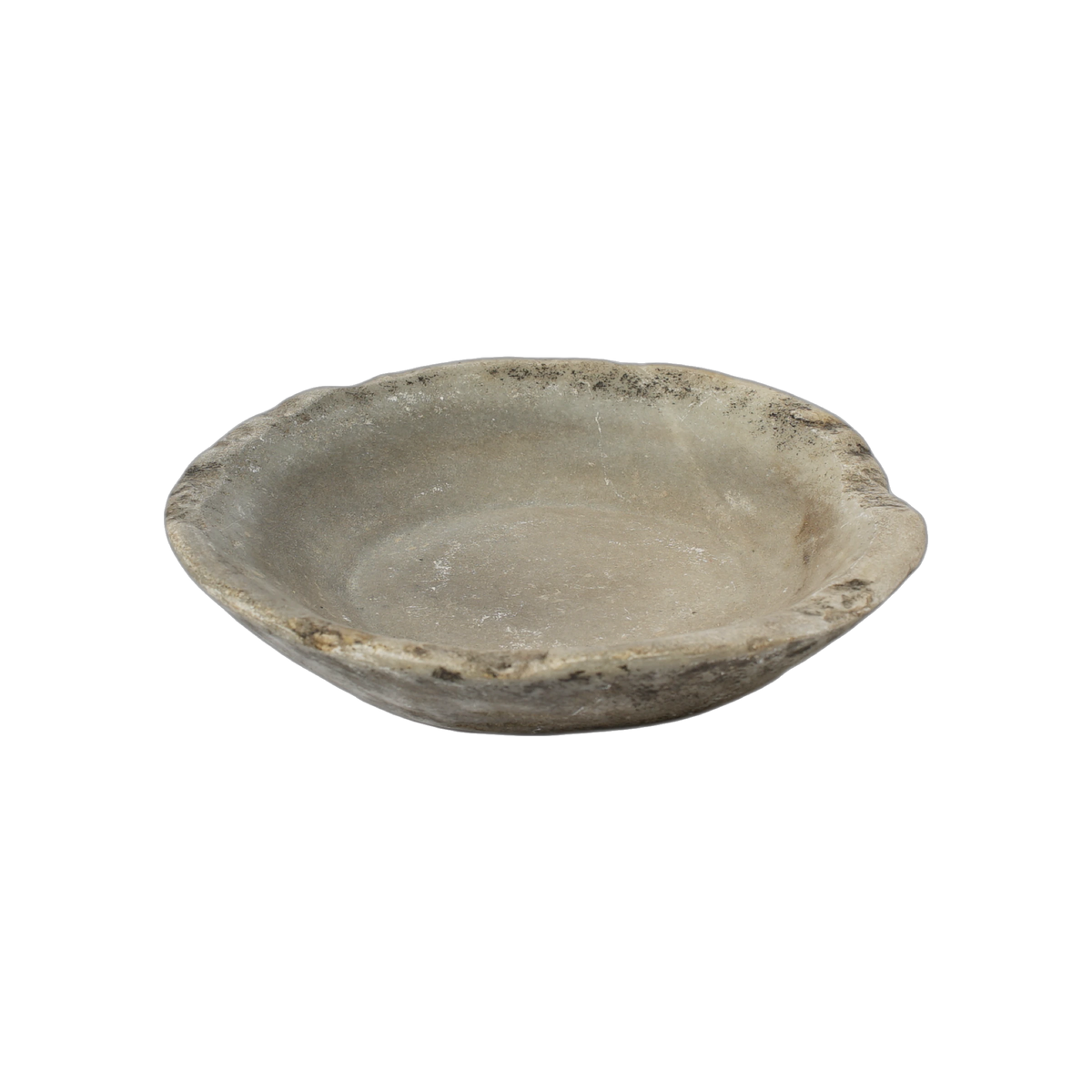
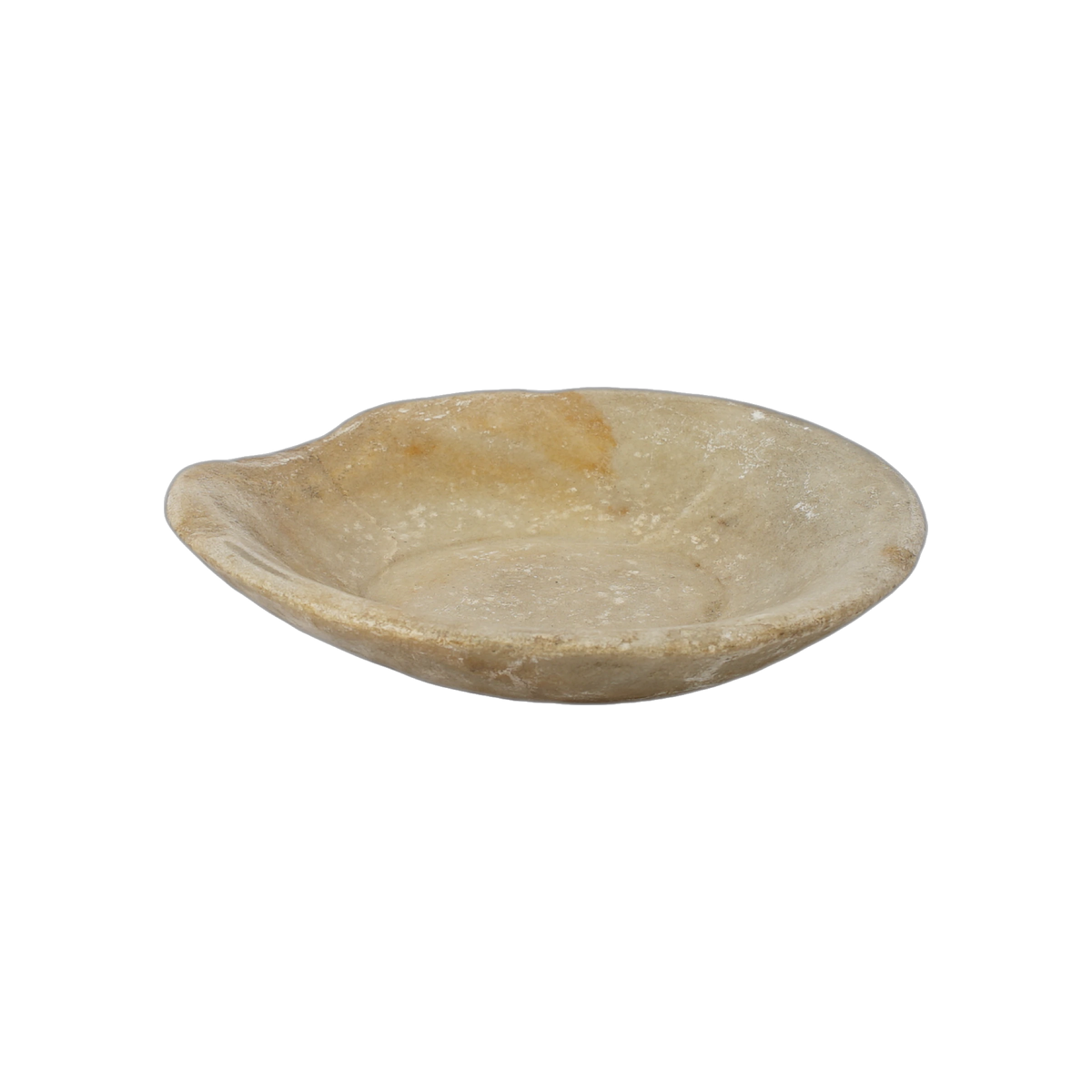
Some old trays, like our marble Parat trays, entirely hollowed out by hand, could be used both for preparing food and for serving it.

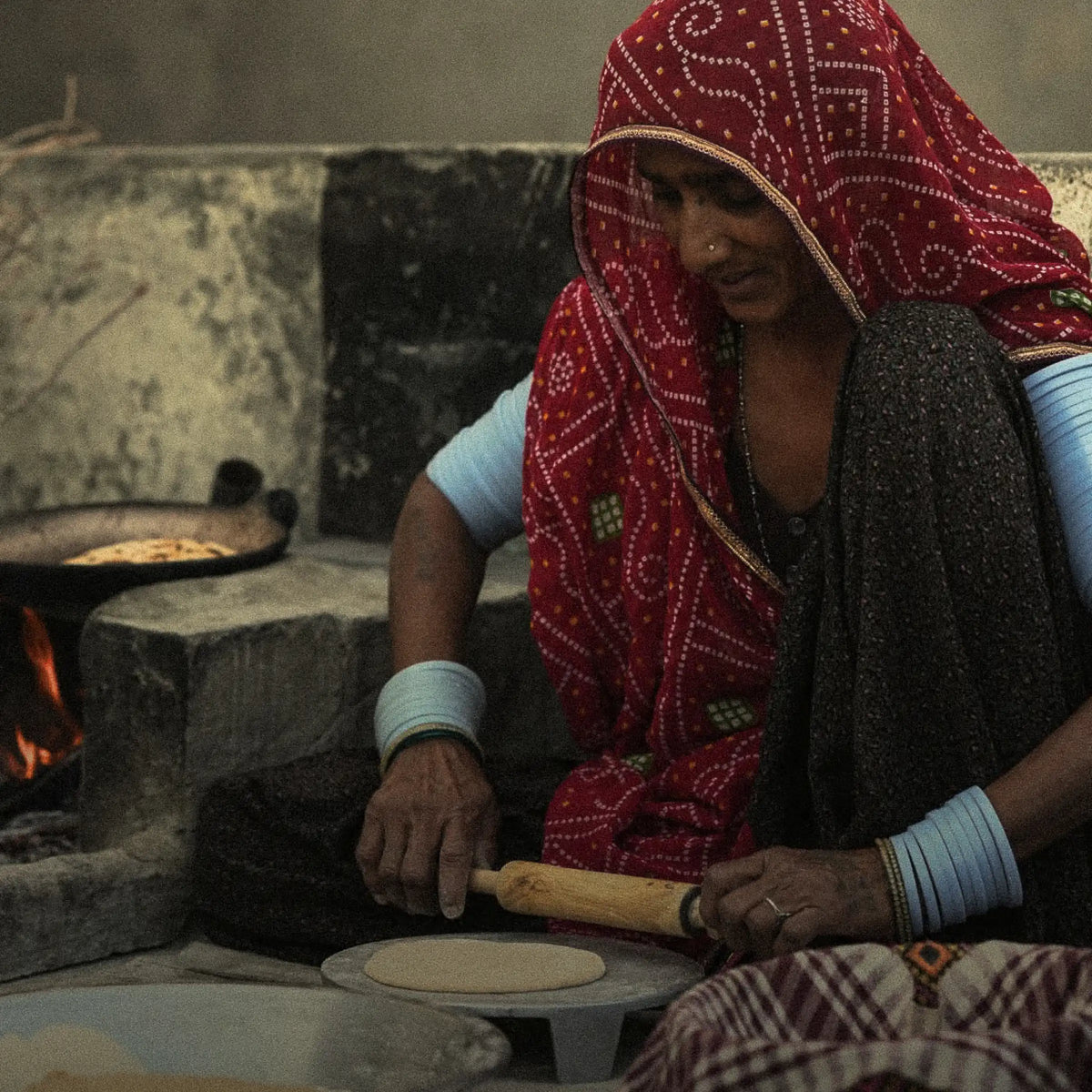
Once the dough is ready, one important step remains: shaping it. In many Indian households, a small round board on legs called a “chakla” (made of wood or stone) and a rolling pin called a “belan” are used for this. The two go together: the board serves as a base and the rolling pin is used to roll out each ball of dough. Our old hand-carved chapati boards from northern India were used for this purpose. The principle is simple: you take a portion of dough, roll it out into a disc, then place it on a hot, slightly curved griddle called a “tawa”.
A rather amusing detail: when it is well prepared and properly cooked, the bread can puff up with the steam trapped inside. In some regions, it is then called “phulka”, a name that refers precisely to this characteristic.
And contrary to what you might think, not all Indian breads are made the same way. For example, naan is made from white flour and traditionally baked in an oven called a “tandoor”, whereas chapatis are made from wholemeal flour and usually cooked on the tawa.
Even today, chapati boards and rolling pins remain very common utensils. Their shapes have of course evolved, as have the materials, but the gesture has changed little.
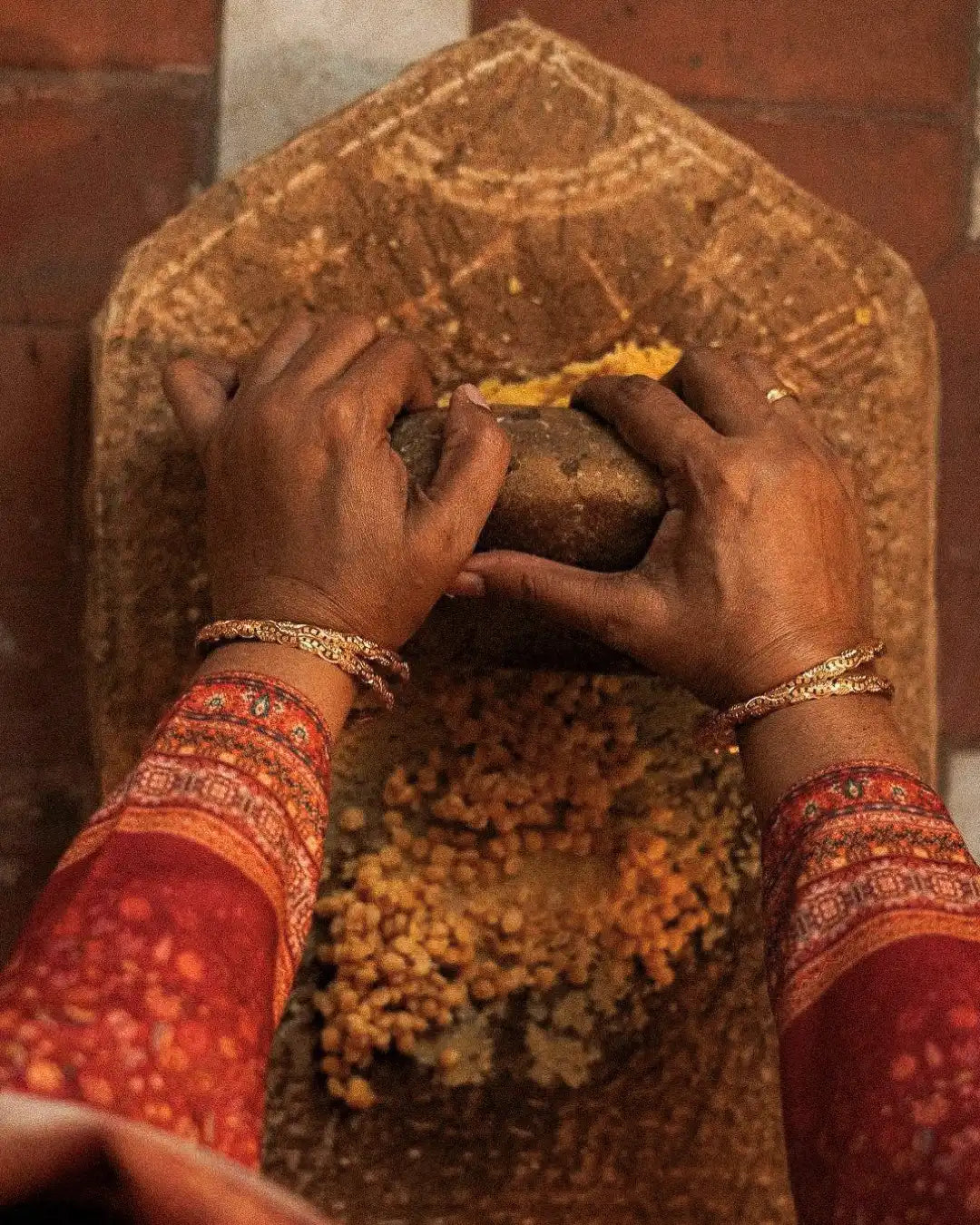
It is impossible to talk about Indian cuisine without talking about spices. Cumin, coriander, cardamom, fenugreek, mustard seeds… Depending on the region and the recipe, spices are used whole, crushed, roasted or ground. Before electric appliances arrived, much of this preparation was done by hand with mortars and grinding stones.
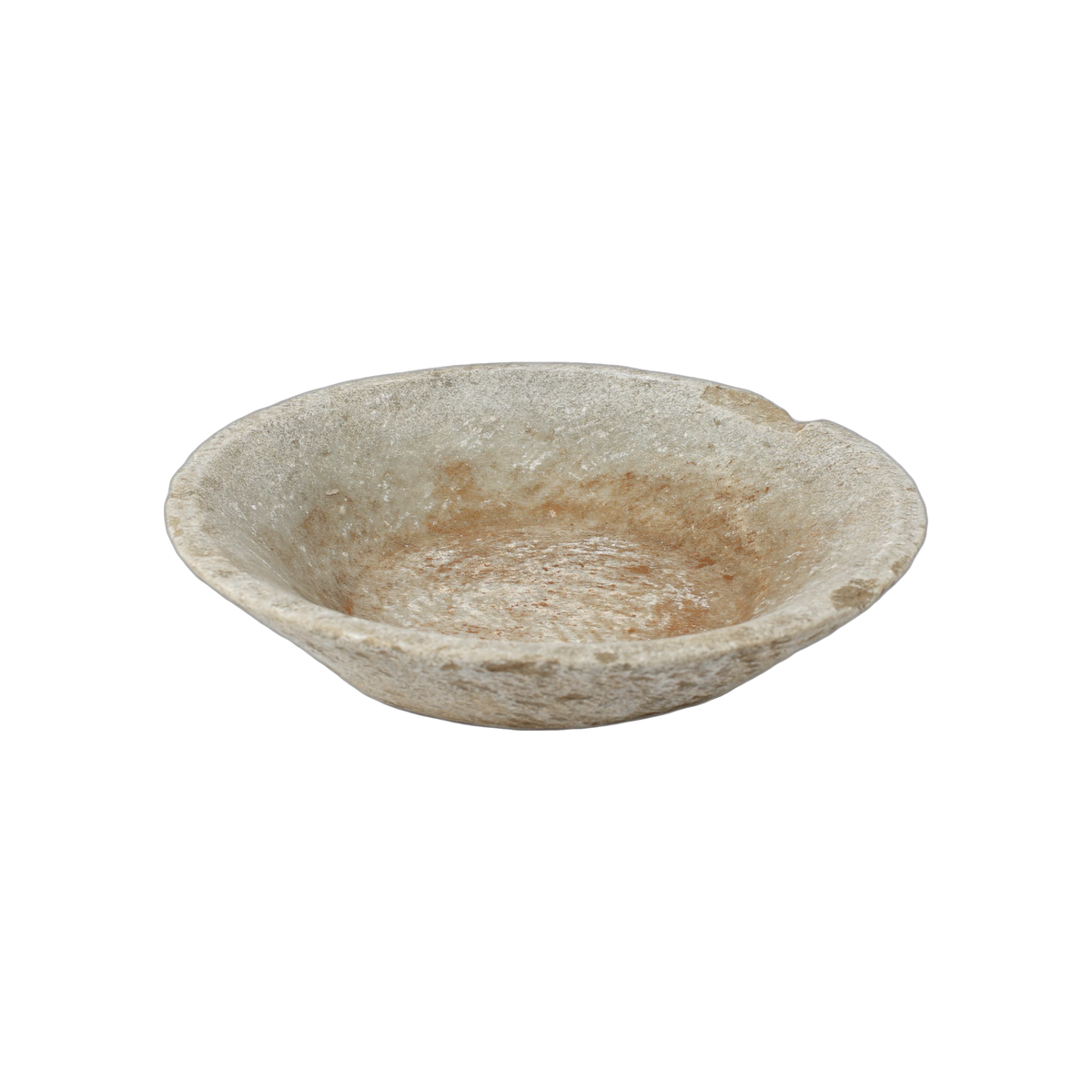
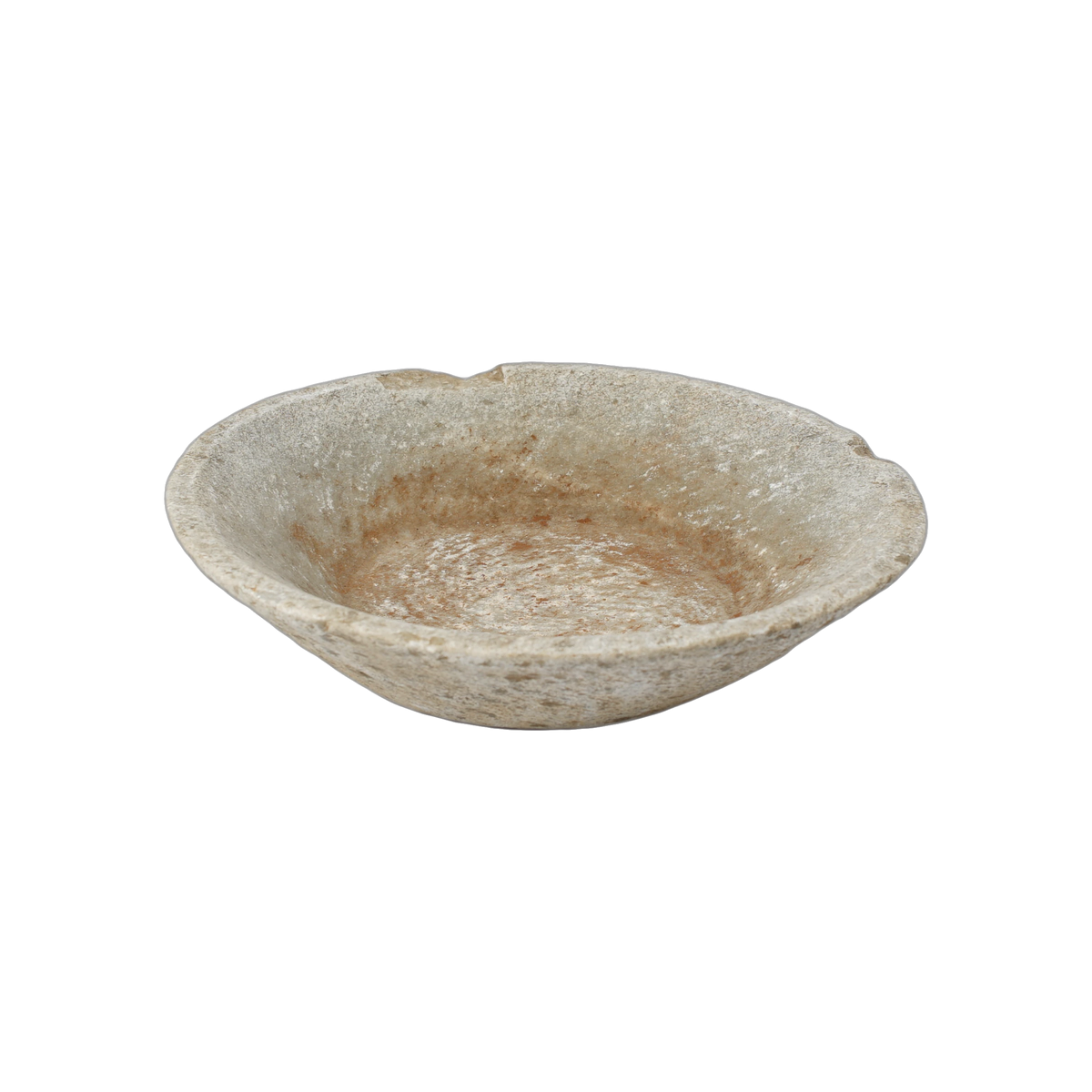
Our Kharal stone mortars, hand-carved in India, were used in rural households to crush spices and grains with a pestle, also made of stone. This work matters: a freshly crushed spice does not release quite the same aromas as one ground long ago. There is also a very widespread technique in Indian kitchens called “tadka”, which consists of briefly frying spices in hot oil or ghee. This “flavoured oil” can then serve as the base of a dish or be added at the end of cooking.
These mortars are not only used for spices. Indians are also fond of a variety of sauces and condiments called “chutneys” that accompany dishes. They are made from fruit or vegetables, garlic and spices, and liven up dishes with a sweet-and-sour or spicy flavour, because in India, you can never have too many spices.
Today, blenders and electric grinders have of course found their place in Indian kitchens. But traditional mortars are still used in some households, particularly in more rural areas.
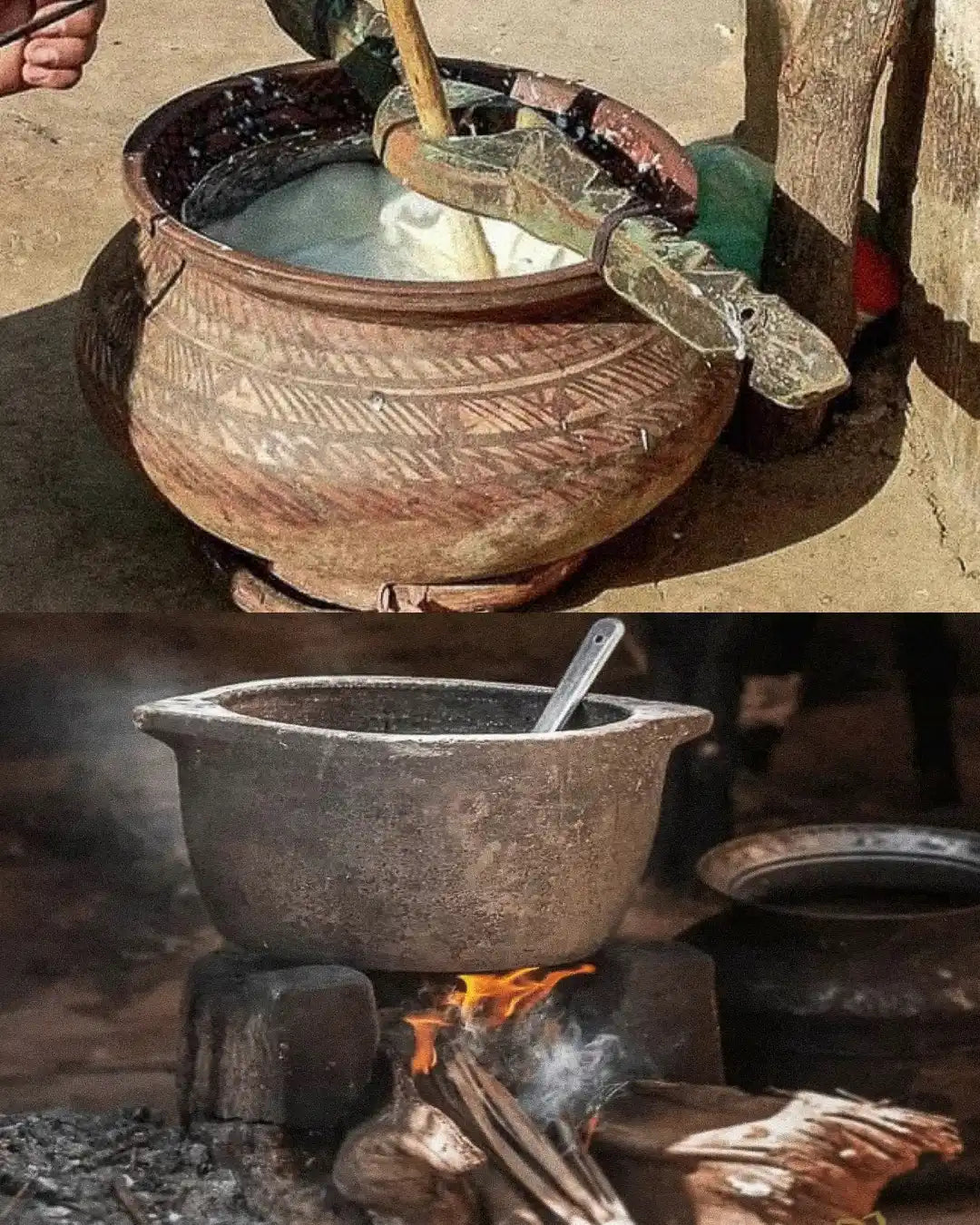
For a long time, in many rural households, dishes were prepared over fires fuelled by wood or other locally available fuels. Terracotta or stone vessels were used for this.
In the villages of northern India, potters made clay vessels specifically intended for cooking. Our Gaon pots are examples of these. These terracotta pots were used to cook everyday dishes directly over the fire.
In the south of the country, particularly in Tamil Nadu and Kerala, there were also vessels made from a particular stone: steatite, also known as soapstone. Some of these vessels are known as “kalchatti ” and were used to simmer curries directly over the flame.
On some of our pieces, you can still see the blackened marks left by the fire at the base of the vessel. Marks that tell the story of their former use rather well.
These cooking techniques were found not only in homes but also in temples. In Puri, in the state of Odisha, the kitchen of the Jagannath temple is known in particular for preparing mahaprasad, a ritual meal then shared with worshippers, in earthenware pots.
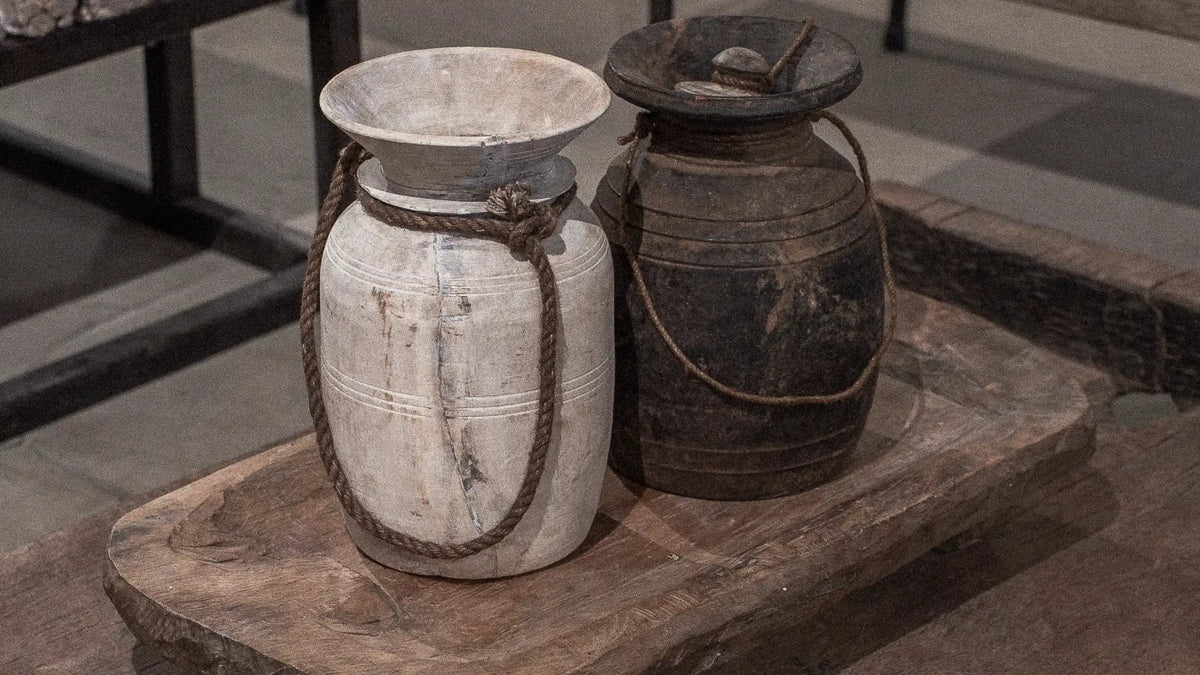
The art of Indian cooking is not only about preparing meals, but also about finding ways to preserve ingredients.
Milk in particular held an important place in many Indian households; it was drunk as it was (litres and litres of chai, the spiced Indian tea) but was also used to make products such as yoghurt or ghee. Ghee is not well known in Western societies; it is a fat obtained by gently heating butter to remove the water and milk solids. This produces a butter that keeps longer than ordinary butter, an important advantage at a time when not every household had a refrigerator.
Ghee is still widely used in India today for cooking, but also to accompany rice, warm breads or certain sweet dishes. A dish cooked in ghee is considered more upmarket than one cooked in plain oil, for example.
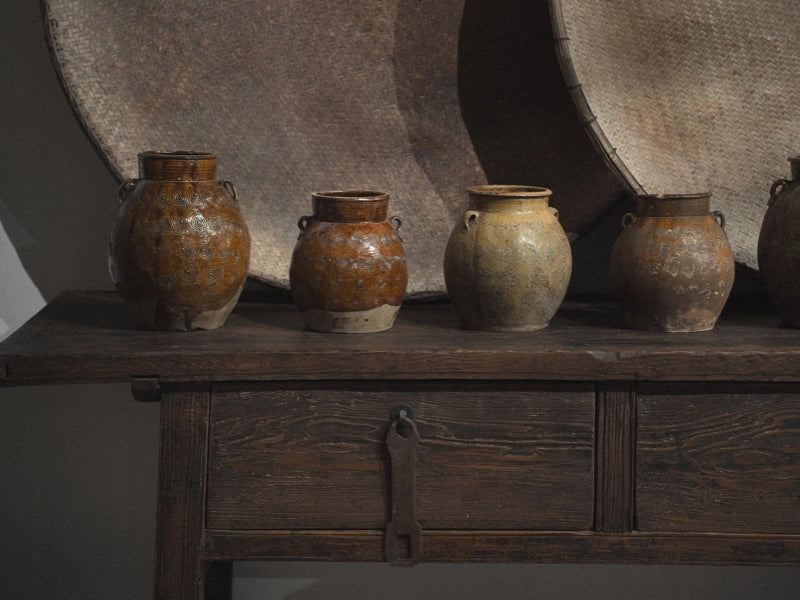
In the Himalayan regions, ghee and milk were stored in containers once made from solid wood, turned by hand. This is the case with our Tosh and Gala pots, which come from northern India.
How to bring an Indian jar into your decor?
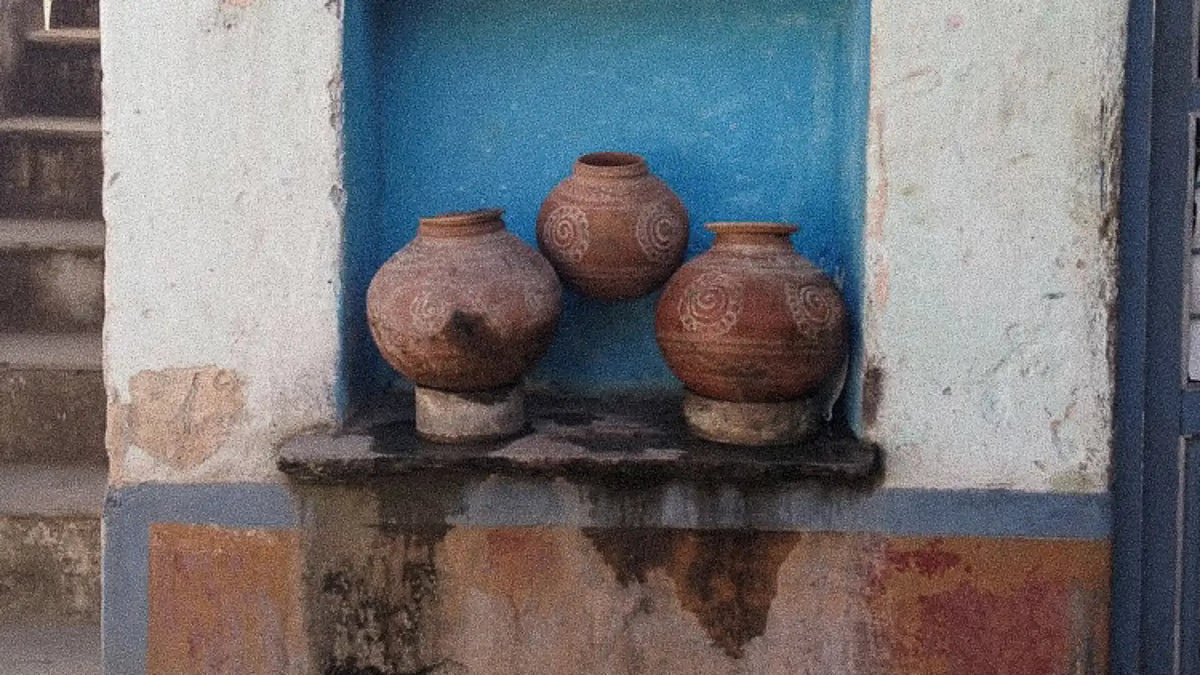
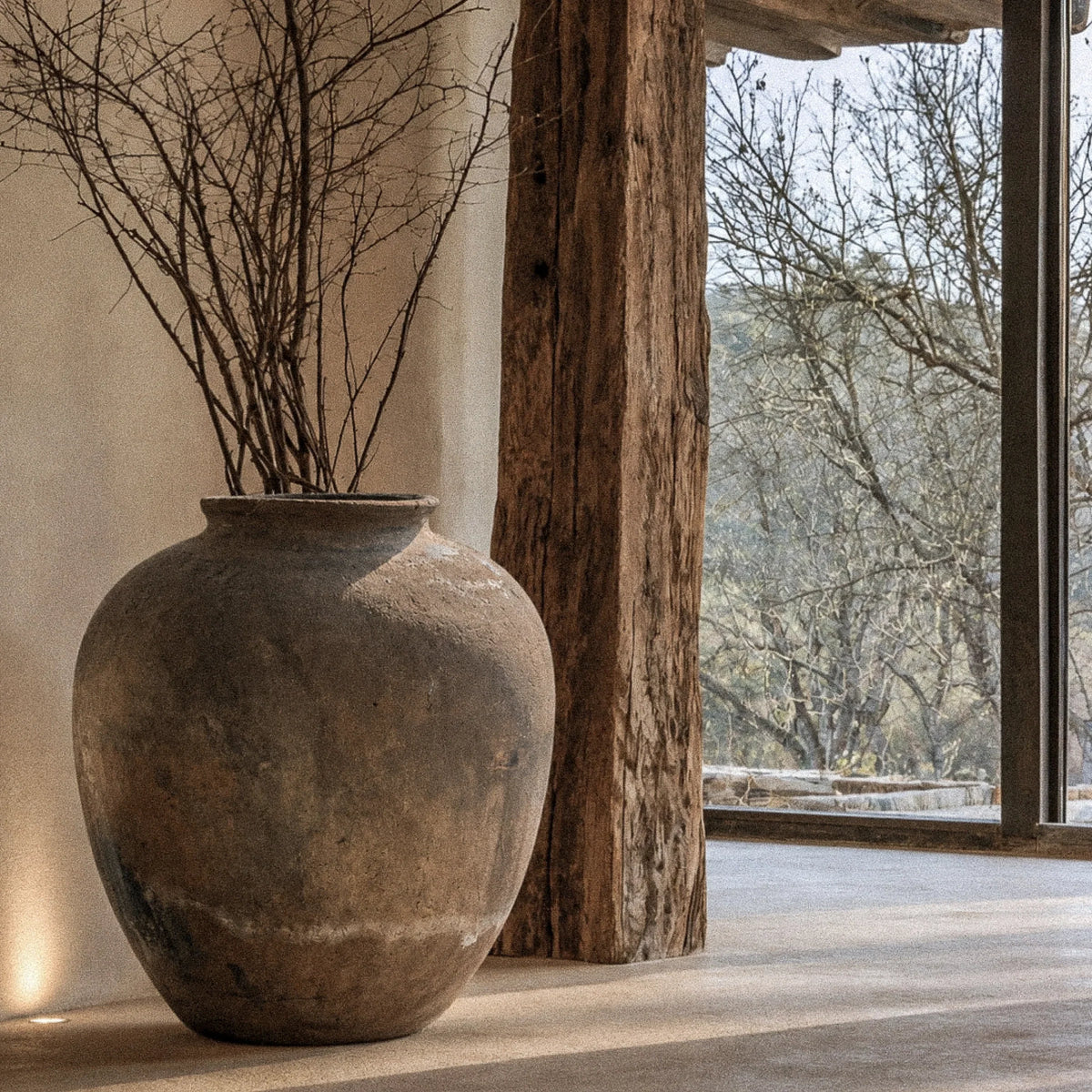
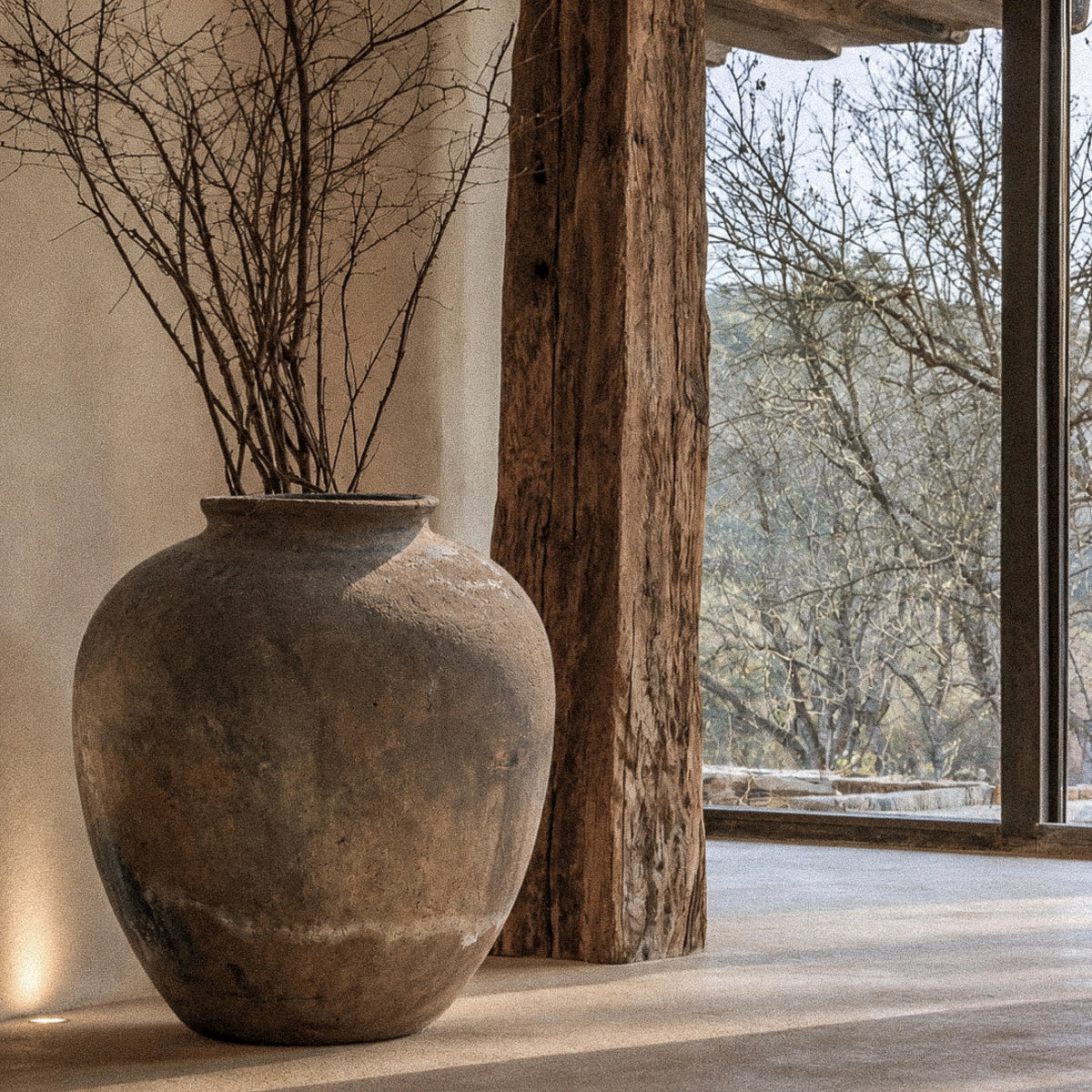
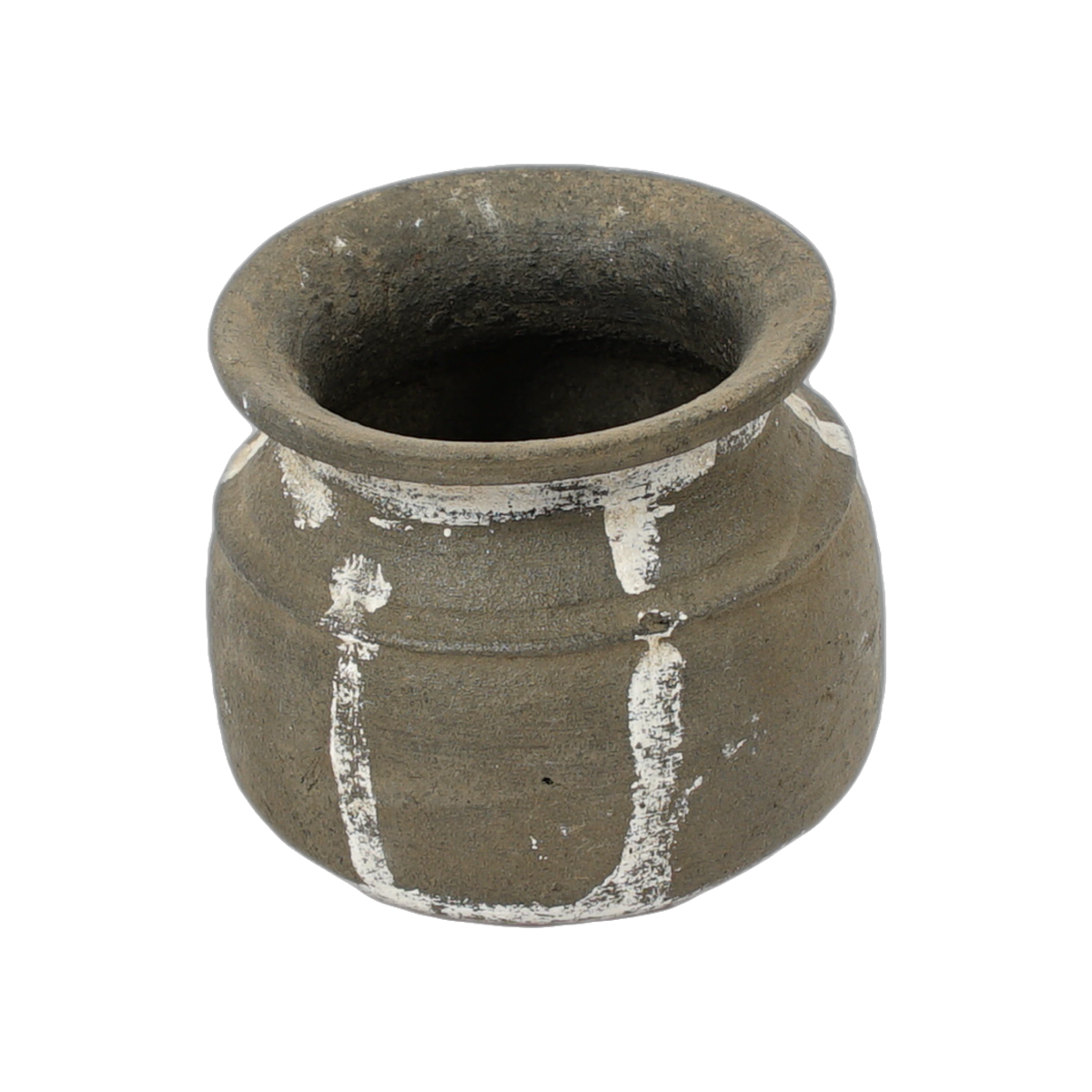
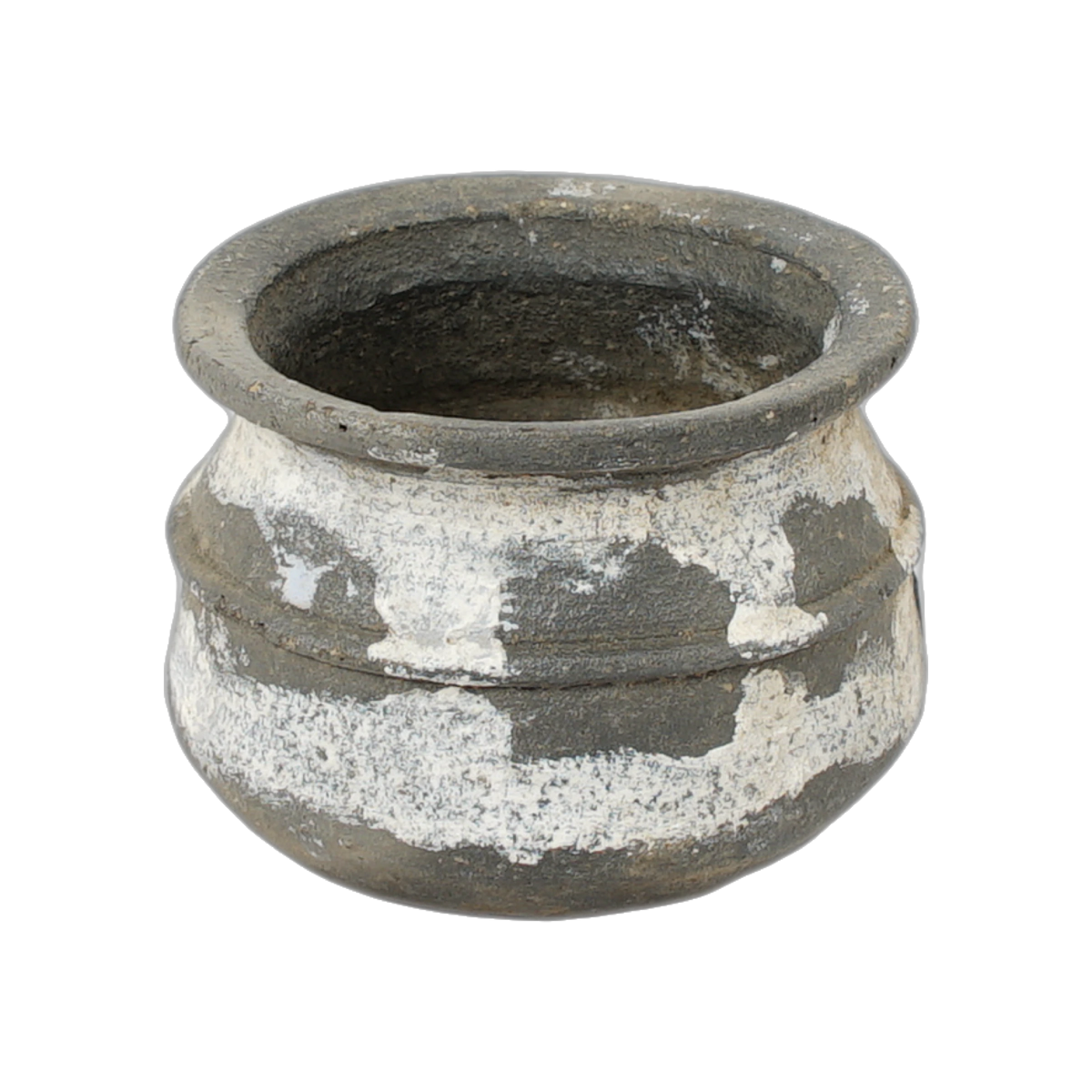
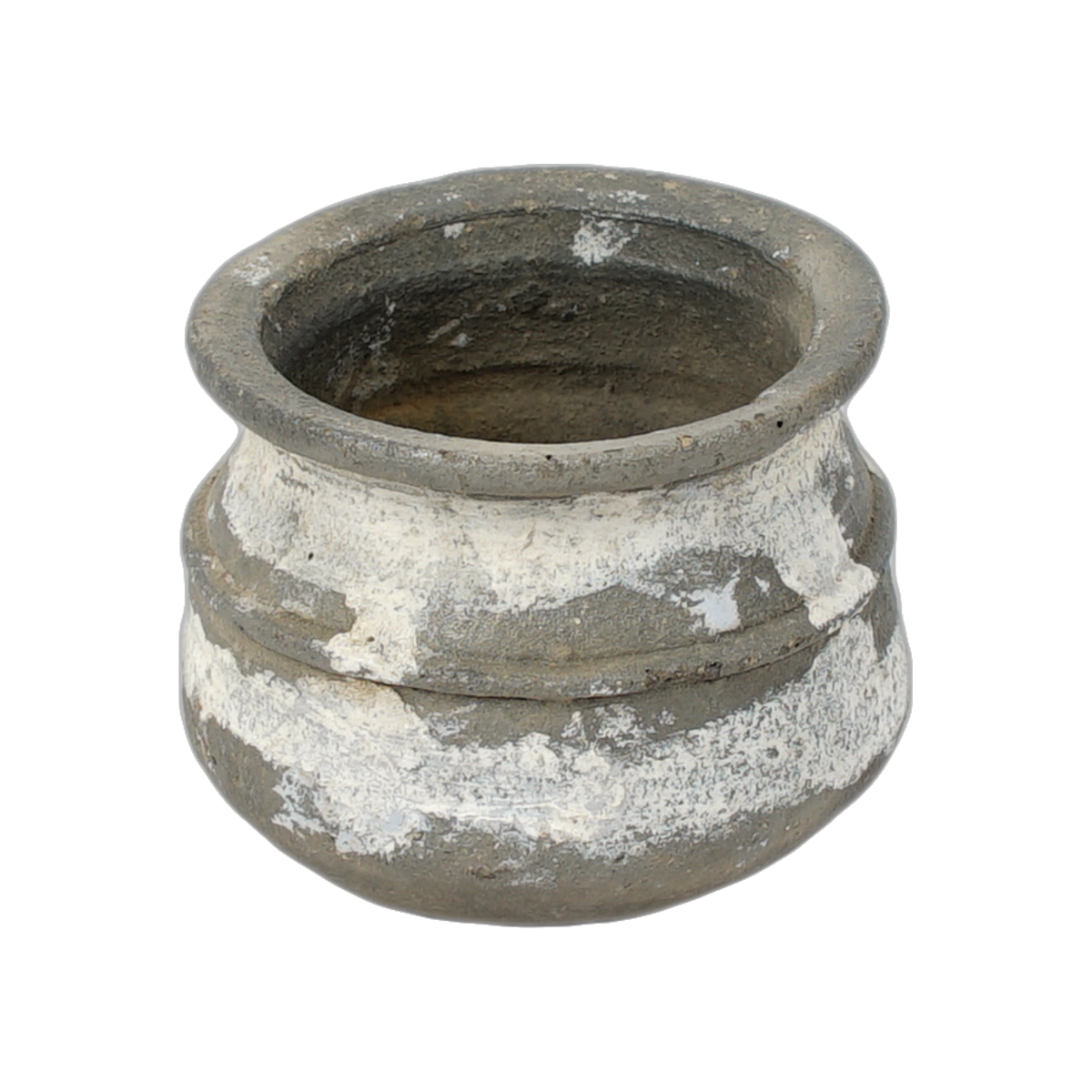
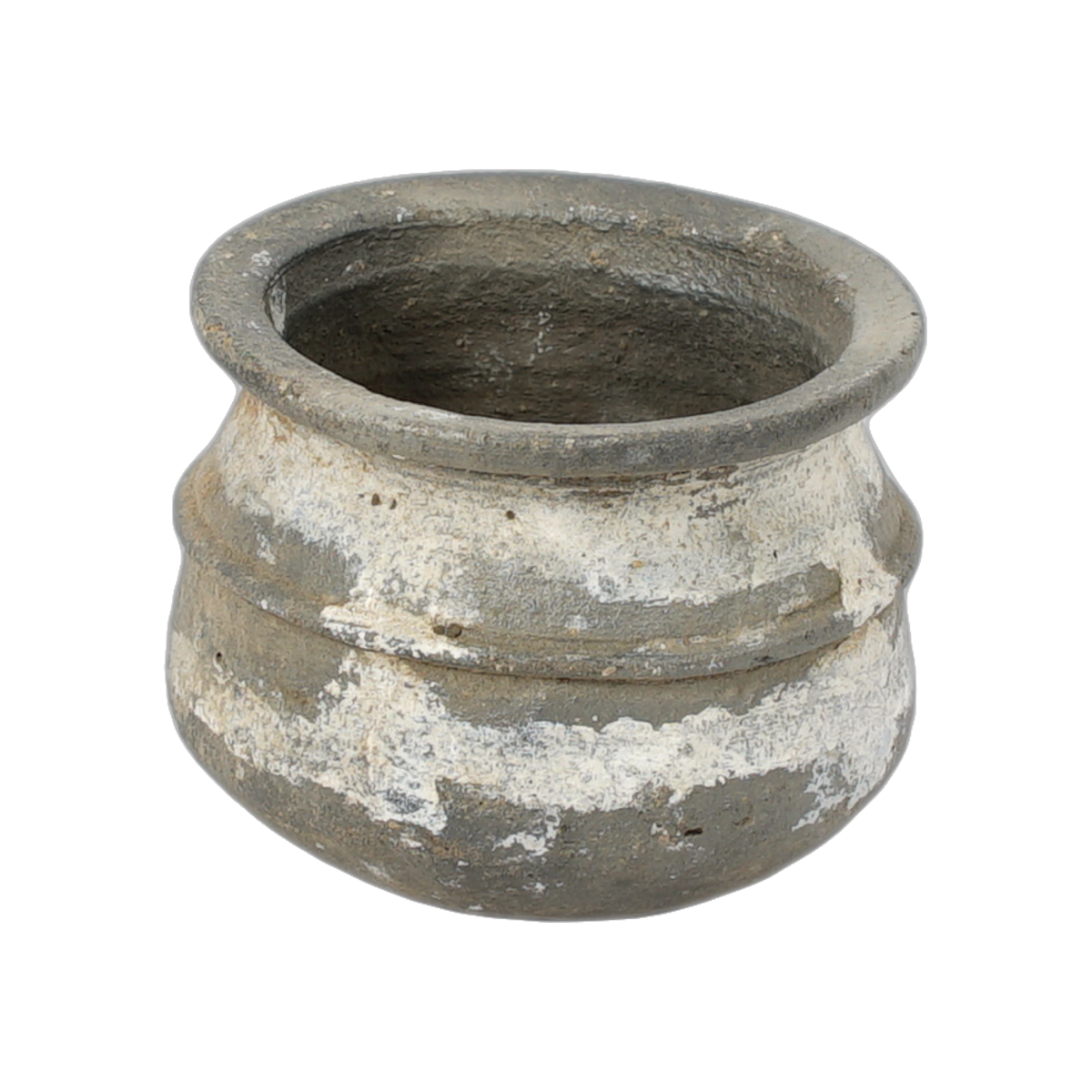
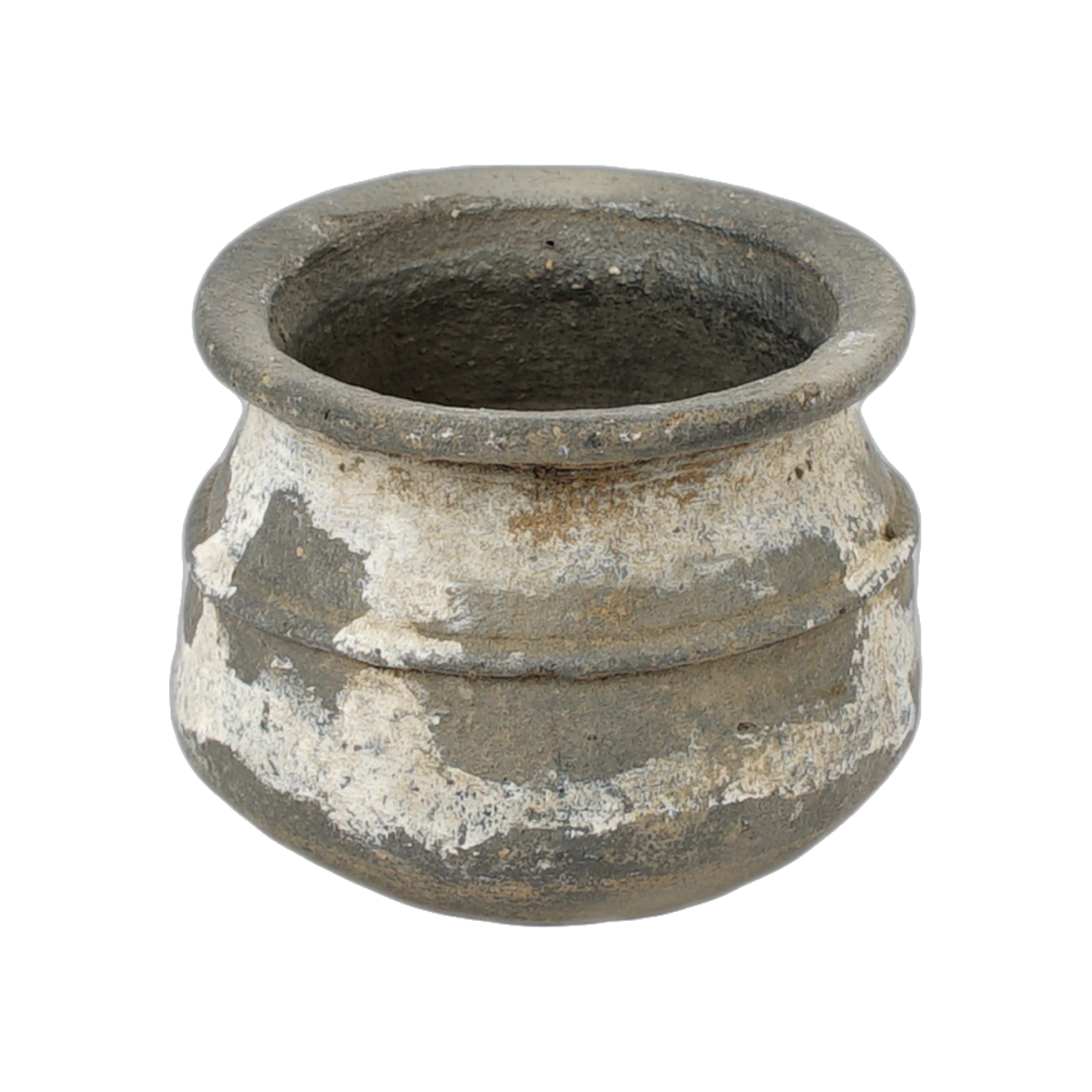
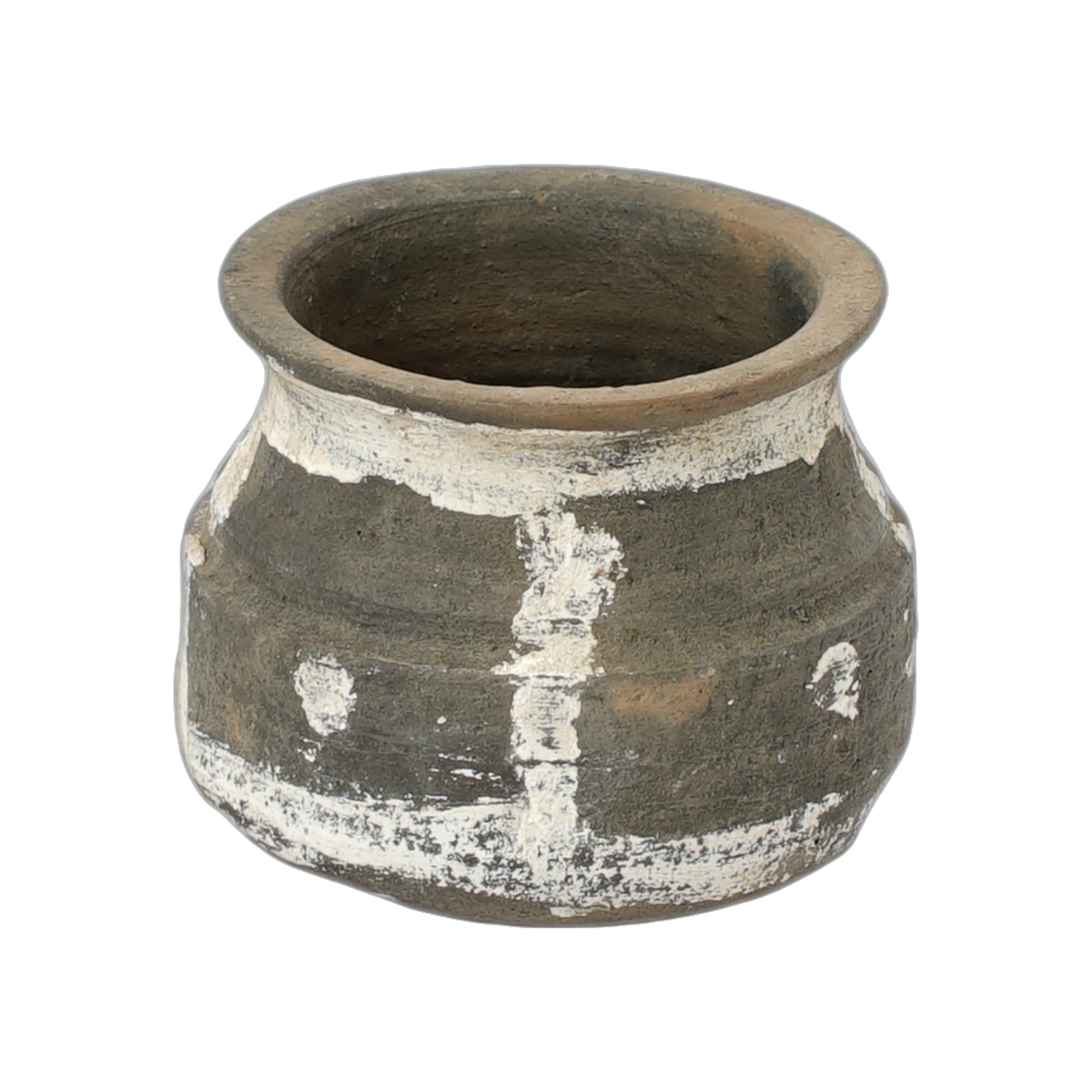
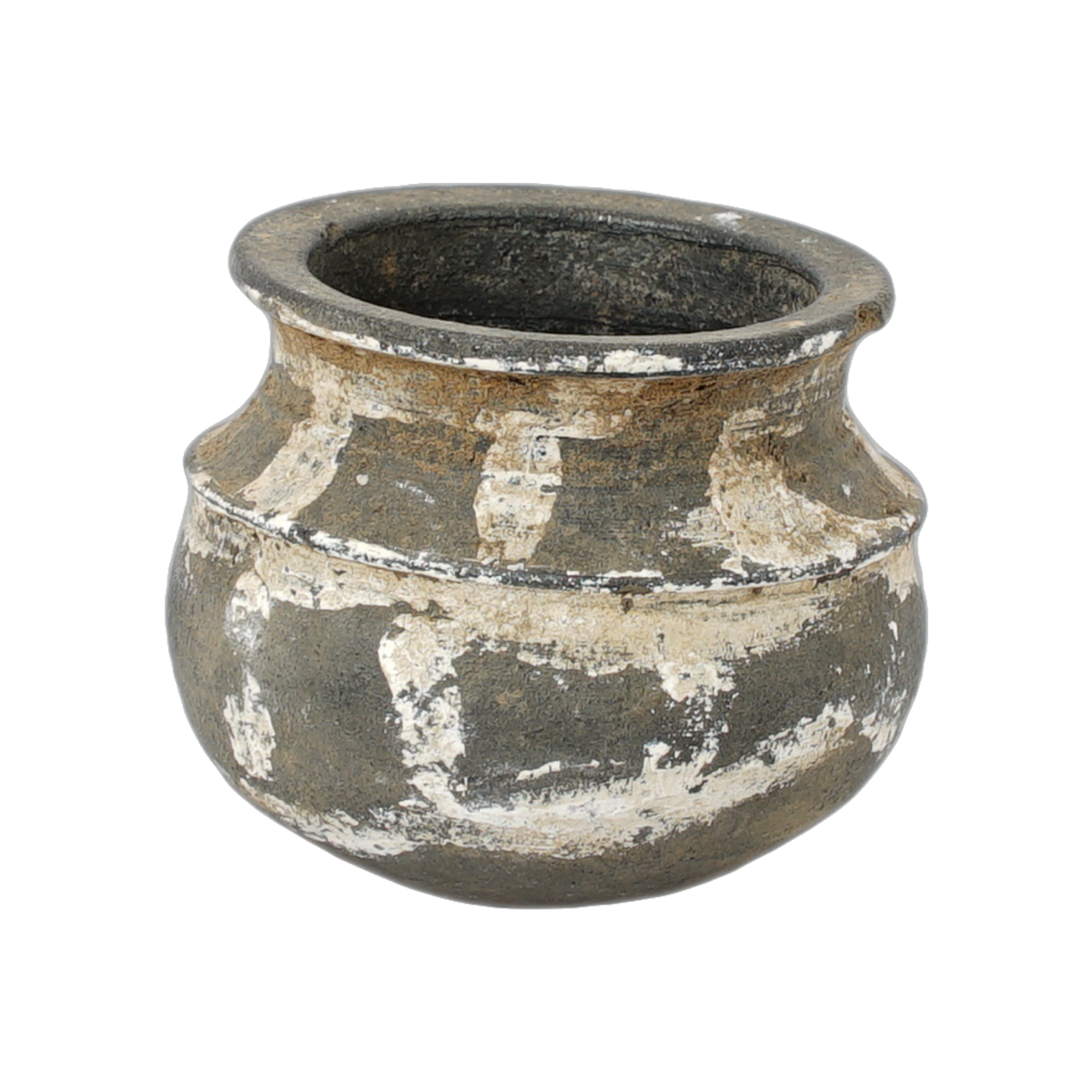
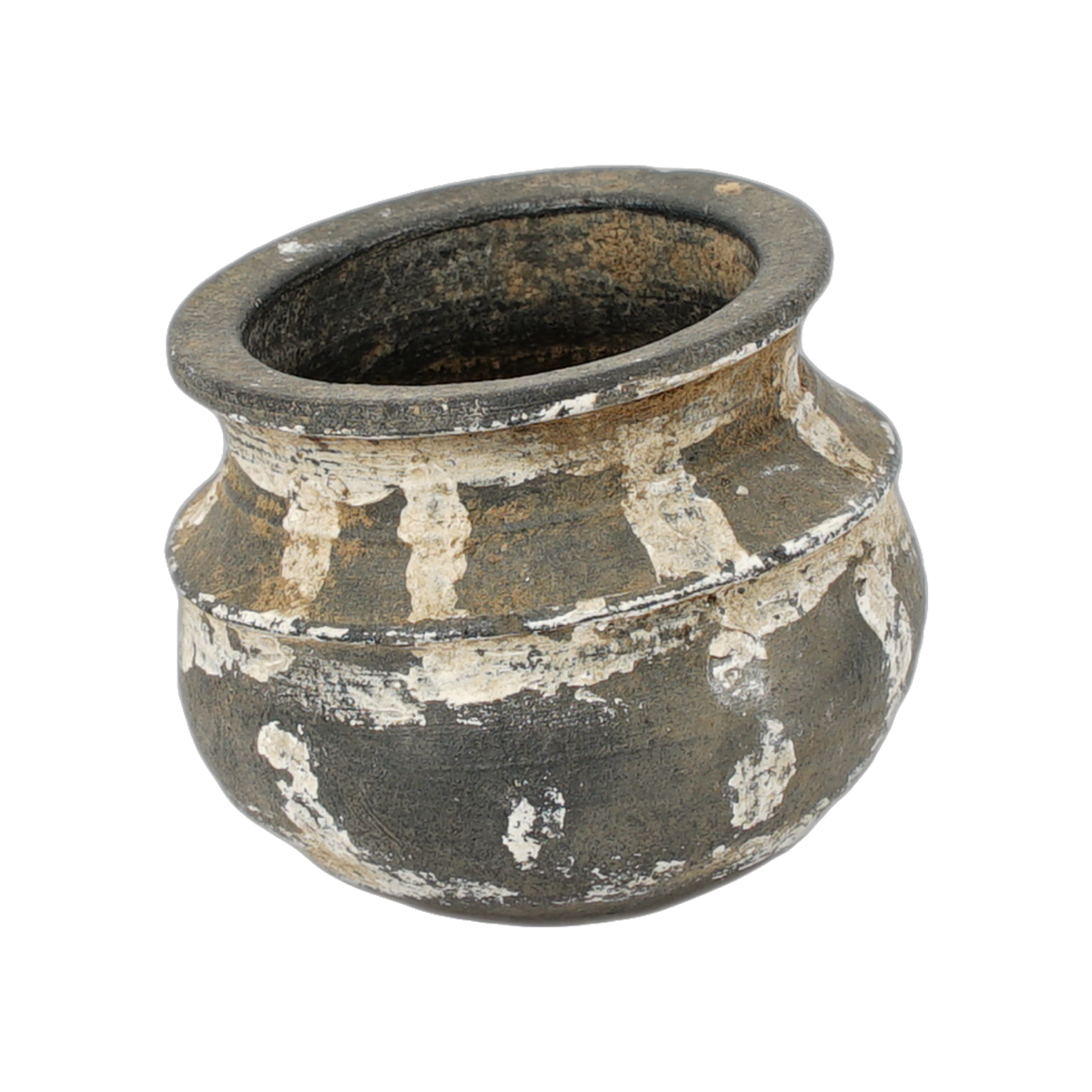
The jars were used to store drinking water. Placed on a stand called a Ghaduchi in Rajasthan or a Paniyaro in Gujarat, they kept water naturally cool thanks to the porosity of the terracotta. To serve themselves, people dipped small terracotta pots, like our Lota, straight into the jar to fill them with water.
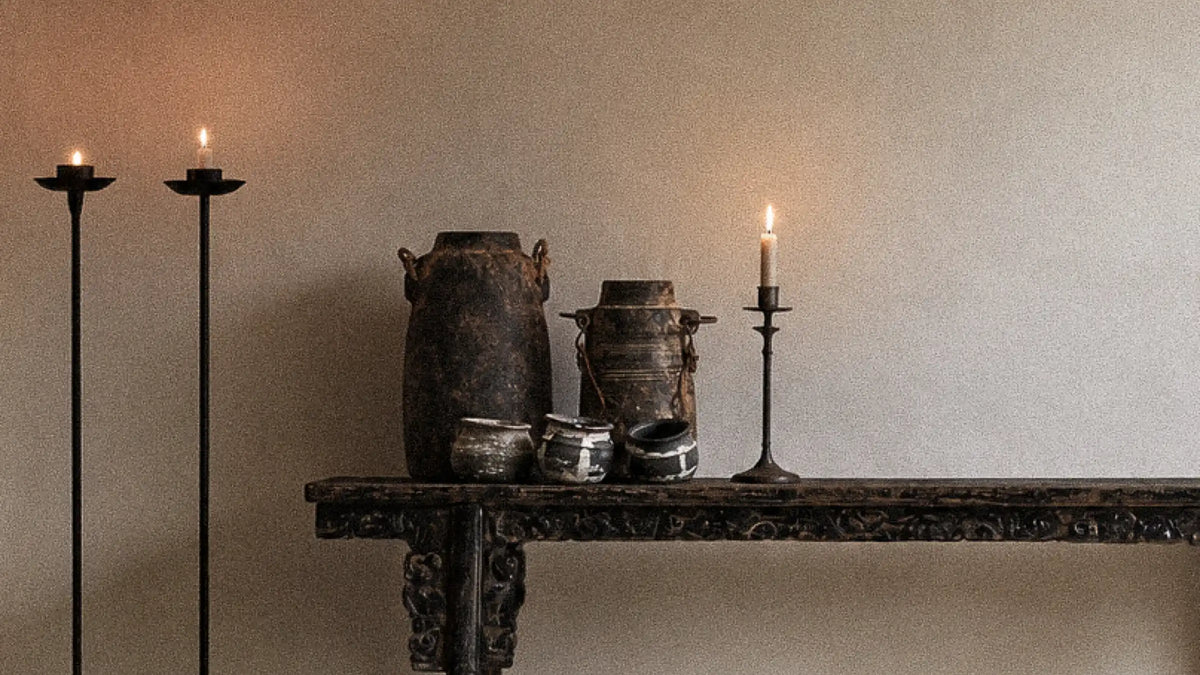
An old jar naturally catches the eye. So there is no need to do much around it. In an interior with wabi-sabi influences, it easily finds its place among natural materials: raw wood, lime plaster, linen, stone, plant fibres… The irregularities of the terracotta and the marks of time go particularly well with this kind of setting.
But an Indian jar can also work in a much more contemporary interior. Placed next to a sofa with very simple lines, a large wooden table or against a plain wall, it immediately adds texture and depth. The contrast between an old object and a more minimalist decor can be particularly interesting.
Outdoors, the principle remains the same. A large jar placed against a stone wall, on a mineral terrace or amid fairly free-growing planting can structure the space on its own. It works particularly well surrounded by ornamental grasses, olive trees or Mediterranean species. Nor does it necessarily need to be used as a planter or a vase.
Bring the story into your home
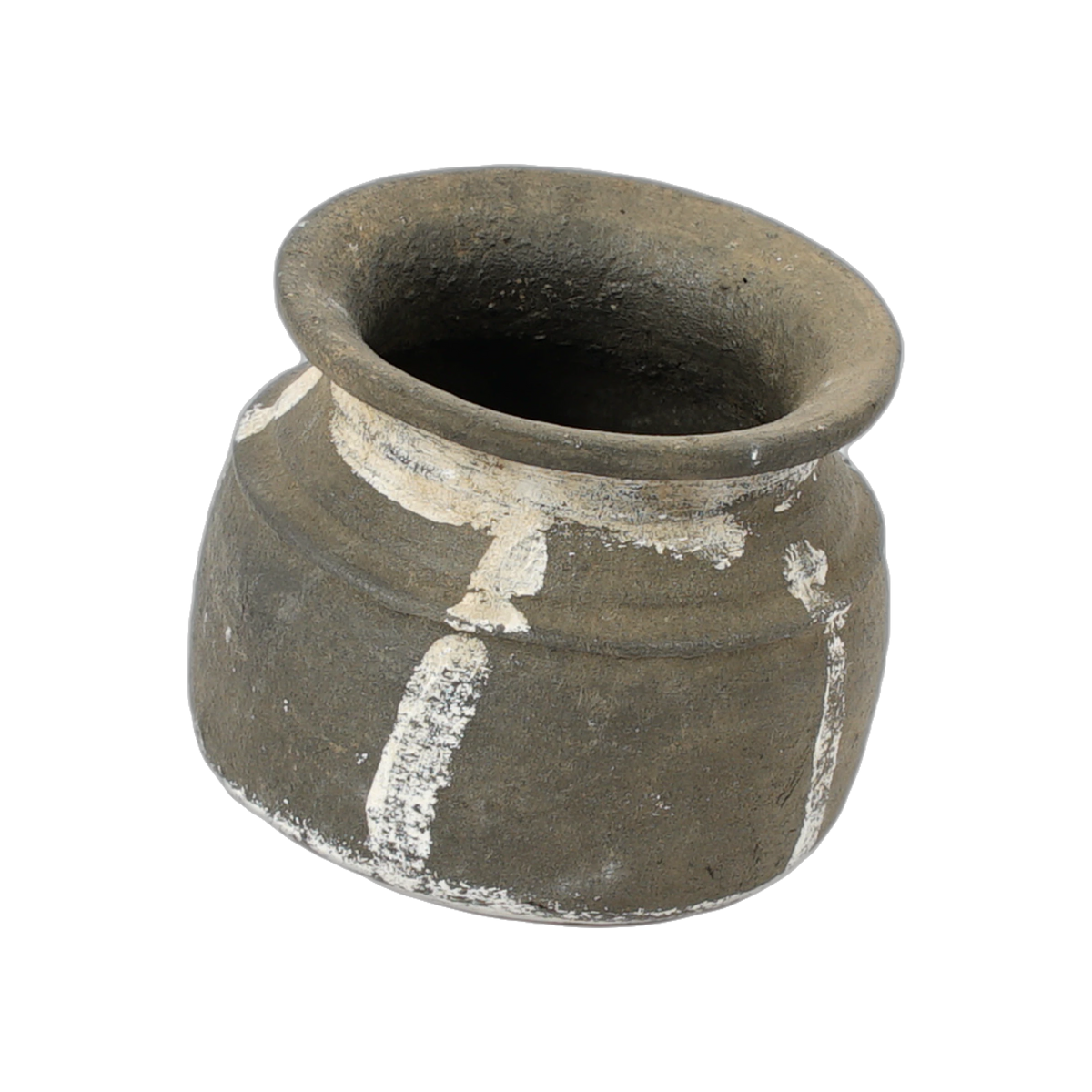
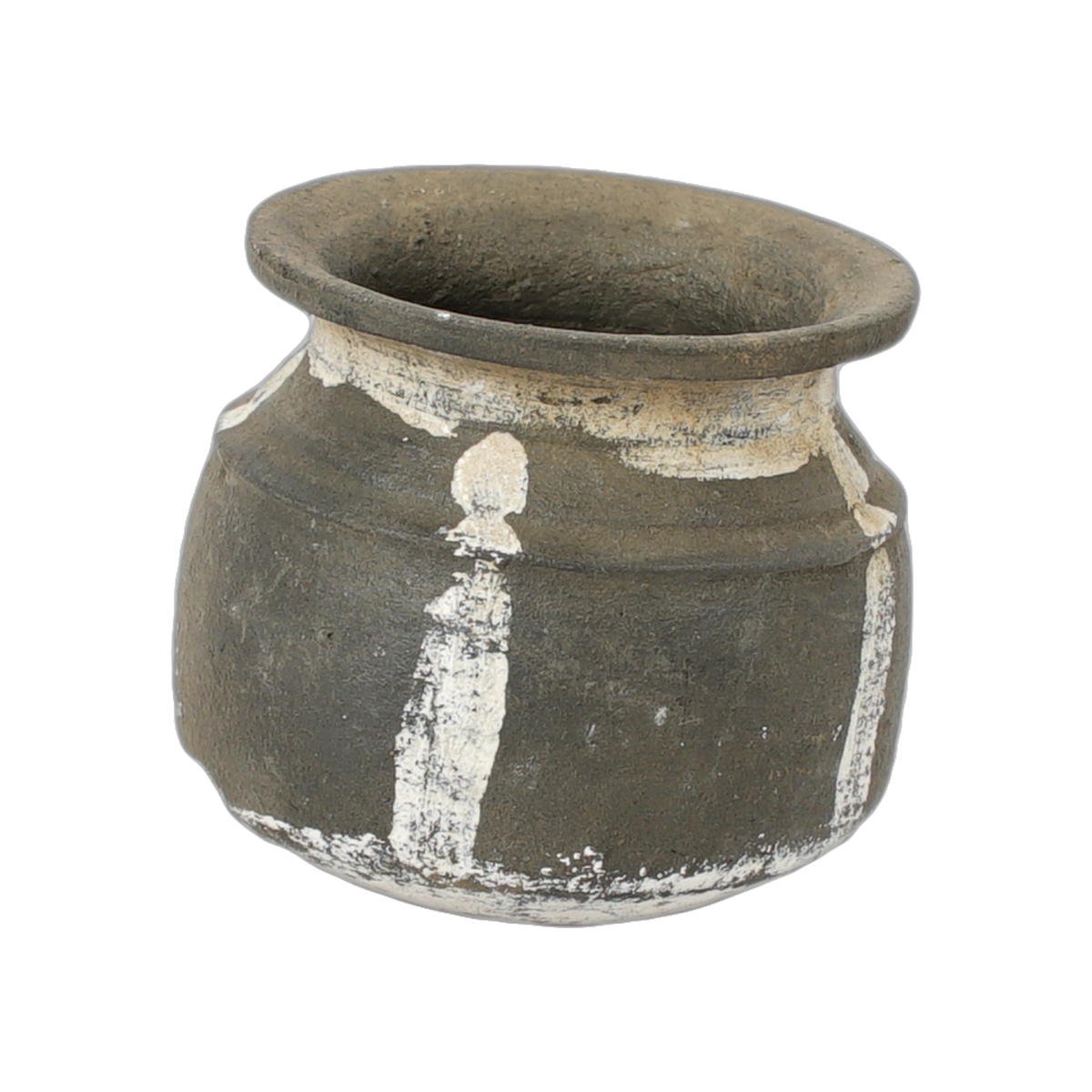
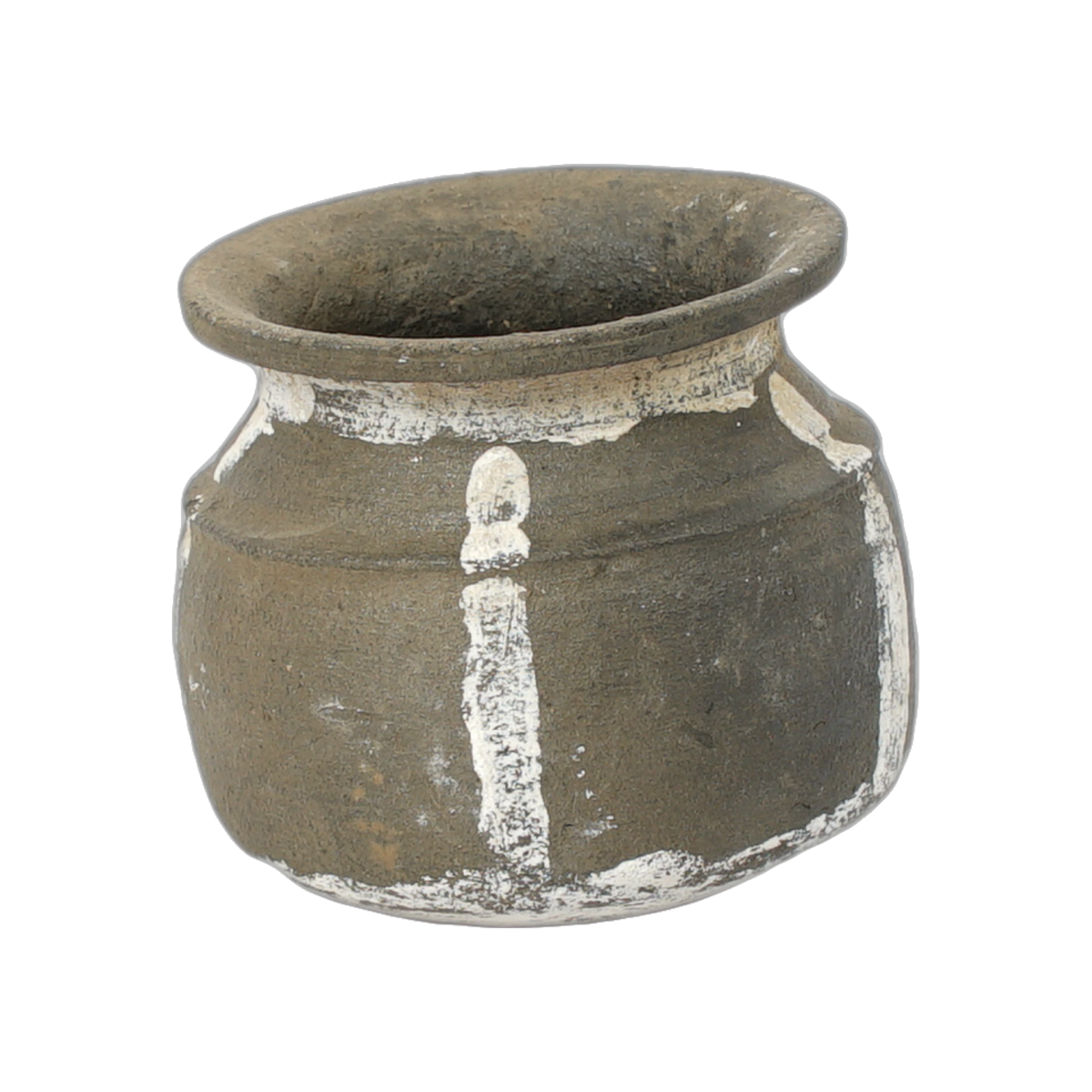
Discover these jars once used to store water, together with their small terracotta pots.










Depending on what needed to be scooped, stirred or served, spoons came in many shapes and sizes. Our Chammach wooden spoons come from northern India. They are said to be “single-piece”, meaning they were entirely hand-carved from a single piece of wood. The Hindi word “chammach” in fact means spoon, although the names vary across the country's different languages. They were used in particular to scoop ghee, milk or grains straight from the large kitchen jars.
Other spoons were much larger. This is the case with our biggest Chammach spoons.
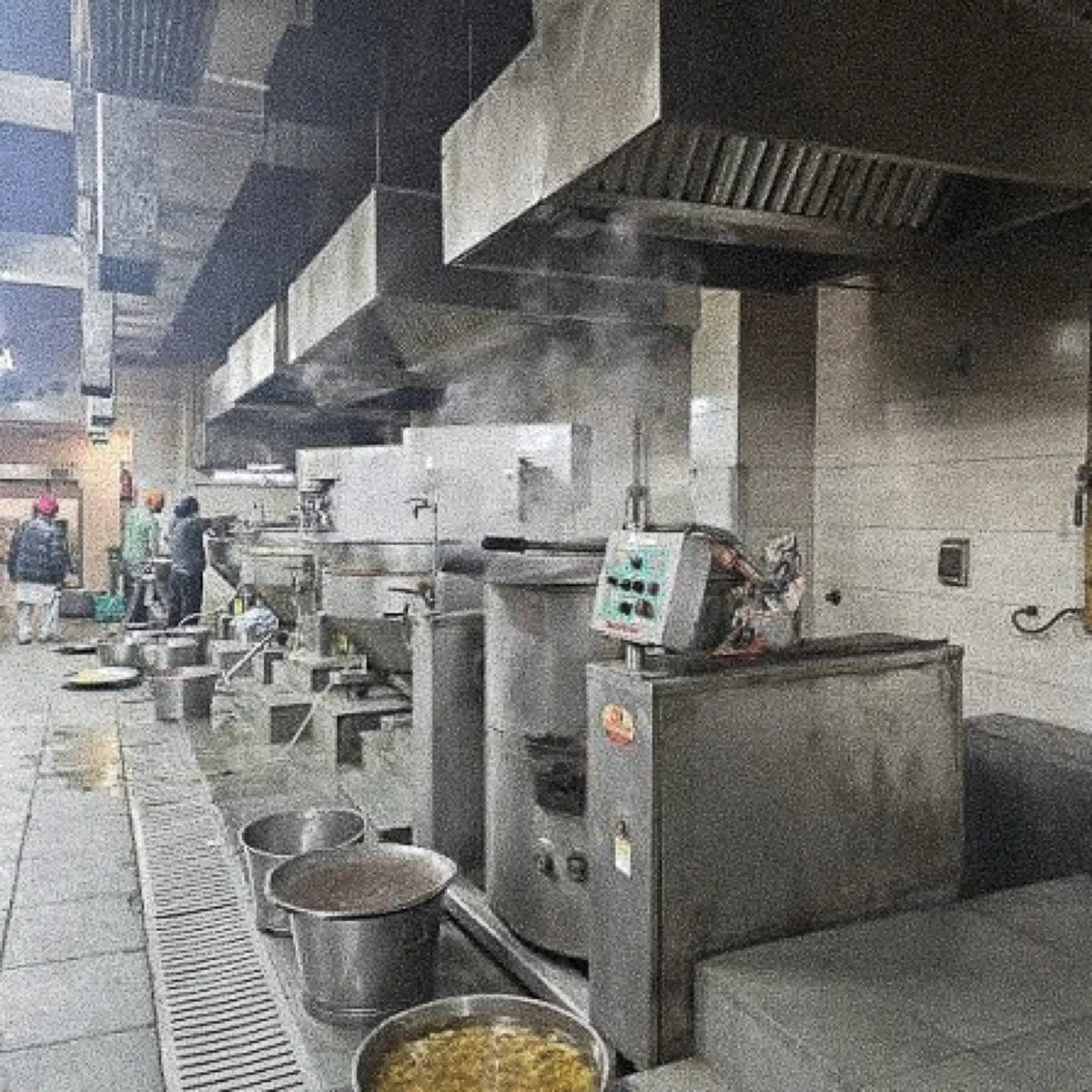
Their size suggests use in kitchens where large quantities of food were prepared, particularly in temples. In Sikh temples, called “gurdwaras”, vegetarian meals are prepared and served free of charge to everyone, whatever their beliefs, origins or social standing. This is called langar. In these kitchens, (very) large cooking pots are used to prepare the meals, and it is easy to imagine how useful a wooden spoon of this size would be for stirring or serving.
A small anecdote: at Bangla Sahib, a large Gurudwara in Delhi where the langar feeds tens of thousands of devotees every day, the kitchen was recently fully automated. Wooden spoons are no longer used: industrial-grade machines can produce up to 4000 chapatis an hour without human intervention.
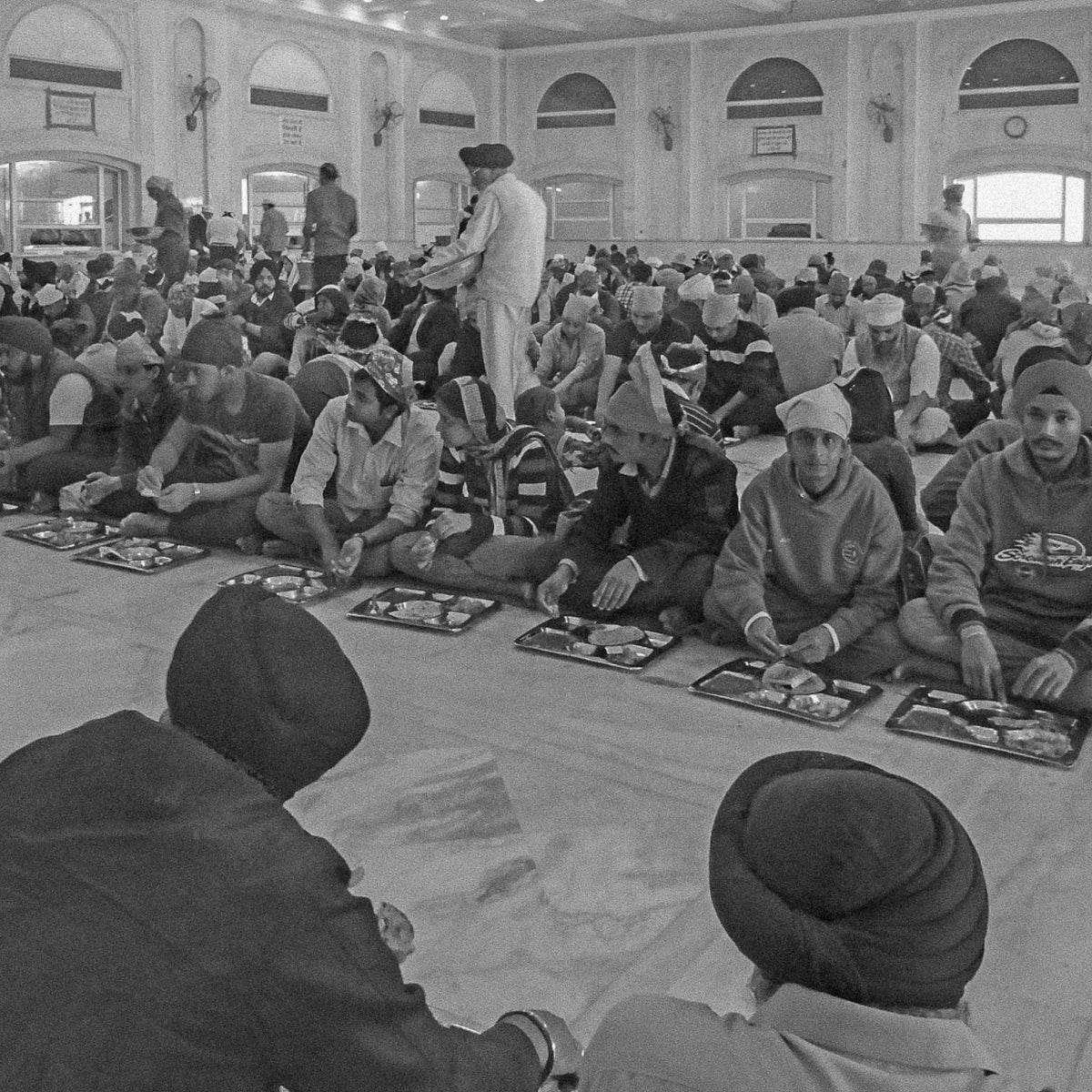
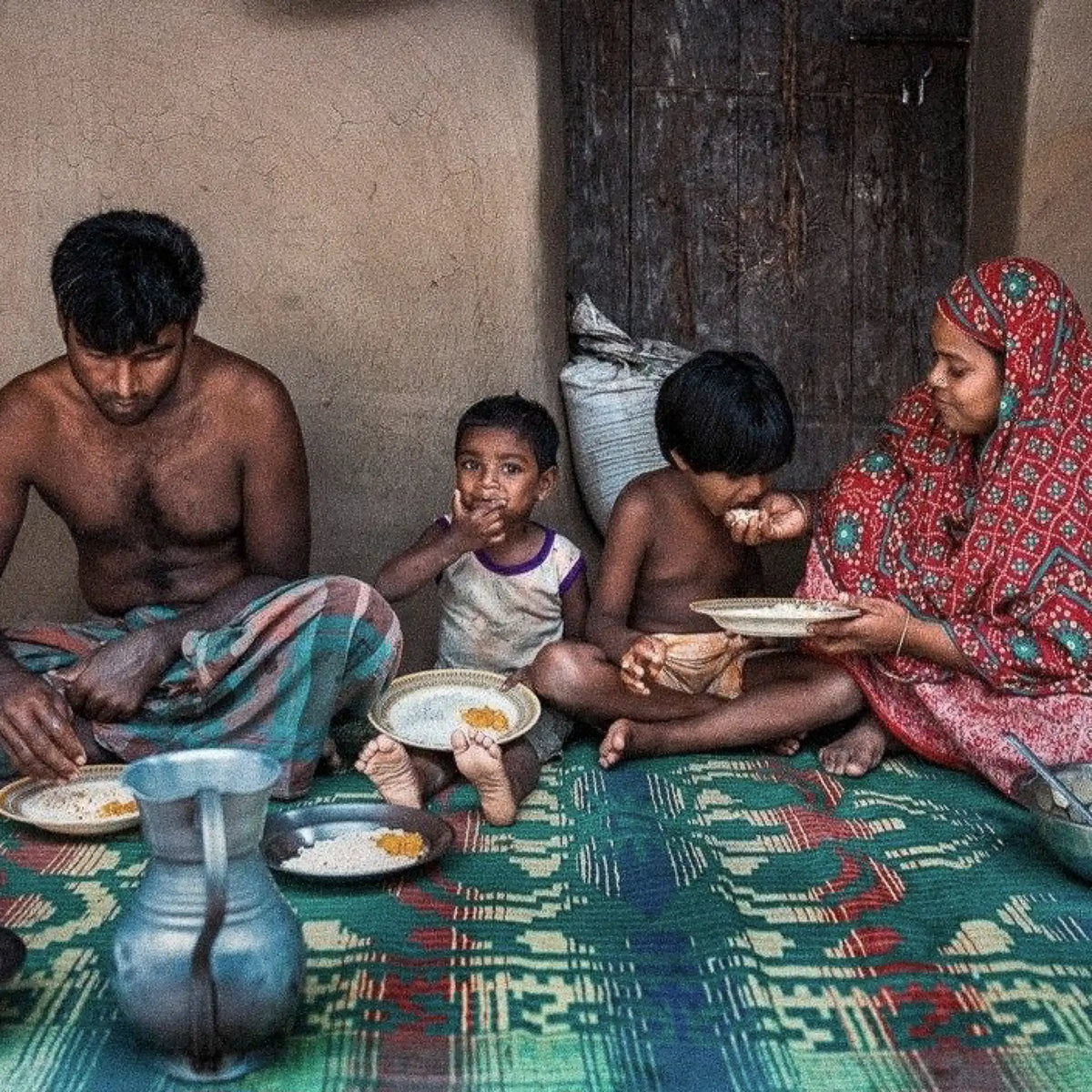
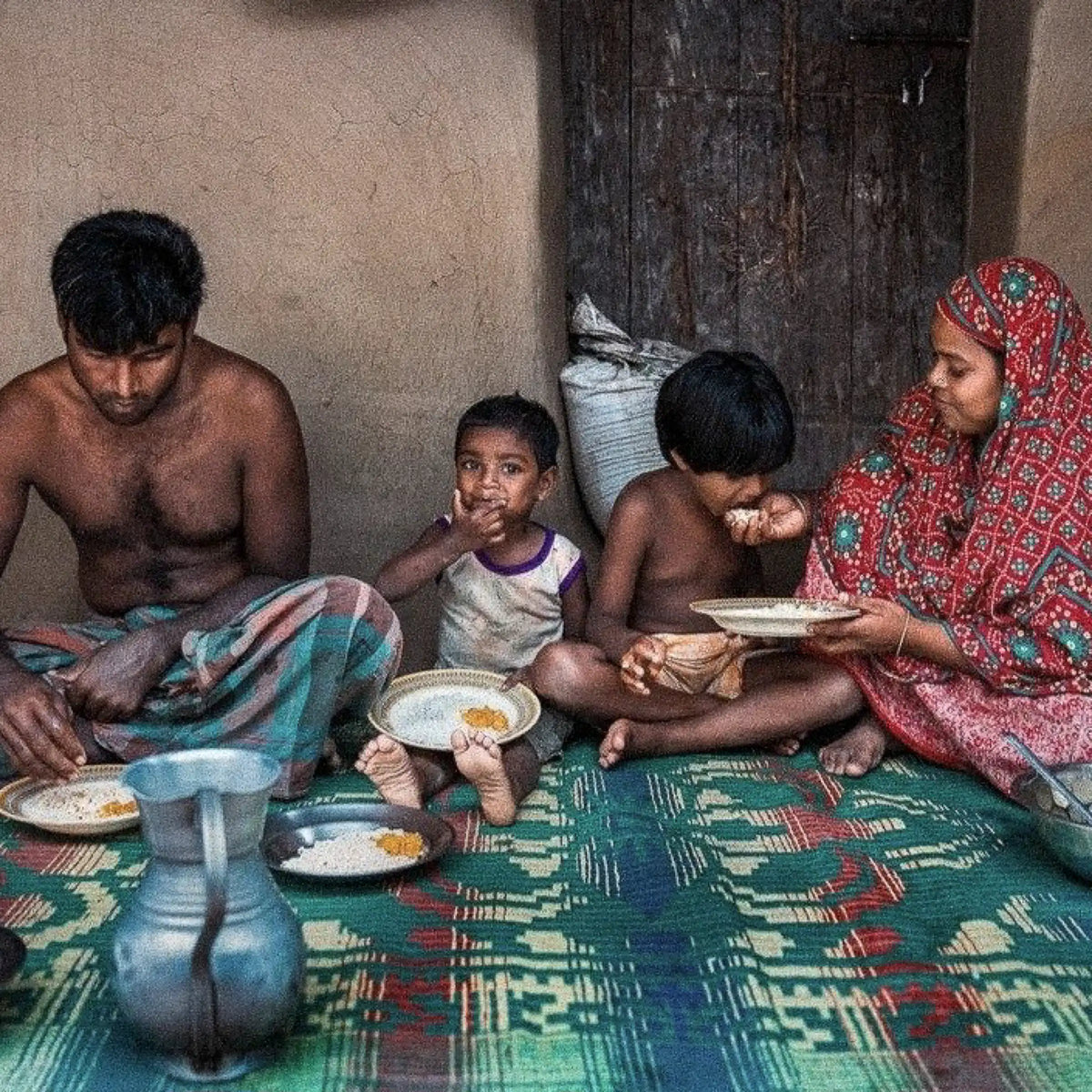
Depending on the region, Indian customs can be quite different from ours. In some families, people traditionally eat sitting on the floor, while in others they gather around a table, as in many homes today.
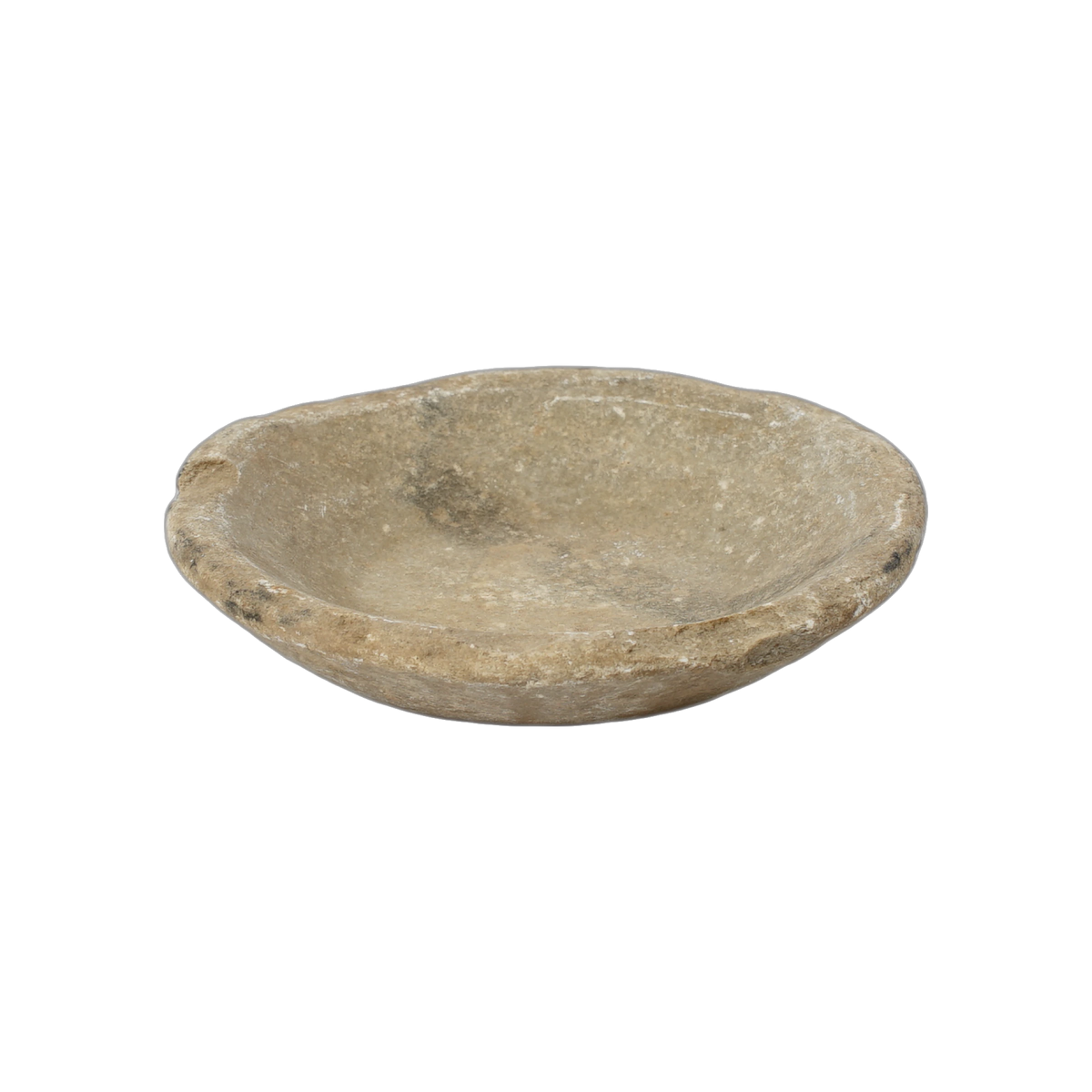
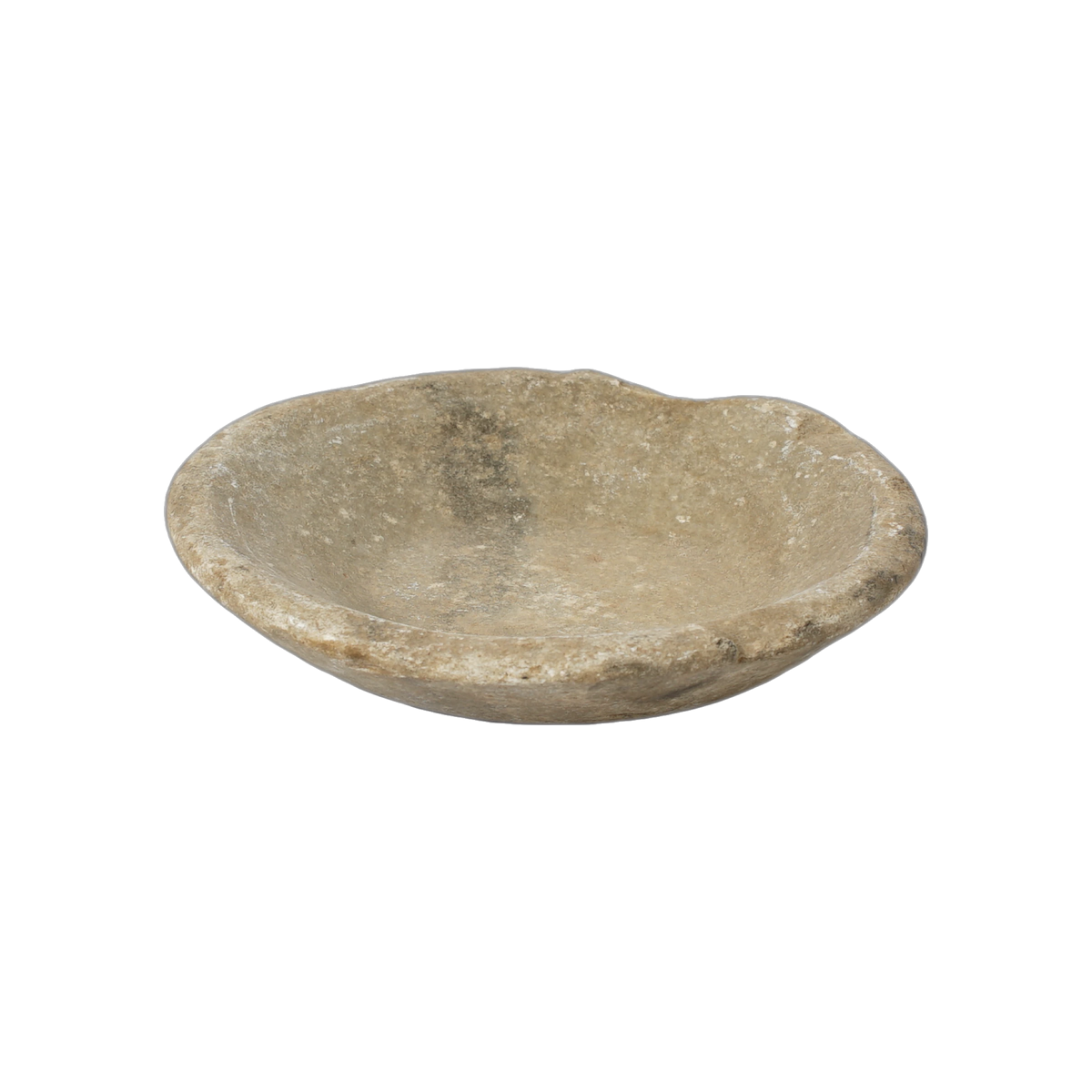
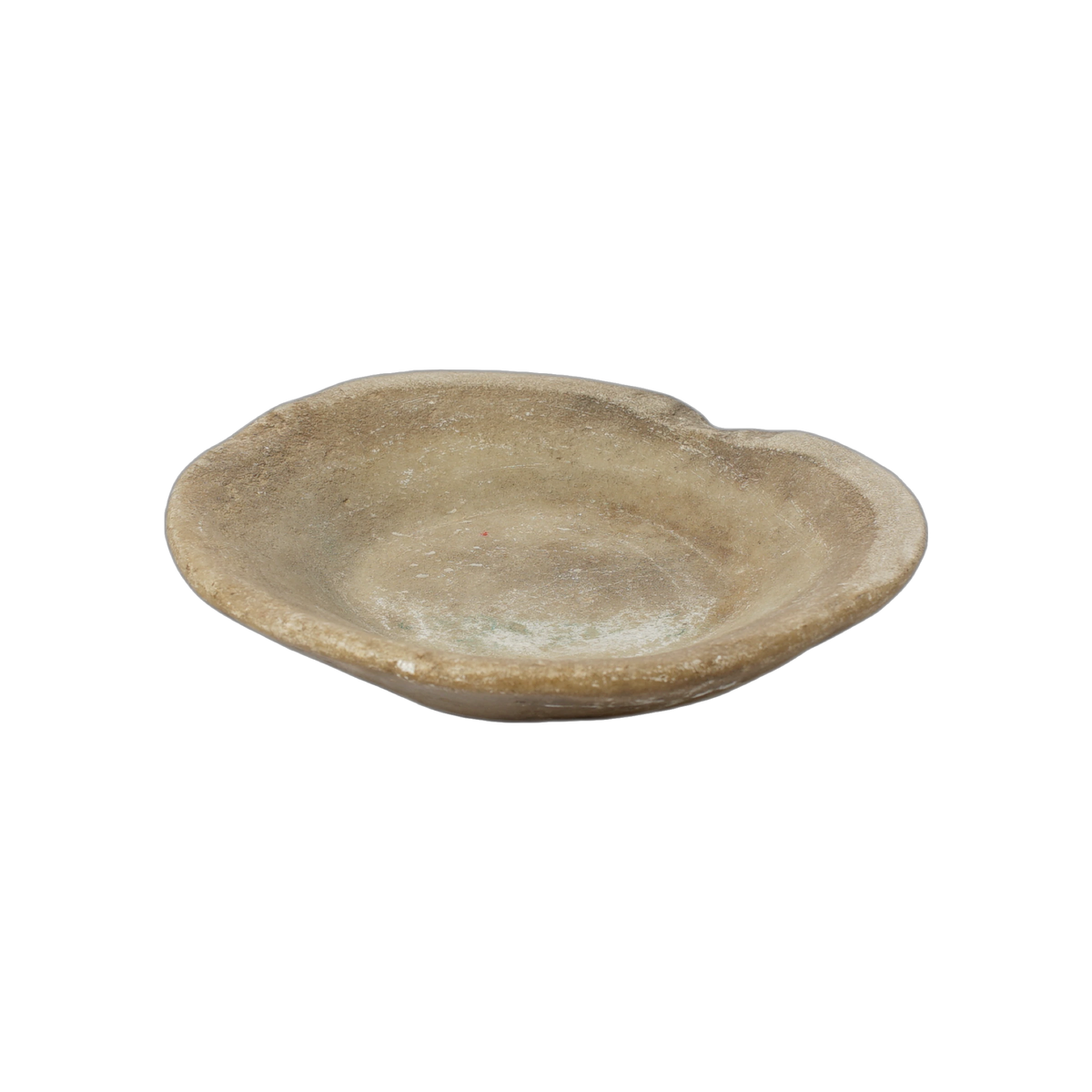
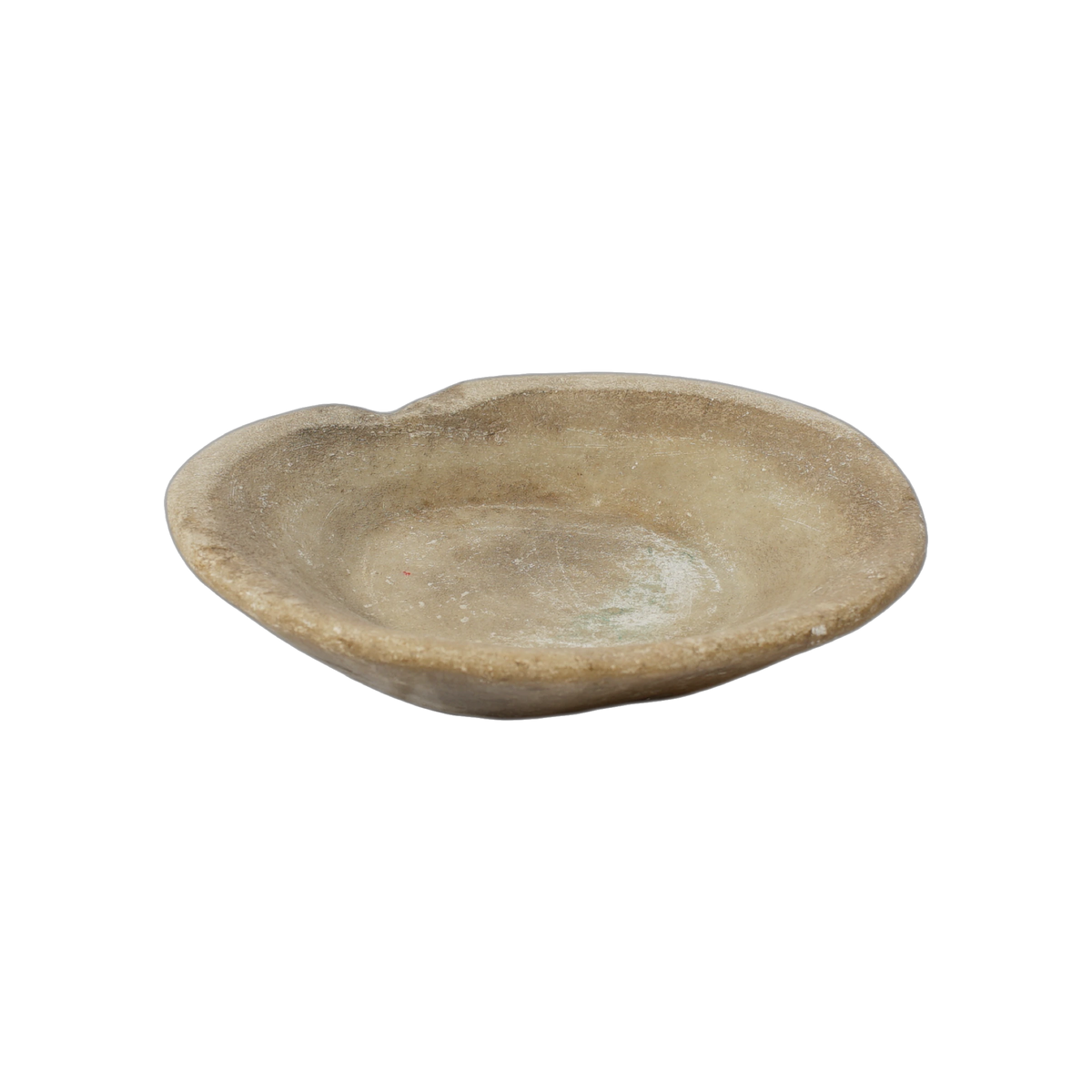
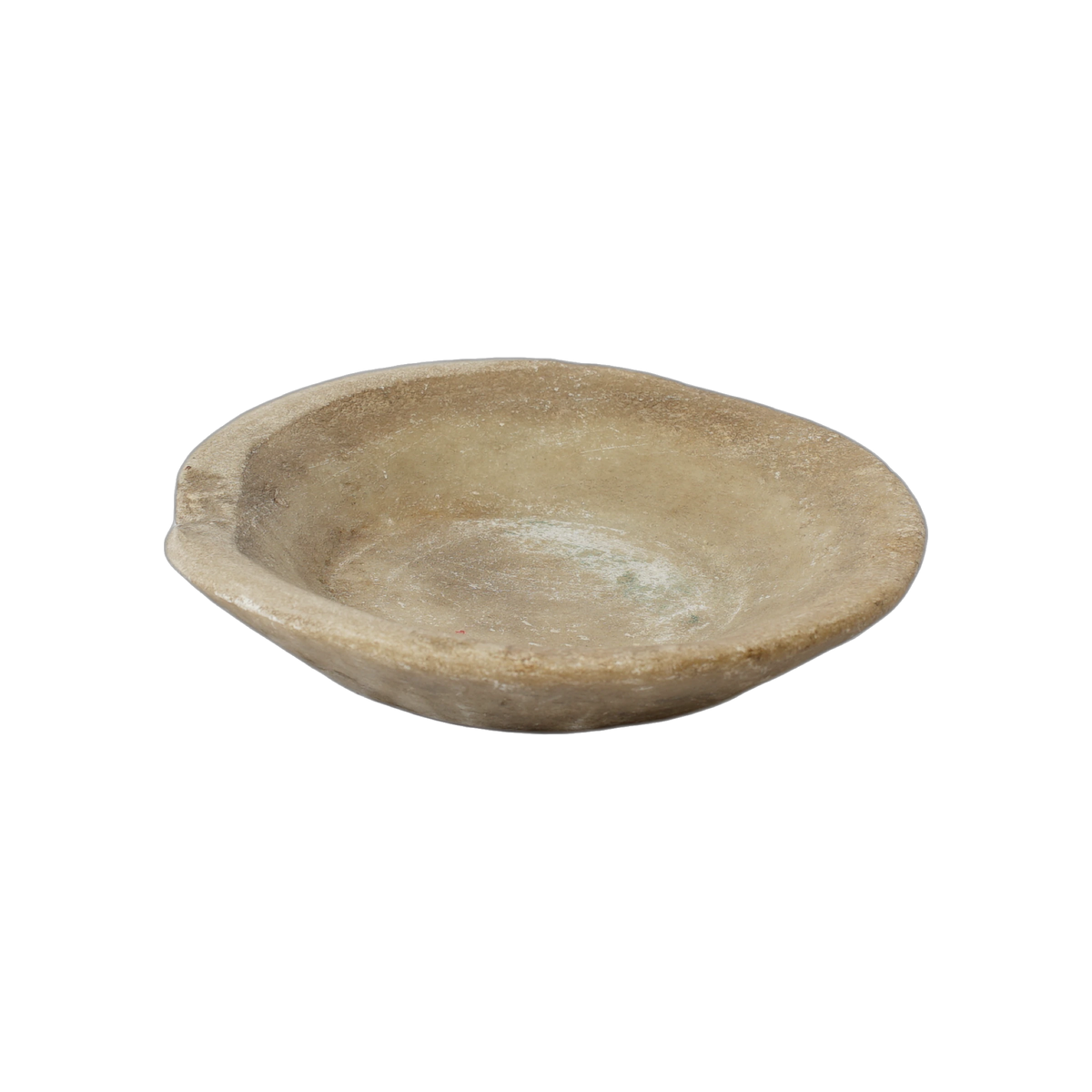
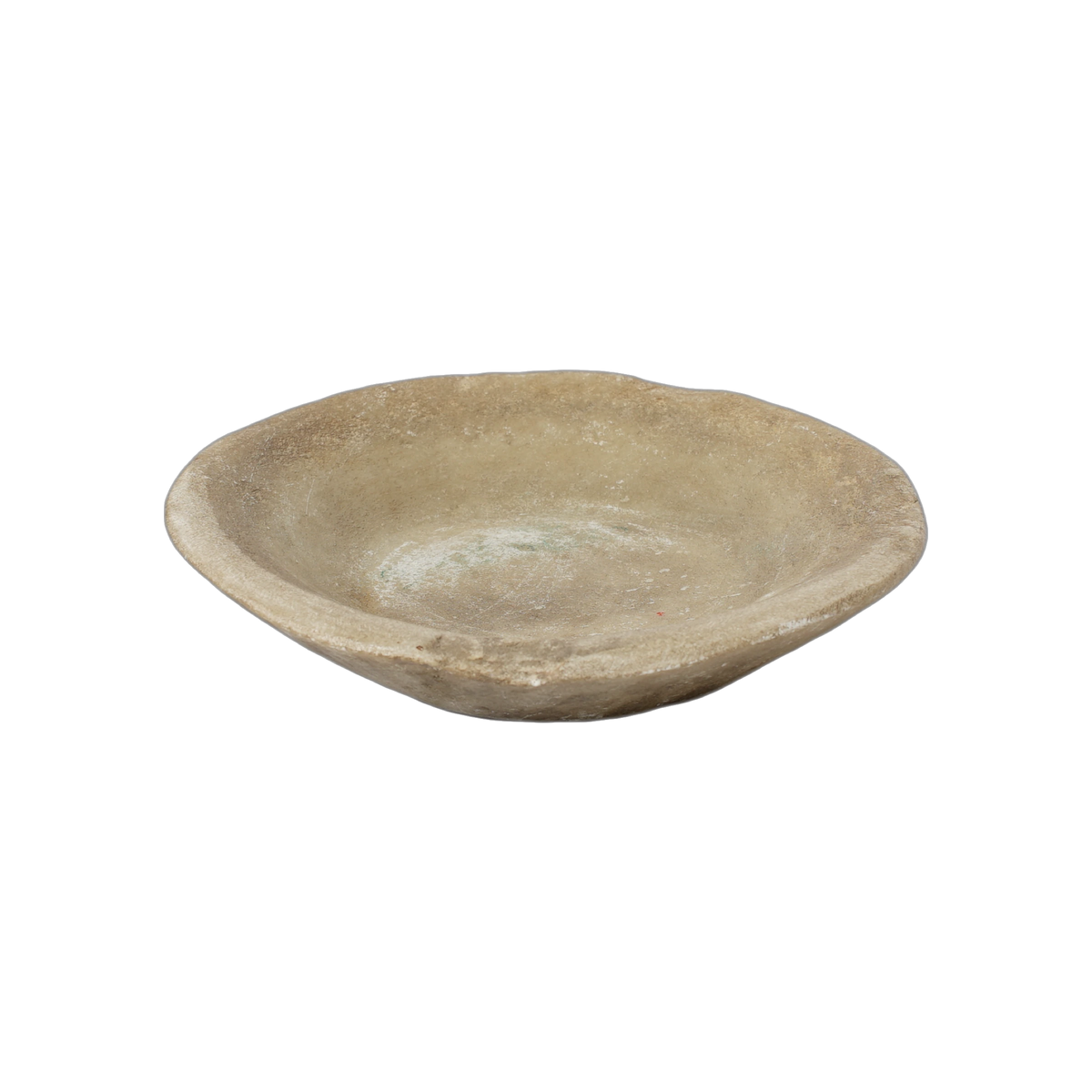
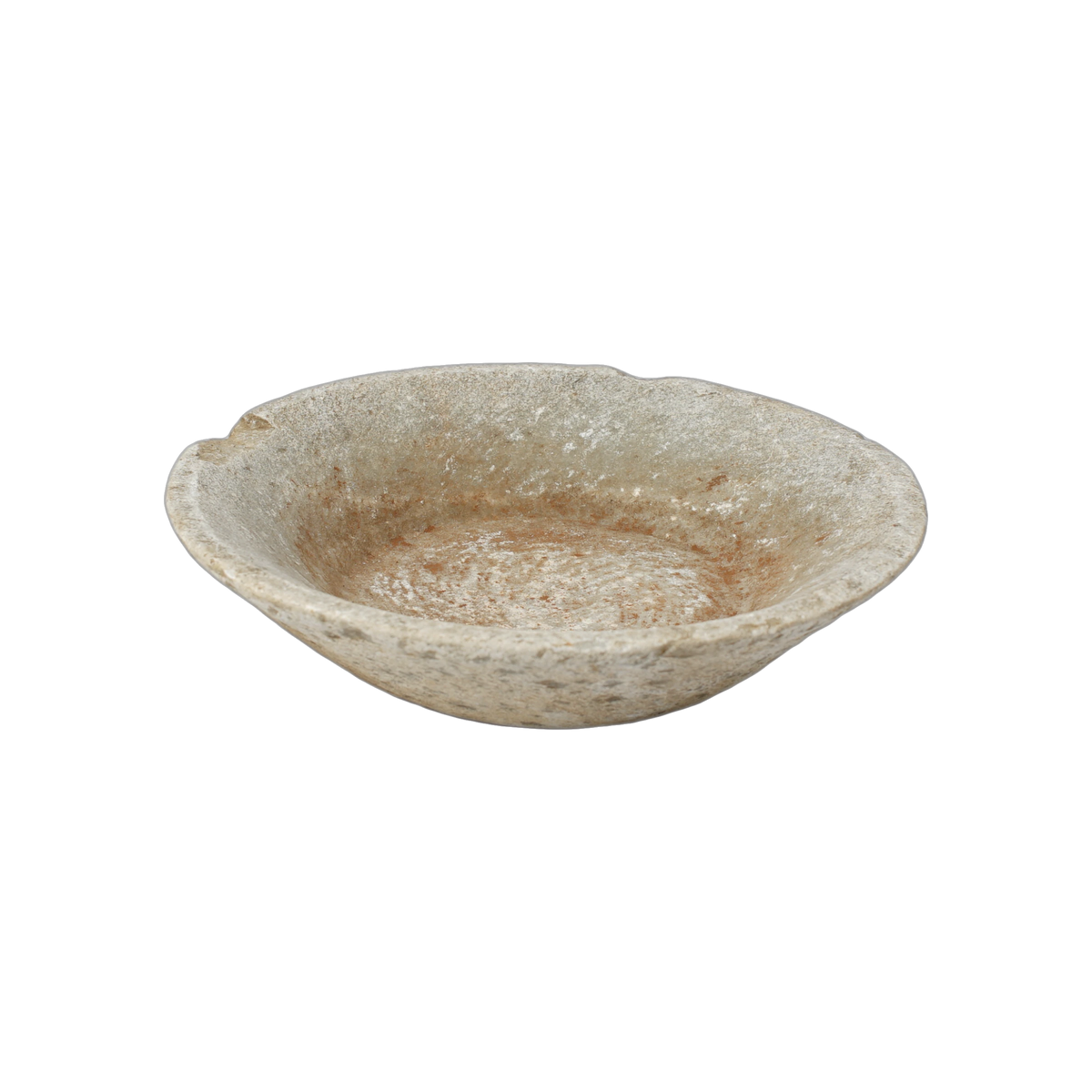
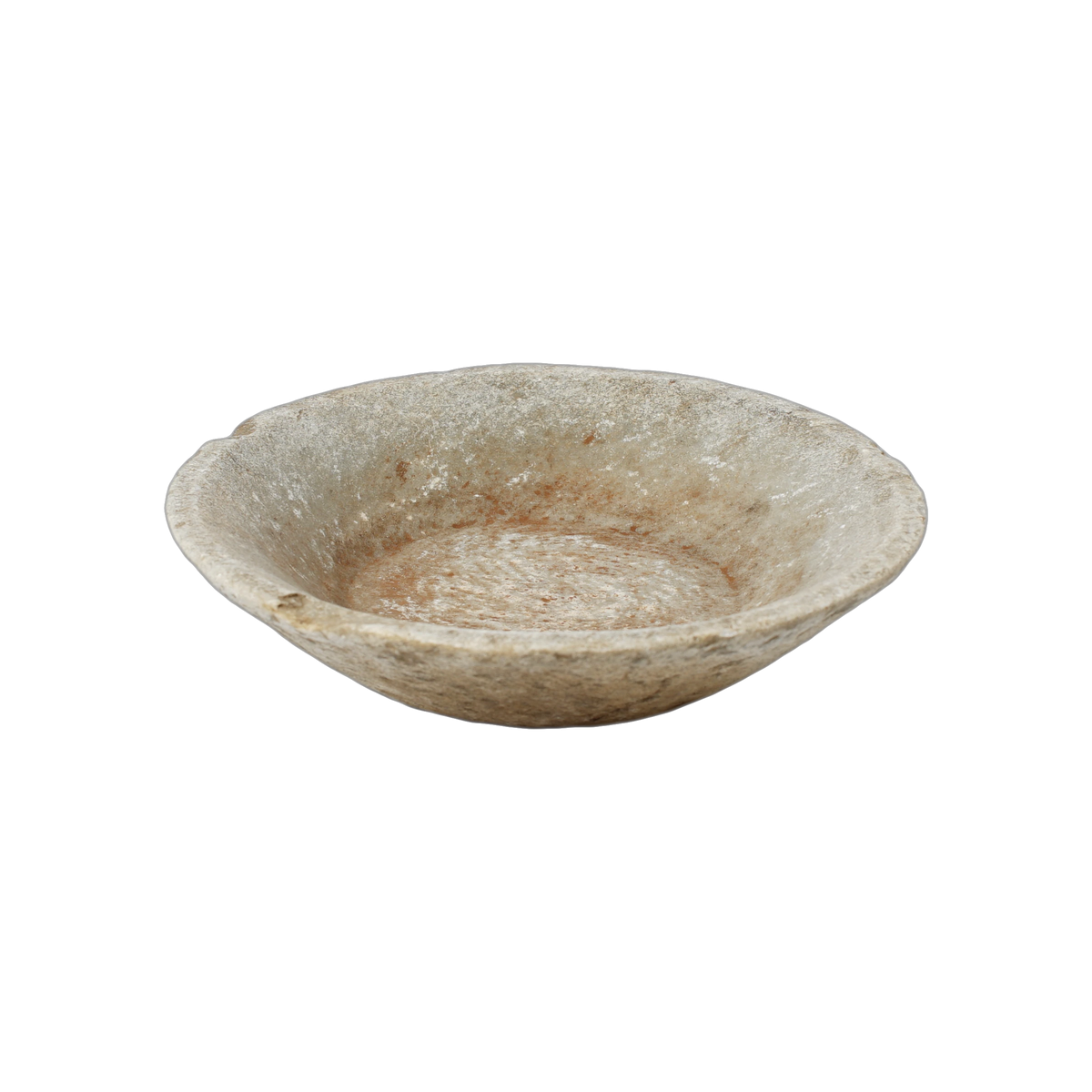
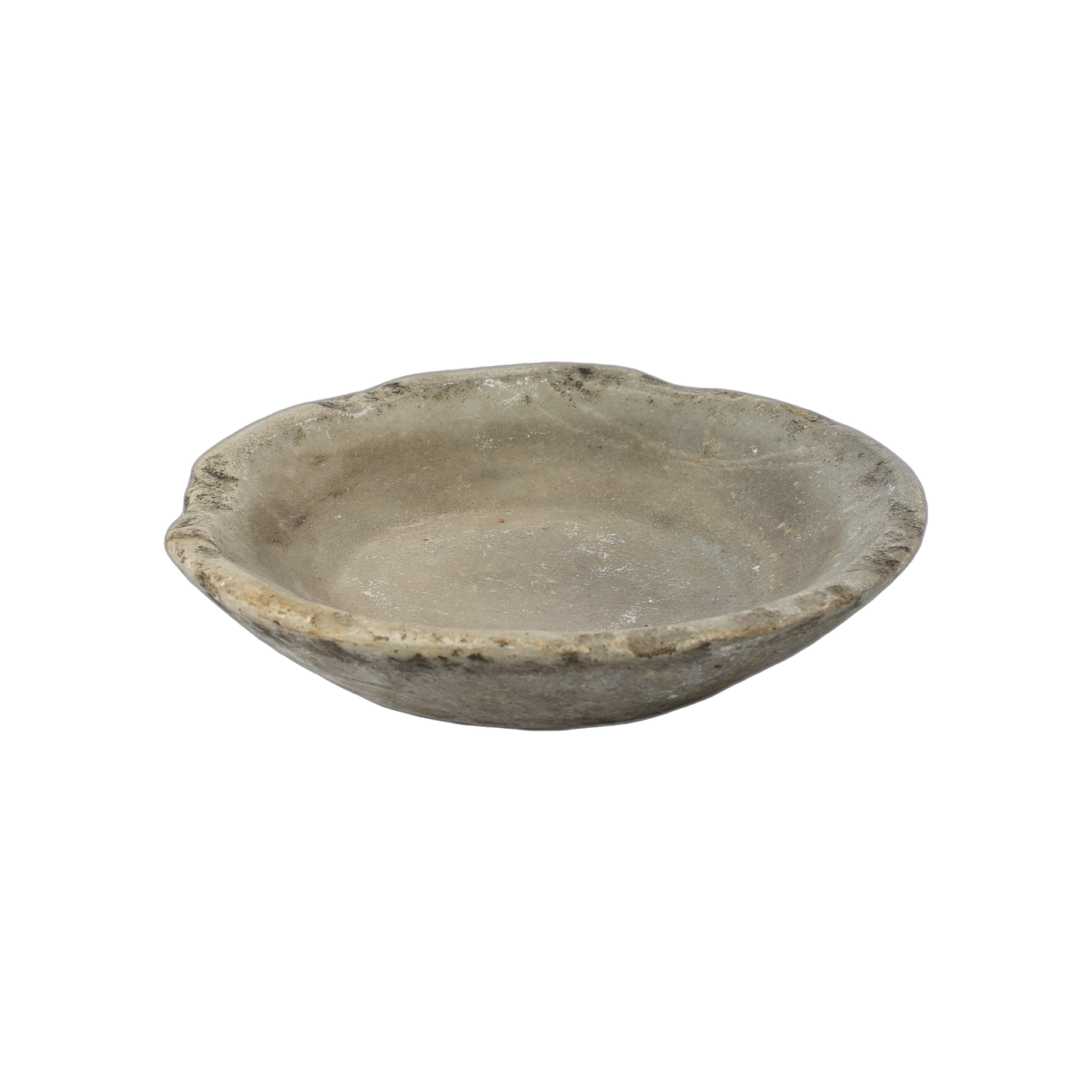
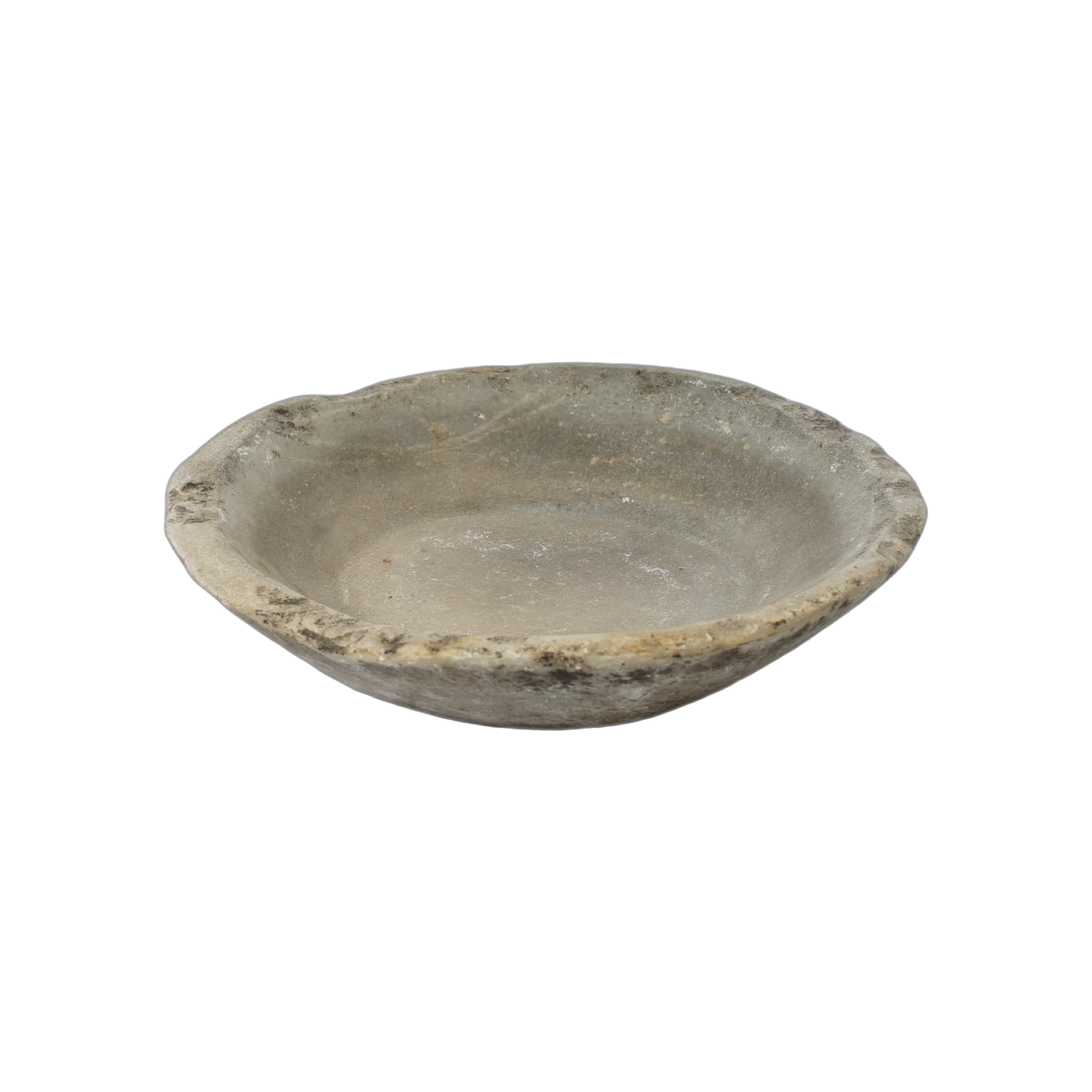
Tableware itself has taken very varied forms. There are metal plates, earthenware vessels, plant leaves (depending on the region) but also pieces carved from stone. Our old Kishan marble plates, hand-carved in India, were used precisely for meals.
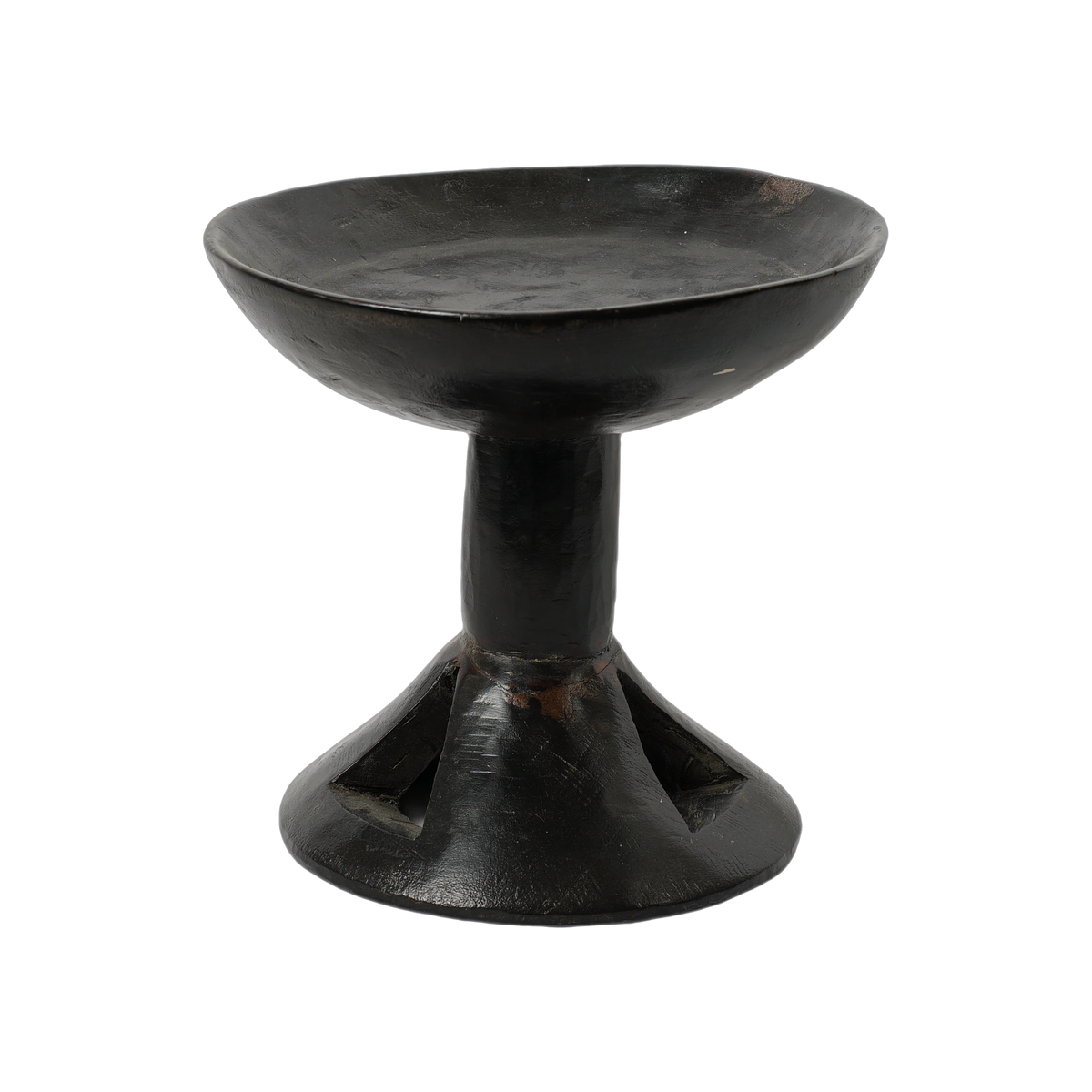
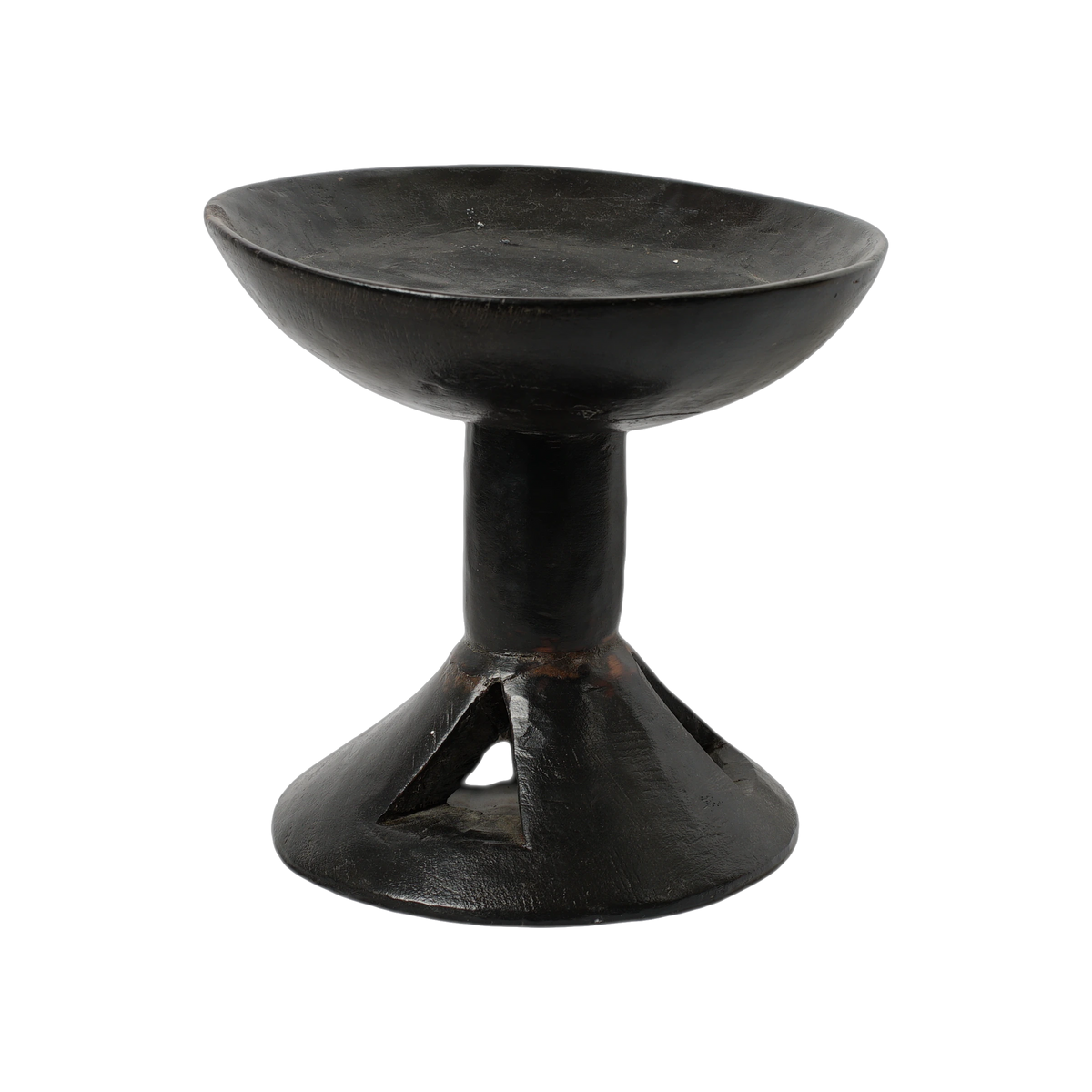
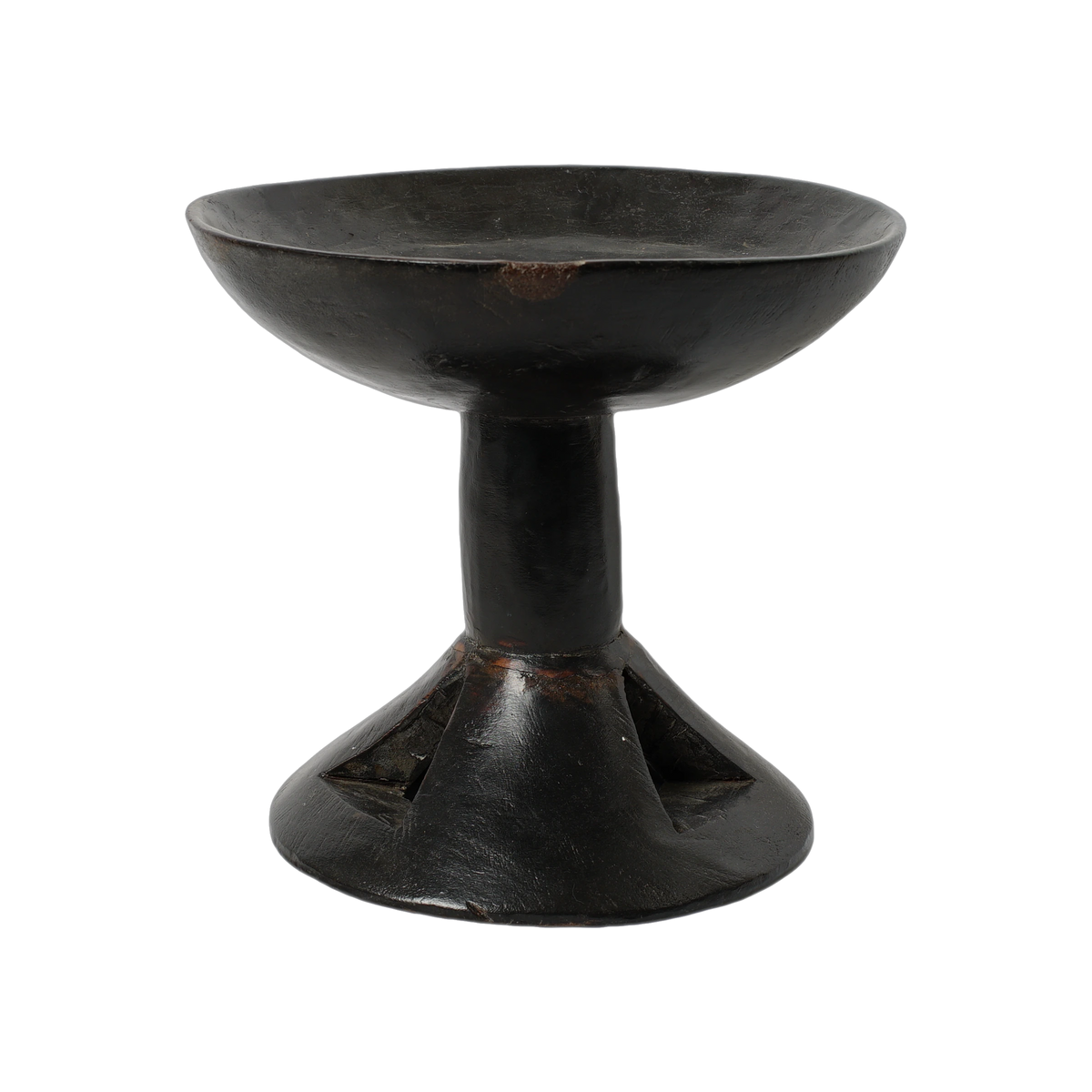
In Nagaland, a tribal region straddling India and Burma, people used a single-piece wooden plate mounted on a tall foot, so they did not have to eat directly at floor level.


Through all these objects, we discover another side of India. Dishes, recipes, everyday gestures and habits that have evolved over time and still exist in some regions. Even if you use these objects for another purpose, that of decoration, it will always be useful and interesting to know the story of the piece, and to be able to explain its shape, or its marks of use, to guests whose curiosity has been piqued.









Frequently asked questions
Traditional Indian kitchens use many utensils made of wood, stone and terracotta. Among them are parat trays for kneading dough, chakla boards for making chapatis, stone mortars for crushing spices and terracotta pots for cooking. These objects, often handmade, bear witness to age-old craft skills.
The parat is a large hollow tray traditionally used in India to mix flour and water, then knead bread dough. It is used in particular to make chapatis, rotis and parathas. Made of wood, metal or sometimes stone, it is one of the emblematic utensils of Indian cuisine.
To make chapatis, a round board called a chakla and a rolling pin called a belan are traditionally used. A small ball of dough is rolled out on the board into a thin disc, then cooked on a hot griddle called a tawa. These utensils are still commonly used in Indian households.
Traditional Indian mortars were used to crush spices, grains and certain ingredients needed to prepare dishes. Used with a stone pestle, they made it possible to prepare fresh spice blends or chutneys. These old utensils are particularly recognisable by their hollowed shapes and the marks left by daily use.
In traditional Indian kitchens, terracotta pots were used to cook dishes directly over the fire. In southern India, stone vessels called kalchatti were used to simmer curries. Other pots, made of solid wood, were used to store milk, butter and ghee, a clarified butter widely used in Indian cooking.
Traditional Indian water jars keep water naturally cool, even without a refrigerator. Unglazed terracotta is slightly porous: a small amount of water evaporates through its walls, which helps cool the contents. This principle is still used today in some regions of India.
Old Indian kitchen utensils can easily become decorative objects. A wooden parat tray can serve as a table centrepiece, a stone mortar as a catch-all and an old terracotta water jar as a decorative object on a piece of furniture. These handcrafted pieces bring natural materials, distinctive shapes and a story to our interiors.