




Nagaland, a foreword.
Nagaland is one of the smallest states in India, located in the north-east of the country. It is one of the "Seven Sisters" (Arunachal Pradesh, Assam, Meghalaya, Manipur, Mizoram, Nagaland and Tripura), a group of remote Indian states off the usual tourist trail. These seven sisters depend on one another and are connected to the rest of India by a single land route, the Siliguri Corridor.

Nagaland takes its name from its inhabitants, the Nagas, who are made up of many tribes (17 officially). Very little information remains about the history of these communities, which today are split between Burma and Nagaland. Historically, the oldest record of these hunter-gatherer peoples dates back to the 13th century. A patriarchal system governed the various kingdoms, and it is still visible today. The different tribes were frequently in conflict, and the Nagas were known for cutting off the heads of their enemies.

Ao Nagas, 1900
However, from the 19th century onwards, British colonisation and the arrival of American Baptist missionaries operating from Jaipur put an end to these practices and brought profound changes to Naga society. Their original animist religion was entirely abandoned in favour of Christianity, and headhunting was also abolished, giving way to peace between the tribes. The Baptist Church played an important role in the peace efforts between the tribes, including in the 1960s during the insurgencies against the Indian government. Travelling through Nagaland, it is common to find a church at the centre of every village.

First attached to neighbouring Assam when the British colonists arrived, Nagaland became a fully fledged Indian state in 1963, after several rebellions against the government of a newly independent India. The insurgencies nonetheless continued, the work of the last separatist groups, which remained active until 1975, the year they finally decided to accept the Indian constitution and lay down their arms.
In 2004, two bombs exploded in Dimapur, killing around thirty people. Several acts of rebellion followed, causing the deaths of several civilians a year until 2013. In 2021, the Indian army killed 6 farmers in Mon district. The riots that followed caused the deaths of 8 more civilians and one soldier. These events have fed the small state's reputation for insecurity, notably hampering the development of tourism.
The official language since 1967 has been English, yet the most widely spoken language remains Nagamese, a language derived from Assamese, and several dozen other languages are still spoken in the territory.

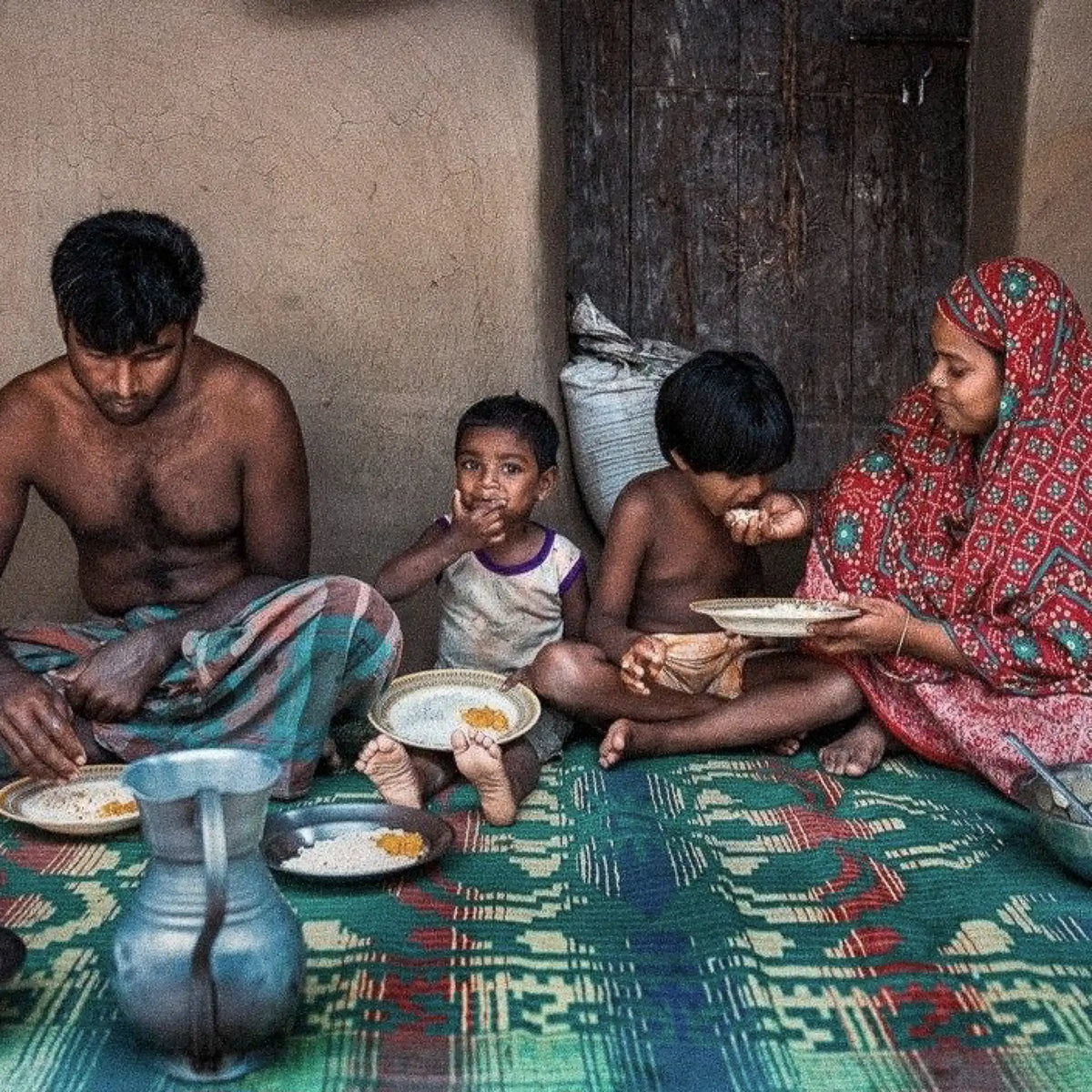
Traditional house in Nagaland
Despite mass conversion to Christianity, Nagaland has kept its old tribal traditions. Many festivals of each ethnic group punctuate the calendar, following the farming cycle, as Nagaland's economy relies mainly on agriculture. In addition, an inter-ethnic festival, the Hornbill Festival, was created by the government of Nagaland in 2000 to celebrate the diversity of Naga culture. It brings together all the tribes of the region and showcases the culture and traditions of each one. The festival is named after a bird, the hornbill, which happens to be the emblem of Nagaland. So for one week in December, the various crafts such as painting, woodcarving and textiles are showcased, along with sports, food, games, music…

To explore the origins of the famous Naga beds, we set out to discover Nagaland, with a first trip in 2023. Follow this blog for the story of our journey.
Read more

Phurbas are ritual daggers associated with deities of Vajrayana Buddhism. Made up of a blade, a handle and a pommel, these carved daggers are often made of brass and metal, but also of wood, as he...

Naga tables are perfectly written in the rustic trend of the moment. Raw wood, irregular, primitive shape, they have become essentials of any self-respecting Wabi-Sabi interior. But these tables ha...
Leave a comment
All comments are moderated before being published.
This site is protected by hCaptcha and the hCaptcha Privacy Policy and Terms of Service apply.