



The history of Indian tribal doors
from central India to our interiors
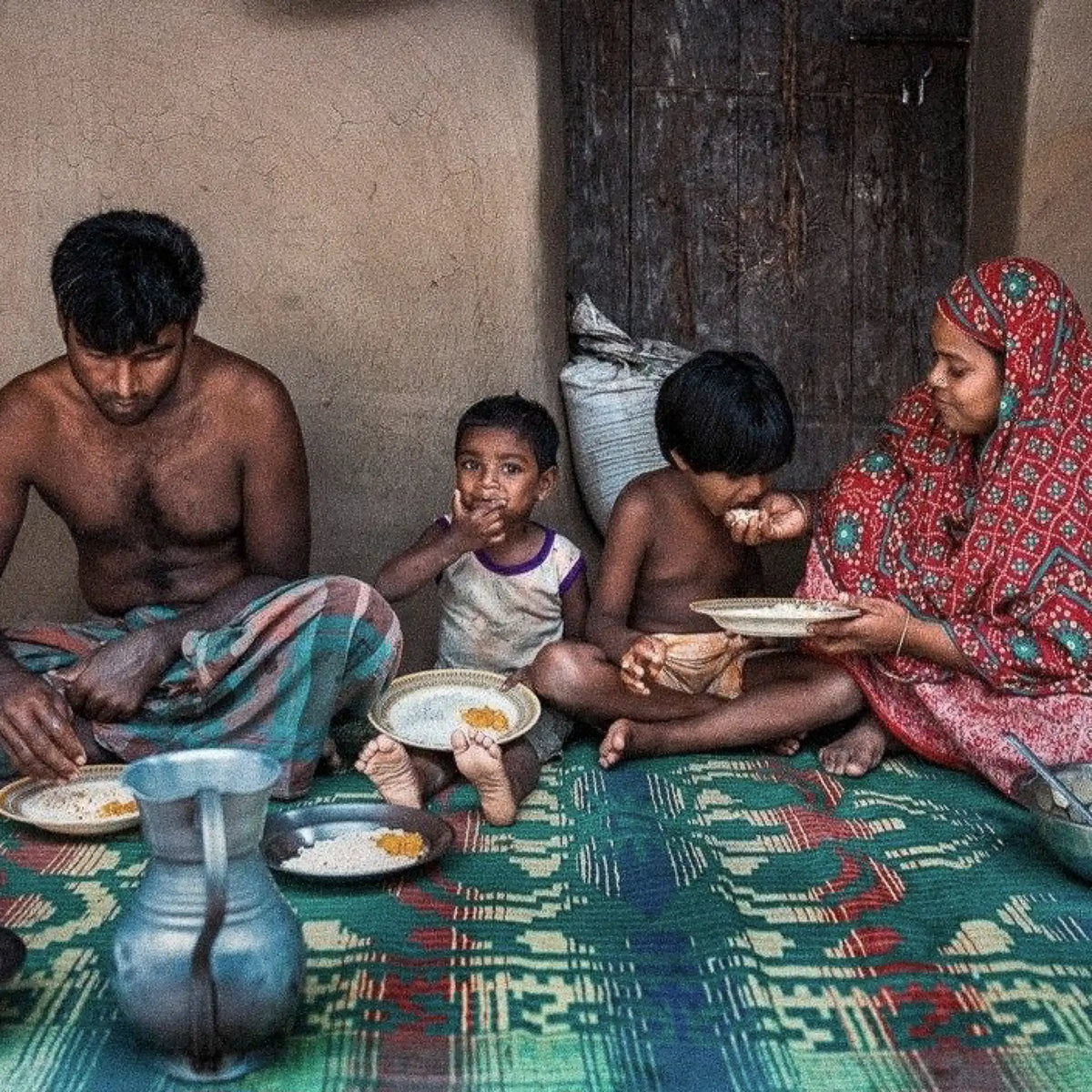
In central India, old carved doors hold an important place in the craft heritage. Their decoration depicts human figures, animals, plants, geometric shapes… They evoke the daily life, beliefs and environment of the communities that shaped them. Notably, whereas most Indian doors from other regions have two leaves, these tribal doors have only a single leaf. They are also not tall, generally reaching 140cm in height at most.
Today, these doors are finding a new place in our interiors. Set against a wall, hung, turned into a headboard… they become decorative pieces in their own right. Yet their time-worn wood, their ironwork and their reliefs still bear the traces of their first life.


where in India do these doors come from?
Central India is home to a great diversity of indigenous communities, often referred to by the term adivasi. A large part of the population officially recognised in India as belonging to the scheduled tribes (indigenous minorities officially recognised as such by the Indian government) lives in this vast region, which covers the states of Madhya Pradesh, Chhattisgarh, Jharkhand and Odisha.
The Gond are one of the main groups of indigenous peoples in India. They are present in several states, particularly Madhya Pradesh, Chhattisgarh, Odisha and certain neighbouring regions.
Within this cultural group there are different communities, including the Muria and the Maria, historically settled in the Bastar region. Now part of Chhattisgarh, this region once belonged to Madhya Pradesh, before the state of Chhattisgarh was created in 2000.
It was notably in this environment that the tradition of woodwork applied to everyday objects, commemorative objects, pillars, doors… developed.
Speaking of "Indian tribal doors" therefore does not refer to a single model. The term brings together pieces from different communities and territories, each with its own uses and its own visual language.


doors tied to community life
The first function of a door was naturally to close off a building and protect its interior. But some carved doors also held an important place in collective and spiritual life.
In the Muria culture of Bastar, they could notably be installed at the entrance of the ghotul. These communal living spaces were traditionally intended for unmarried young people. They played a role in their education, their socialisation and the passing on of the community's traditions.
Other doors were placed at the entrance of the devgudi, village shrines associated with local deities and religious practices.
The decoration of a door could therefore be linked to the function of the building it protected. Depending on the richness of its carvings and its location, it could also show the importance of the place or the status of its owner.
These doors were therefore not mere partitions between inside and outside. They were an integral part of the building's identity and of community life.


a distinctive woodworking technique
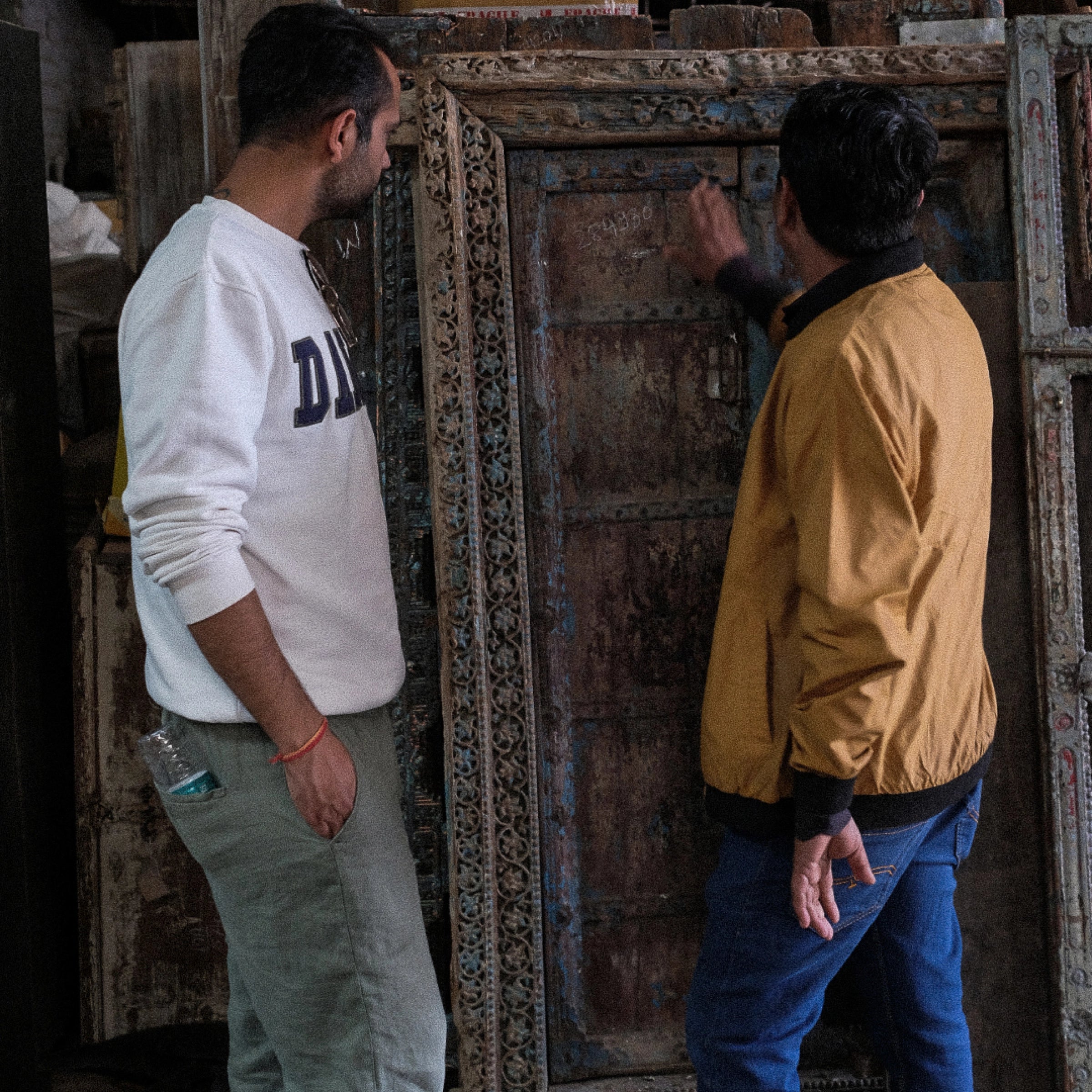
Indian tribal doors were generally made from several wooden planks joined together. Their structure was completed by wrought-iron clamps holding the planks together, easily recognisable as they are often round and flat. An iron locking system, usually a simple chain, completed the whole.
Once the planks were joined, the craftsmen worked directly on the surface of the wood for the decorative part. Some doors were divided into several panels, each able to carry a different motif or scene.
The decoration, generally shallow, was carved by hand. In the traditional craftsmanship of Bastar, heated metal tools could also be used to bring out darker lines on the surface of the wood and highlight certain details.
This handwork explains the variations visible from one door to another. The figures are not always perfectly symmetrical and the motifs may show slight differences in size or depth. These irregularities are not flaws: they bear witness to the craftsman's hand and give each piece its unique character.


the meaning of the carved motifs
The carvings on the doors can take very varied forms. They include figures, dancers, musicians, animals, birds, flowers, geometric motifs…
The sun, the moon, fish, turtles and certain everyday objects also appear on several old doors. Some depict scenes of hunting, farming, dancing or music.
The panels sometimes form a true story in pictures. They show village life, links with nature, daily activities or certain local beliefs.
In the Muria tradition of Bastar, fish and turtles could notably be associated with fertility and stability. Other motifs were considered auspicious or protective. Placed at the entrance of a building, their symbolic role was to keep negative influences from entering.
However, caution is needed when interpreting these carvings. The same animal or the same shape may have a different meaning depending on the community, the village, the period and the original function of the door.


the marks of time
Old doors were sometimes in use for several decades. Over time, the wood has acquired a patina, the reliefs have softened and the ironwork has oxidised. Cracks, differences in shade or small losses of material may also appear. These marks bear witness to the door's age, its use and the conditions to which it has been exposed.
Precise dating of a piece is not always possible, however. Its history and place of origin have not necessarily been recorded or preserved.
A distinction must also be made between old doors, once part of a building, and more recent decorative panels inspired by Bastar art. All can be of real craft interest, but they do not share the same history or the same original use.
On an old door, the patina is part of the piece. It tells the story of its evolution and makes each example impossible to reproduce exactly.
a new life for these old doors
When an old door leaves its original architecture, it can be reused in many ways without losing its character.
Because of their size and weight (they are lighter than the massive doors of Rajasthan, for example), they are often turned into cupboard or walk-in wardrobe doors. This use allows them to be fully integrated into the layout while showing off their reliefs.
When hung on the wall, tribal doors become true decorative works. They catch the eye and add texture to an entrance, a living room or even a bedroom.
They can also be used as headboards, hung above the mattress, in pairs or even on their own. Their vertical format, their carvings and the patina of the wood create a strong presence, with no need to add many other elements around them.
Overall, old wood pairs easily with plain walls, natural plasters, stone or more contemporary materials. The contrast brings out the reliefs and patina of the door without overloading the decoration.


our selection
At Orpaï, we select genuine old tribal doors from central India. They are made of wooden planks joined together and carved by hand.
Their decoration combines rosettes, geometric borders and central figures in particular. Some still retain their ironwork, their clamps and their old fittings.
The wood shows nuances, irregularities and traces left by time. Each door has its own dimensions, its own motifs and its own patina. No two are ever exactly alike.
We select them for their decorative strength but also for the history they continue to carry. A new way of giving them a place in our interiors, while keeping the marks of their first life.

Discover our tribal doors in stock
A selection of one-of-a-kind pieces sourced in India


Frequently asked questions
An Indian tribal door is a hand-carved wooden door made by indigenous communities in India. The term brings together several styles, origins and craft traditions.
They come mainly from central India, particularly Madhya Pradesh and Chhattisgarh. Several are linked to the Gond and Muria communities of the Bastar region.
They closed off and protected homes, communal living spaces or village shrines. Their decoration could also indicate the function or importance of the building.
Craftsmen joined several wooden planks together before carving the decoration by hand. Metal fittings, hinges and clamps then completed the structure.
The motifs can depict figures, animals, plants, everyday scenes… Some had a protective or symbolic value, but their meaning varies depending on the community and the period.
It can be used as an actual door, a cupboard or walk-in wardrobe door, a wall decoration or even a headboard. Its installation must be suited to its weight and condition.
Each door was shaped by hand and bears the traces of its former use. Its dimensions, carvings, irregularities and patina make it a piece that is impossible to reproduce identically.
Read more

Discover the history of Indian aalas, old carved niches once built into the walls of homes to hold light, everyday objects or sacred images. Today, these one-of-a-kind pieces are finding a new plac...
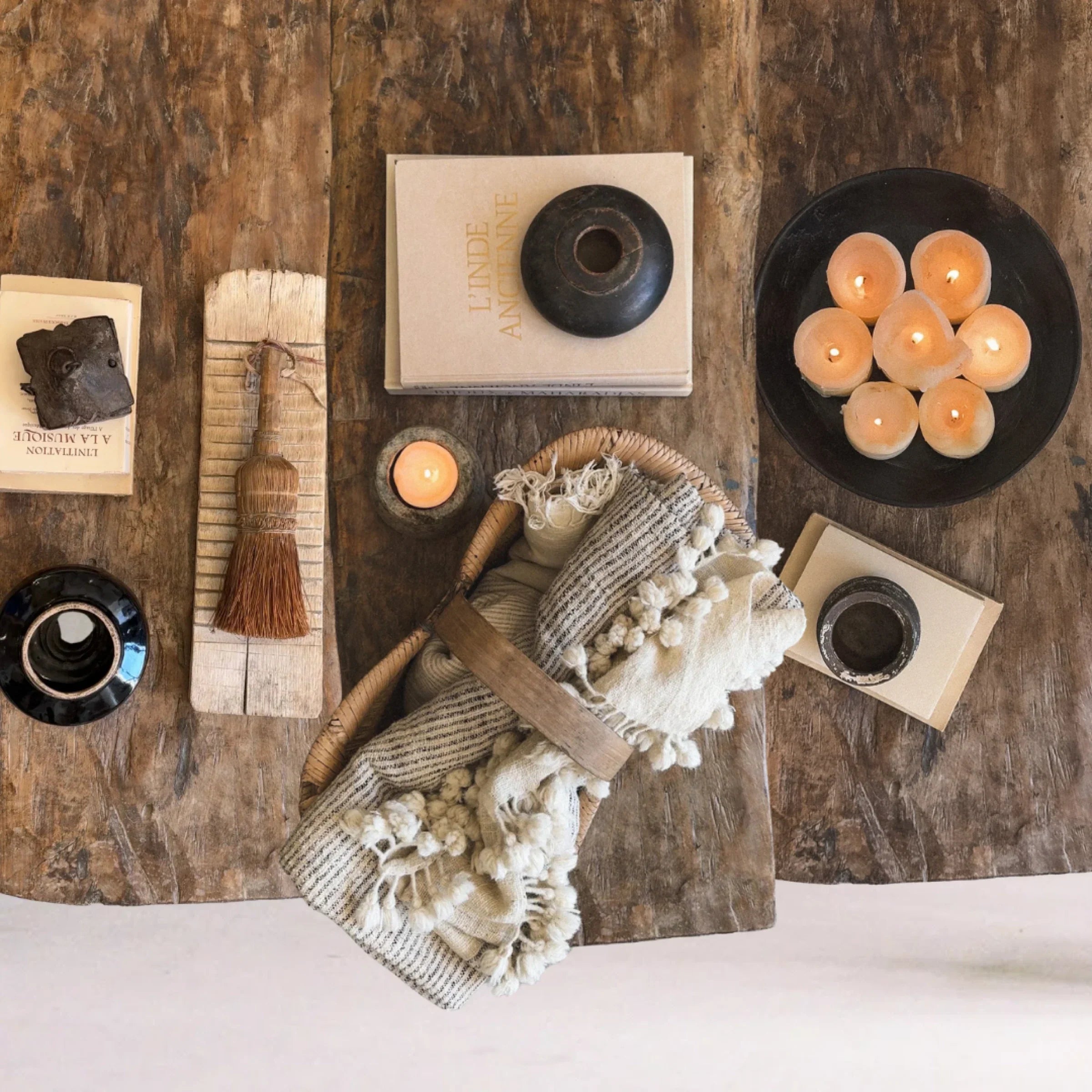
Discover how to decorate a coffee table with taste: which objects to choose, how to arrange them, colours, materials and decor ideas to create a harmonious living room.